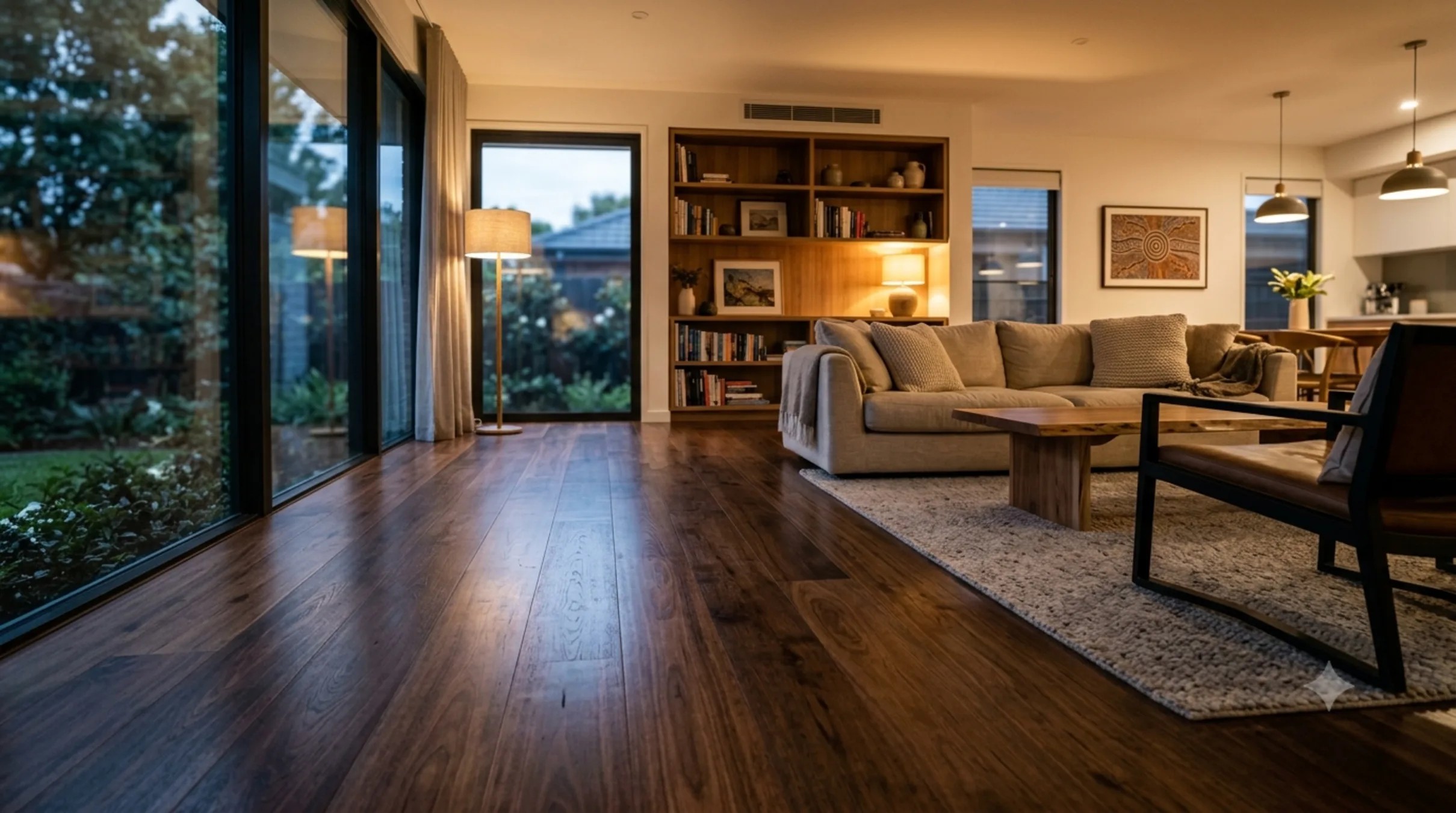

Once you’ve decided on the coating system, you need to pick a sheen level: matte, satin or gloss. All three protect the floor equally — the difference is visual, and practical for how the floor lives.
Here’s the plain-English guide to picking the right one for your home.
Matte
Sheen level around 10–15%.
The look: flat, natural, almost as if the timber wasn’t coated at all. Reads as the most contemporary of the three. Makes the timber look soft and matte, like a raw finish but sealed.
The practical: matte is the most forgiving of everyday wear. Small scratches, footprints, pet nails and dust are dramatically less visible than on a shinier finish. If your floor is going to live hard — kids, dogs, a busy household — matte hides the day-to-day.
Best suited to: modern interiors, coastal homes, families with kids and pets, holiday houses that need to hide guest wear.
Downsides: cleaning up spills can leave a slight ring if not wiped quickly. Some clients find it looks “flat” compared to what they expected from a polished floor.
Satin
Sheen level around 25–40%.
The look: a soft glow. Reflects light without being shiny. The middle ground, and by far the most popular choice.
The practical: hides most wear, catches enough light to look properly finished, and cleans easily. Doesn’t show marks the way gloss does, but does show up drips and spills more than matte.
Best suited to: almost any interior. If you can’t decide, this is the safe choice. Reads as “the finish a real timber floor should have” in most people’s minds.
Downsides: none really. It’s the default for a reason.
Gloss
Sheen level around 60–80%.
The look: shiny, reflective, formal. Makes the timber look rich and deep, and doubles the visual weight of the floor by reflecting light off it.
The practical: shows every scratch, footprint, dust particle and drip. Requires ongoing effort to keep looking good. Wonderful when maintained, disappointing when neglected.
Best suited to: formal interiors, period homes with traditional styling, showrooms, spaces where the floor is meant to be the visual anchor of the room.
Downsides: high maintenance. Any scratch is visible. Pet nails leave scuff marks. Not a “set and forget” choice.
What we recommend
For most Peninsula homes: satin water-based polyurethane.
For coastal beach houses, holiday rentals or homes with pets: matte water-based polyurethane.
For heritage restorations or clients who specifically want the traditional look: satin oil-based, occasionally gloss oil-based in the right room.
Common mistakes
- Choosing gloss to make a small room look bigger — it doesn’t work. It just shows more marks.
- Choosing matte because it’s trendy, then hating that light spills show up as rings — think about how the floor will actually live.
- Mixing sheens between rooms — jarring visually. Pick one and use it throughout.
Ask for a sample panel
We do sample panels of different sheens on site before every job. What looks right on a sales chart in bright showroom lighting often looks completely different on your actual floor with your actual timber and your actual lighting.
If your sander won’t sample sheens for you before committing, ask why.