Floor Sanding Frankston
Frankston · 3199 · Mornington Peninsula
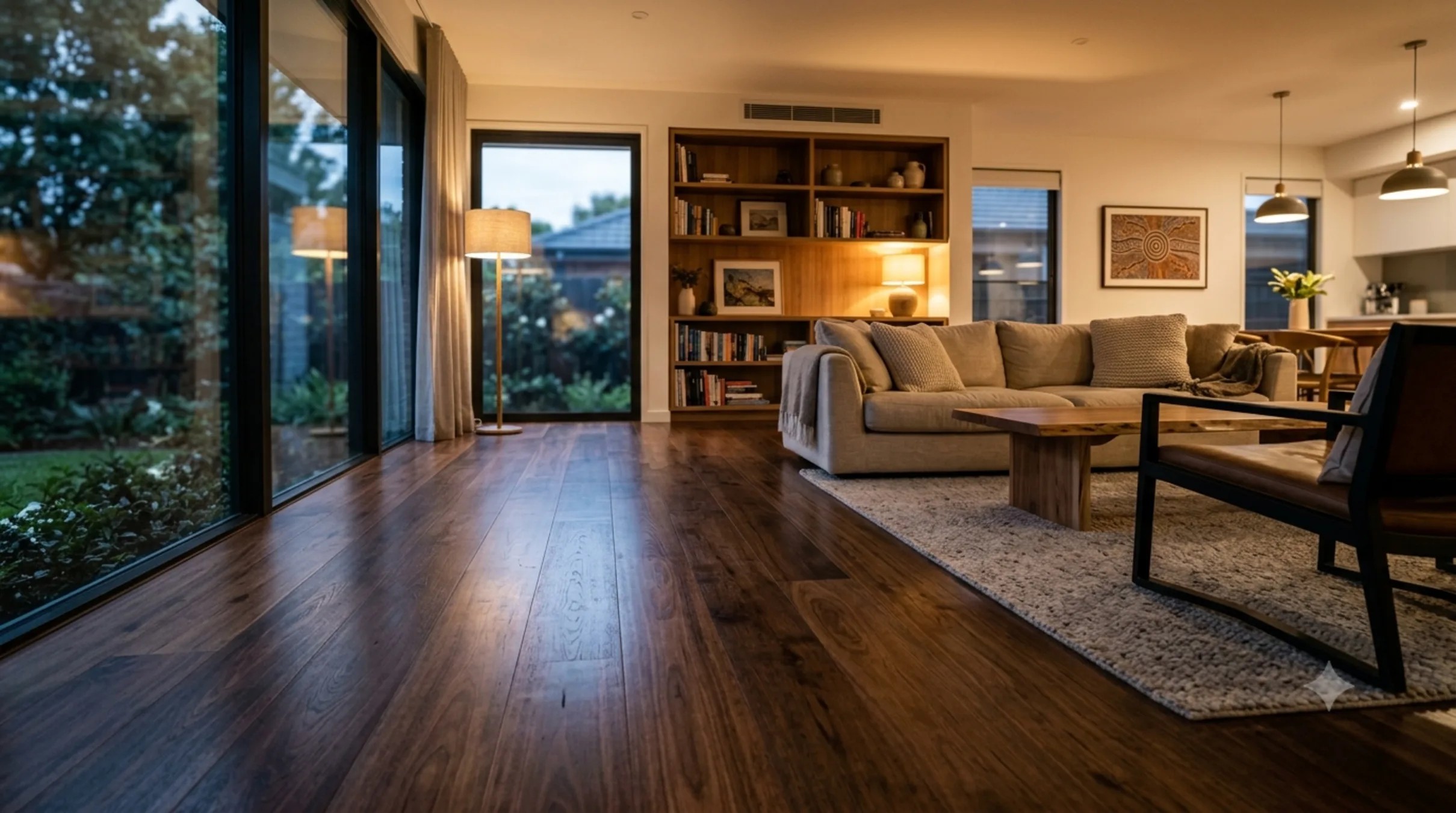
Baltic Pine accounts for something like 35 to 40 per cent of the restorable timber floors in Frankston, and that single fact shapes almost everything about how we quote here. It is a soft, resinous, imported softwood laid as tongue-and-groove subfloor planking through the post-war building boom, and it behaves nothing like the native hardwood most people picture when they think of a sanded timber floor. Get the machine settings wrong on Baltic Pine and you dish the soft springwood between the growth rings. Get them right and you uncover a floor with more warmth than anything laid since.
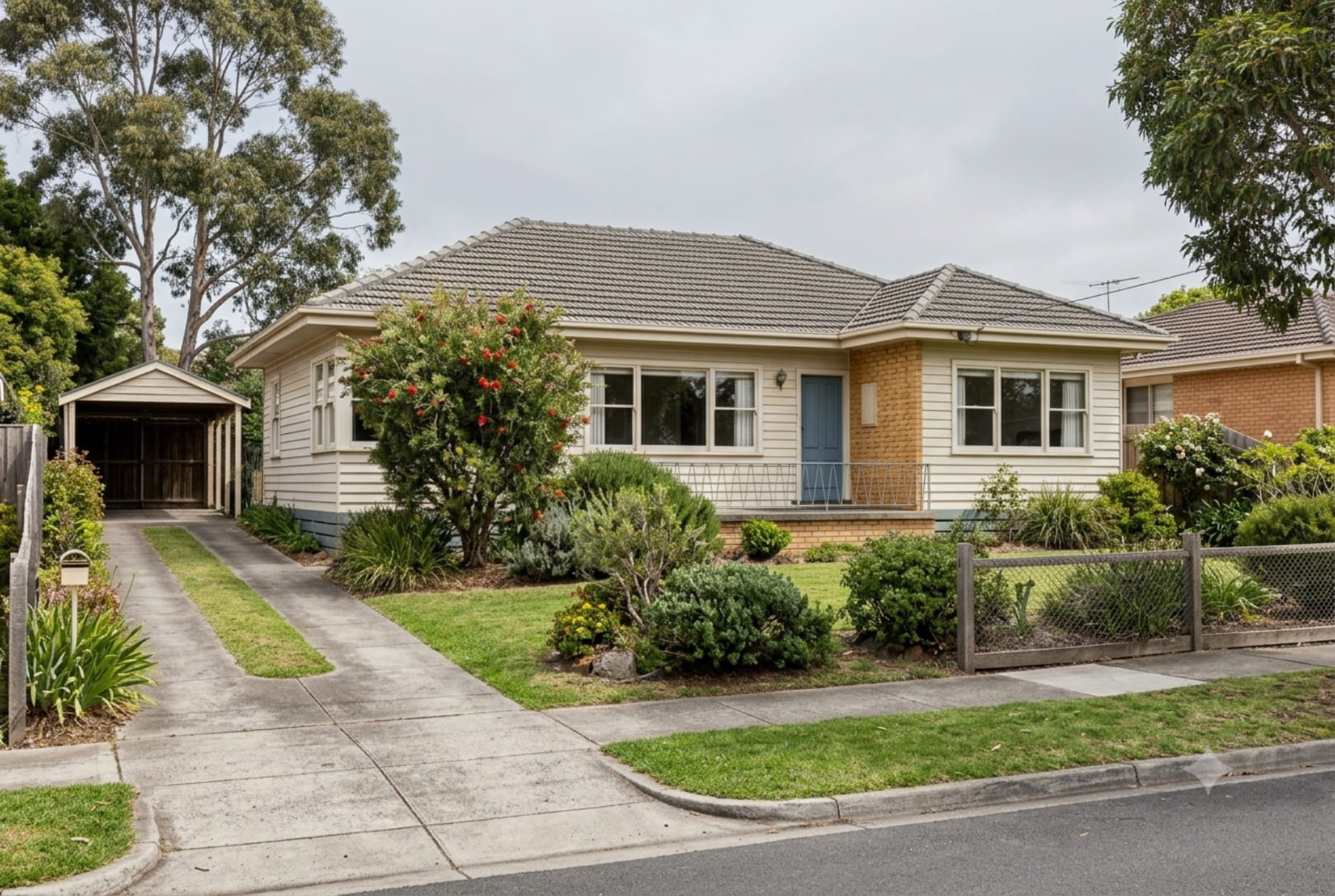
The rest of the Frankston housing stock splits predictably. Native hardwoods — Tasmanian Oak, Victorian Ash, the occasional run of Jarrah — make up roughly 50 to 55 per cent of what we restore, concentrated in the 1970s brick veneer subdivisions on the eastern side of the suburb. These are narrow strip floors, generally 65mm to 85mm wide, secret-nailed over conventional joists. The remaining 10 per cent is engineered overlay, bamboo and floating product, mostly in newer infill townhouses closer to the station.
Frankston jobs are usually 60 to 80 square metres of exposed timber: living areas, hallway, two or three bedrooms. That is the figure we quote against most weeks. It happens because the carpet or vinyl comes up in the main living zone first, the owner sees what is underneath, and the scope grows room by room rather than being planned as a whole-house project from the outset.
The defect that defines Frankston work is gap-filler failure on Baltic Pine. It is not glamorous but it is the single most common thing we are called in to correct. A previous contractor has filled the board joints with a rigid resin or water-based filler, the boards have expanded through a humid summer, and the filler has been crushed, cracked and popped out in strips. Now there is a floor with hard grey lines of broken filler sitting proud of the timber, which is worse than the open gaps it was meant to hide.
Our position on this is straightforward and occasionally unpopular: on 1950s Baltic Pine we generally leave the gaps open. We clear the debris out of them with a multitool or a chisel, we sand the floor flat, and we let the timber move the way it is always going to move. Where a client genuinely needs the gaps closed — draught, dust from an unsealed subfloor, a rug that keeps catching — the correct answer is timber splines. Tapered strips of reclaimed pine, glued in, sanded flush. They move with the boards instead of fighting them.
Pricing in Frankston sits in the lower of our three bands, and it reflects real project economics rather than a headline number. Turn-key sand-and-polish runs $45 to $55 per square metre with a traditional solvent-based polyurethane, and $55 to $65 per square metre with a standard waterborne system. On a typical 70 square metre job that puts the final invoice somewhere between $3,150 and $4,550, moving within that range according to how much carpet staple extraction, perimeter edging and subfloor preparation the floor actually needs.
Compare that against the $22 to $35 per square metre advertised through directories and lead aggregators. That number is not a lie exactly, but it buys a sanding pass and little else. It excludes GST. It excludes nail punching and perimeter joint filling, at $5 to $10 per square metre. It excludes removing black mastic adhesive or heavy legacy paint, at $8 to $15. It excludes the extra topcoat a hallway needs to survive a family, at $10 to $15. Add those back and the promotional quote lands where ours started.
A standard 60 square metre Frankston job takes two to three days on site. Day one is containment, punching the exposed nails below the surface, pulling tack strips, clearing legacy adhesive, then the coarse and medium sanding passes with the belt sander and the perimeter edger. The primary seal goes down late that afternoon. Day two is fine rotary work, inter-coat screening to knock back the raised grain, vacuuming and the final topcoats. Light foot traffic after 24 hours with a waterborne system, furniture back at three to seven days.
On coating, we lean waterborne for owner-occupiers and solvent-based for rental refreshes, and the reasoning is honest rather than aesthetic. Solvent polyurethane is cheaper per square metre, dries hard and handles standing water well, but it ambers badly — a light Baltic Pine floor will shift orange over a few years, and it needs the house empty for five to seven days while it off-gasses. Waterborne stays clear, carries VOCs under 27 grams per litre and lets you back in the next day. If you are living in the house, that difference is worth more than the price gap.
The other Frankston-specific thing worth knowing is what carpet does to a floor over fifty years. It protects the timber from UV and from wear, which is good, but the tack strips around the perimeter leave a band of nail holes 20 to 30mm in from every wall, and staples get driven through the boards in their hundreds. Every one of those has to come out by hand before a sander touches the floor. Miss one and it tears the abrasive belt and scores a line across the room. It is slow, unbillable-looking work that separates a proper preparation job from a quick one.
We also test moisture before we sand, every time, with a pin-type meter across multiple points rather than one reading by the door. Parts of Frankston closer to the bay and toward the Seaford border sit on high groundwater, and a floor above 14 to 16 per cent is not ready to be cut flat. Sanding a damp cupped floor level is how you produce a crowned floor two summers later, when the subfloor dries and the board centres rise. That is a full re-sand to fix, and it is avoidable.