Floor Sanding Sorrento
Sorrento · 3943 · Mornington Peninsula
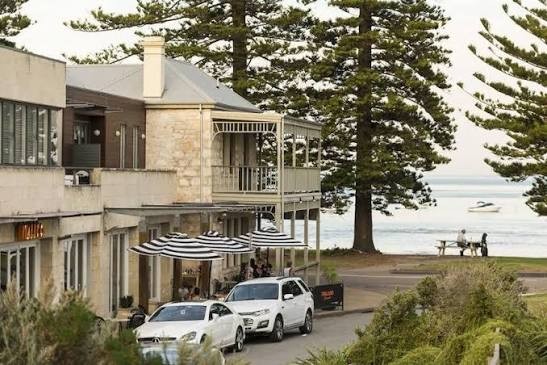
Limestone and Baltic Pine built Sorrento, and both are still underfoot. The 1880s heritage houses through the front beach end were constructed in local limestone with wide-board pine floors laid over substantial bearers, and a surprising number of those floors survive intact beneath later carpet and overlay. Alongside them sit Federation cottages, postwar holiday shacks, and the contemporary rebuilds that have progressively replaced the shacks over the last thirty years.
A genuine 1880s Baltic Pine floor is not a floor to sand casually. Boards run 130 to 200 millimetres wide, face-nailed rather than secret-nailed, and after 140 years the timber has developed a colour, a surface compression and a level of honest wear that cannot be manufactured. Sanding it aggressively erases all of that permanently. The first conversation on a Sorrento heritage floor is whether it should be cut at all, or cleaned, repaired and recoated with its patina left intact.
That is not a romantic position, it is a practical one. A heritage floor that has been sanded to uniform smoothness looks like a new floor, which is precisely what the building is not. Where the client is after period authenticity, we will often recommend sanding only the primary living areas where wear genuinely demands it and leaving the historic sections cleaned and recoated without re-cutting the surface. Not every floor benefits from being made perfect.
Where a full restoration is the right call, old pine brings specific technical demands. High resin content softens under a coarse belt and clogs abrasive within a few passes, so belts get changed more often than the material cost alone would suggest. Resin concentrated around knots interferes with coating adhesion and needs a shellac-based spot seal before the main sealer. And the softness of the timber means lighter pressure and finer sequential grits to avoid dishing the springwood between the growth rings.
Sorrento sits at the top of our three pricing bands. Turn-key sand-and-polish runs $70 to $120 per square metre, and floor areas here are larger than anywhere else we work — frequently 120 to 220 square metres and beyond, often with outdoor decking alongside. A comprehensive 150 square metre lime wash and premium waterborne project routinely lands between $10,500 and $18,000. Heritage restorations with board replacement in matched aged stock run above that.
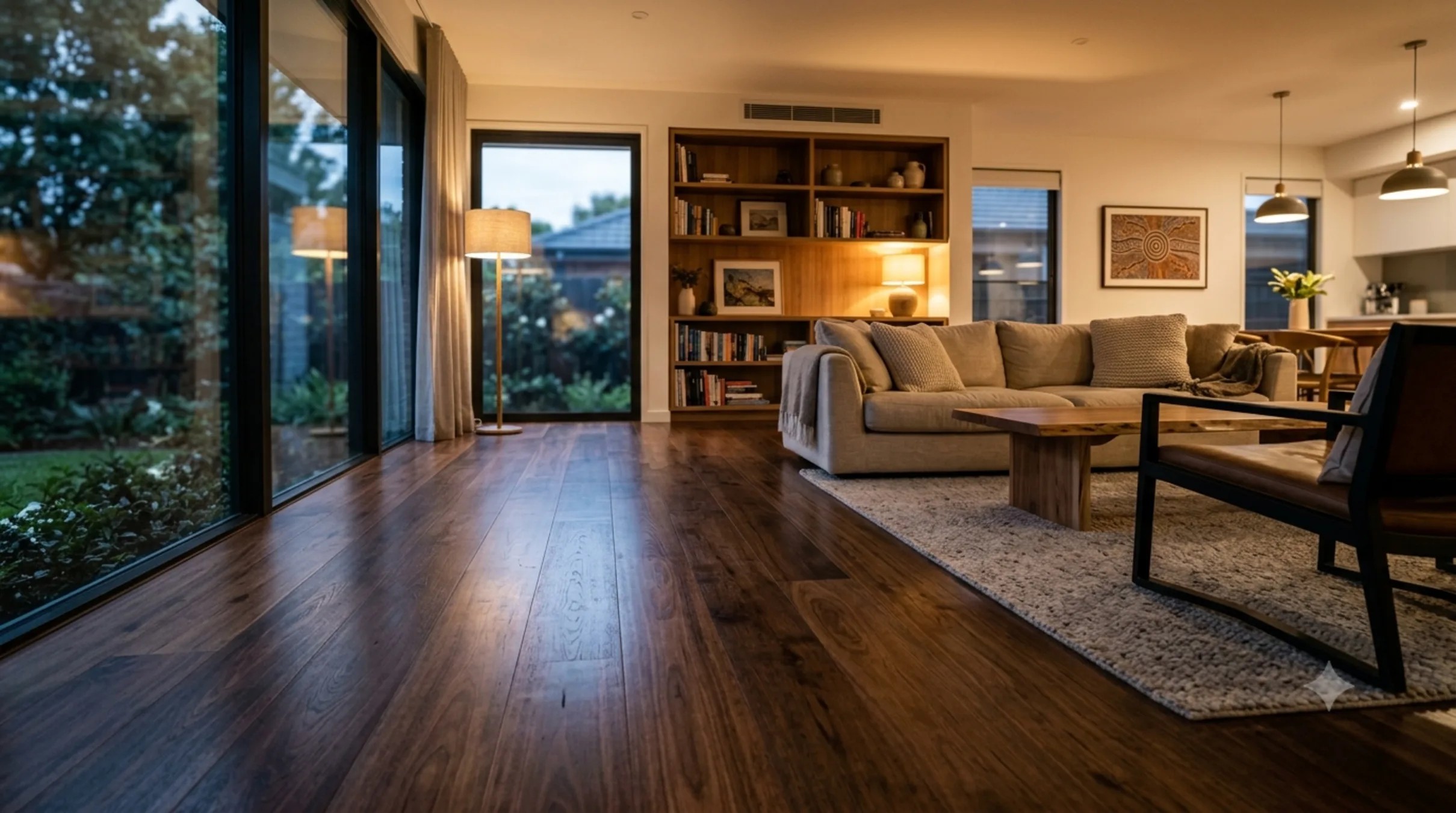
The finish brief in Sorrento is consistent and it is not about durability. Clients here want pale: lime washing, white-tinted Nordic finishes, wire-brushed texture, ultra-matte protective coats that hold blonde timber tones under the enormous glazed openings these houses have. The design problem is that expansive north and west-facing glass delivers UV onto the floor at an intensity that will amber any solvent-based coating within a few years, undoing the entire look.
So the specification is a pigmented system over a non-yellowing waterborne base, and the pigment work is where the cost sits. Lime wash and Nordic tint systems run $55 to $110 per square metre turn-key depending on coverage and passes, or $12 to $25 per square metre as an application over a base sand. They require a precise multi-stage sand up to 120 grit for uniform pigment absorption, and the wash has to go across a whole floor in one continuous session.
Sample panels are not optional on a job at this level. Pigment intensity reads completely differently on Baltic Pine than on European oak, and completely differently again at four in the afternoon with sun off the water than under overcast conditions in a showroom. We prepare panels on the actual floor, at the actual intensity, and we ask to see them in the room at the time of day the client uses it most. Reversing a whole-floor pigment decision is expensive.
Board replacement in a heritage floor needs matched aged stock and there is no shortcut. A new pine board next to a 140-year-old one will read as a patch forever, regardless of stain, because the grain compression and the surface character are not reproducible. Where the board count justifies it we source reclaimed timber of the right period and width. Where it does not, we discuss whether honest repair is a better outcome than a pretended match. Replacement runs $8 to $20 per square metre or from $50 a board.
Execution on a 150 square metre Sorrento project spans five to seven days and longer with a pigmented finish. Days one and two are tack strip removal, board levelling, punching what can run to thousands of face nails on a heritage floor, and multi-directional coarse sanding. Day three is rotary orbital finishing, vacuuming and the lime wash or primer. Day four is screening and the high-build topcoats. Site stays off-limits until day five, with full cure at seven to ten days.
Decking is almost always in scope alongside the interior on a Sorrento property, and it should be. These decks take the full force of the southerly, hard summer sun and salt spray, and a finish two summers old is generally silver and starting to lift. Combining the deck with the interior job while the equipment is on site is more efficient than mobilising twice, and it means the whole property comes back at once rather than in stages.
ALSO AVAILABLE IN SORRENTO
Because Sorrento is a coastal Peninsula suburb, we also offer deck sanding and oiling and lime-wash finishes here.
REPLACING THE FLOOR IN SORRENTO INSTEAD?
If the existing boards are past saving, or you are after something different underfoot, we also supply and install timber, engineered and hybrid flooring here.