Floor Sanding McCrae
McCrae · 3938 · Mornington Peninsula
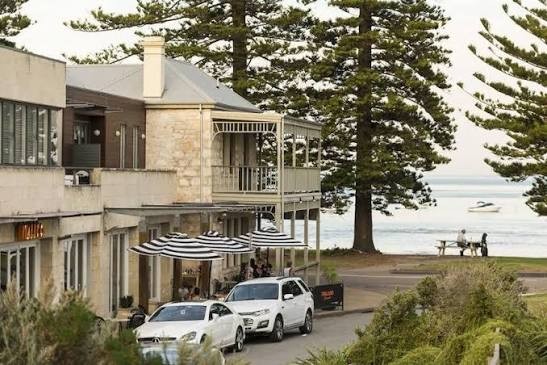
Elevation separates the two McCraes, and the floors follow the split. Along the highway flat there are 1960s beach shacks, modest and low-set, many still carrying their original timber. Up on the ridge behind them are the modern rebuilds — double-storey, heavily glazed, oriented hard at the bay view that justifies the block price. The same suburb, the same postcode, and almost nothing in common when it comes to specifying a floor finish.
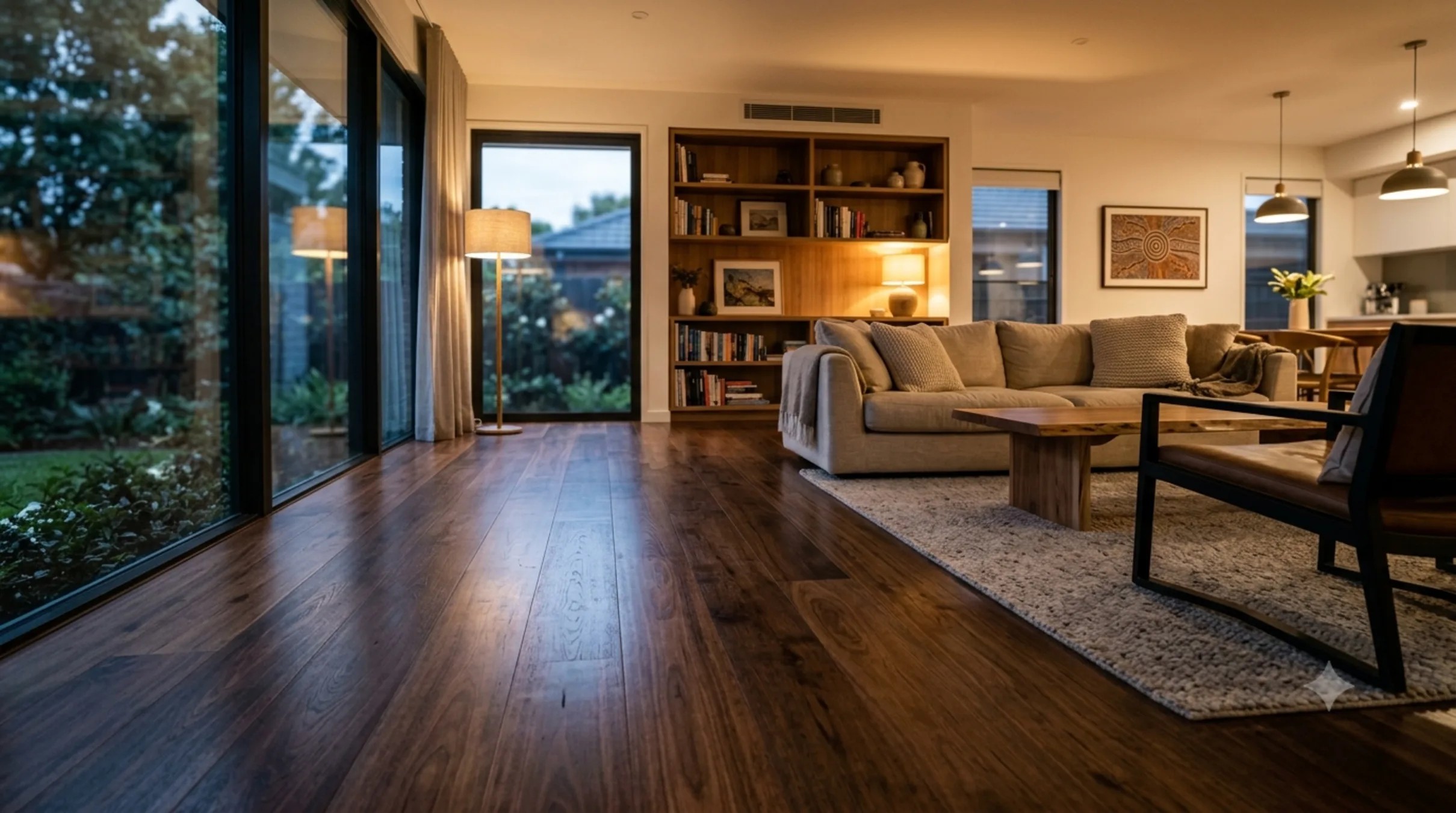
The ridge houses have a light problem. A wall of north-west facing glazing over Port Phillip delivers UV onto a timber floor at an intensity most inland homes never see, amplified by reflection off the water through the middle of the day. Under a solvent-based polyurethane, that produces amber shift within a handful of years — and because the sun path is not uniform across a room, the shift is not uniform either. The result is a floor that is visibly darker in a band across the exposed third.
Solvent-based polyurethane ambers because of what it is: a moisture-curing polymer in aromatic hydrocarbon solvents, and yellowing under UV is inherent to that chemistry rather than a fault in the product. On a pale timber the shift is dramatic. On the European oak and light native hardwood that the McCrae ridge rebuilds are typically floored in, it undoes the entire design intent within about five years.
Two-pack waterborne is the answer and on a heavily glazed ridge house it is not a close decision. These systems cross-link with an isocyanate or aziridine hardener and hold optical clarity indefinitely — no amber drift, no tonal shift along the sun path. Abrasion resistance on the commercial-grade products is very high. VOCs sit under 27 grams per litre, and the household is back on the floor within 24 hours rather than evacuating for the five to seven days a solvent system needs.
Where the client wants to hold a deliberately pale, chalky look under that much light — and on the ridge, most do — a lime wash or a Nordic tint over a non-yellowing waterborne seal is the specification that achieves it. Those systems run $55 to $110 per square metre turn-key depending on the pigment coverage and the number of passes, or roughly $12 to $25 per square metre as an application over a base sand. They need a precise multi-stage sand up to 120 grit to take the pigment evenly.
The highway shacks are a more conventional restoration. Narrow-strip native hardwood or Baltic Pine on bearers, low subfloor clearance, and decades of carpet or lino over the top. Removing bituminous mastic adhesive where lino was glued directly to the boards runs $10 to $20 per square metre and is the most common reason a promotional quote gets revised on site. The timber underneath is usually sound and usually on its first cut.
McCrae sits in the Mount Eliza pricing band at $55 to $80 per square metre turn-key for a standard sand-and-polish, with typical 90 to 140 square metre scopes landing between $6,050 and $8,800. Ridge houses with larger open-plan floor plates and internal staircases run above that, with treads quoted separately at $20 to $35 each. A lime wash or Nordic specification is quoted on its own basis rather than as an add-on percentage.
Subfloor moisture is worth checking on the low-set highway stock. Sand build-up against the perimeter over sixty years buries vents that were adequate when the shack was built, and a subfloor that has stopped breathing produces board cupping — the underside picking up moisture the top face is not, and the board edges curling upward. We take pin-type readings at multiple points and stop above 14 to 16 per cent, because sanding a damp cupped floor flat produces crowning when it eventually dries.
Timeline is three to four days for a highway shack floor and four to five for a ridge house, extending where there is a staircase or a lime wash in scope. A pigmented finish adds at least a day because the sanding sequence is longer and the pigment application needs to be uniform across the whole floor in a single continuous session. You cannot stop halfway through a lime wash and pick it up tomorrow.
Sheen selection is worth thinking about carefully on a ridge house. High gloss under a wall of north-west glazing produces genuine glare across the middle of the day and shows every dust nib in the finish. Ultra-matte is the fashionable answer and it suits the coastal aesthetic, but it marks more readily underfoot and needs more maintenance. Satin is the compromise most owners land on once they have seen samples in the actual room at the actual time of day.
We will always ask to see the room in afternoon light before finalising a sheen or a tint on a McCrae ridge job. A sample panel viewed in a showroom or under overcast conditions tells you very little about how the same finish reads at four in the afternoon with the sun over the water. Fifteen minutes at the right time of day prevents a decision that is expensive to reverse once the whole floor is coated.
ALSO AVAILABLE IN MCCRAE
Because McCrae is a coastal Peninsula suburb, we also offer deck sanding and oiling and lime-wash finishes here.
REPLACING THE FLOOR IN MCCRAE INSTEAD?
If the existing boards are past saving, or you are after something different underfoot, we also supply and install timber, engineered and hybrid flooring here.