Floor Sanding Portsea
Portsea · 3944 · Mornington Peninsula
Portsea jobs are the largest we quote, and scale changes more than the invoice. A house with 220 square metres of interior timber, a staircase, multiple wings and a deck is not a bigger version of a Frankston job — it is a different kind of project, with sequencing, staging and access problems that a small floor simply does not have. Getting those right is most of the difference between five days on site and nine.
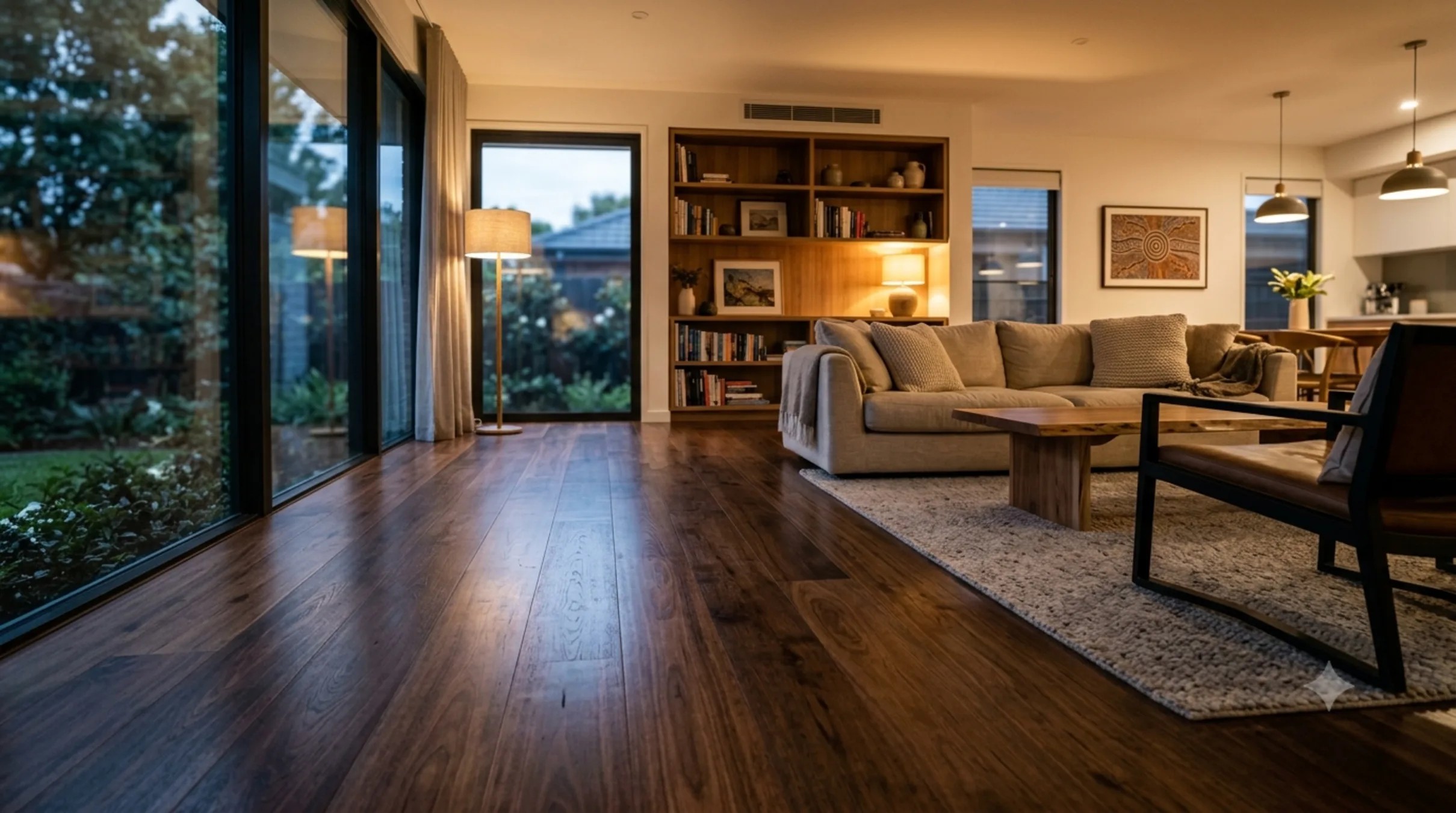
The housing runs from heritage estates through mid-century holiday homes to contemporary architect rebuilds, and all three are represented within a few streets of each other. Heritage stock carries wide-board Baltic Pine, face-nailed, sometimes original. Mid-century houses have narrow-strip native hardwood. The rebuilds are almost universally wide-plank European oak, either solid or engineered, laid across large open spans with minimal thresholds.
Wide-plank oak is the specification that dominates new work here and it has particular requirements. A 200 or 260 millimetre board moves substantially more across its width than an 80 millimetre strip, which makes moisture content at installation and stability in service far more consequential. It also shows any unevenness in the sanding more readily, because the eye reads a long uninterrupted board surface differently to a busy strip floor. Flatness tolerance on wide plank is genuinely tighter.
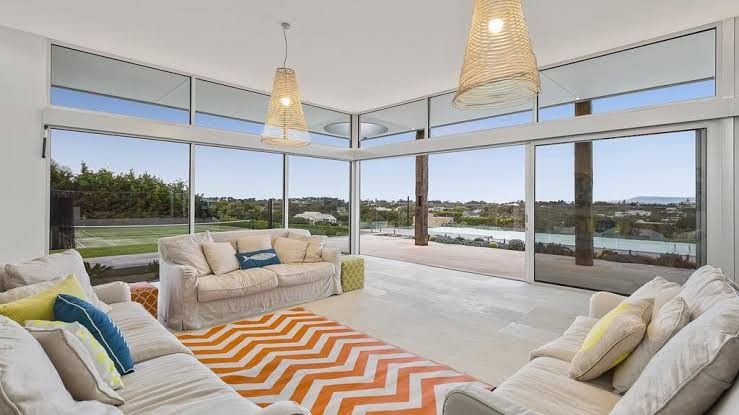
The glazing is the other constant. Portsea houses are built to look at Point Nepean and Bass Strait, which means enormous north and west-facing openings and UV loading on the floor that no inland house experiences. A solvent-based polyurethane under that exposure ambers hard within a few years and does it unevenly, following the sun path, producing a floor that is visibly darker across the exposed third of every room. On pale oak the effect is ruinous.
Two-pack waterborne is the only sensible base specification here, and where the client wants to hold a deliberately pale tone, a lime wash, Nordic tint or wire-brushed treatment over it. Those pigmented systems run $55 to $110 per square metre turn-key depending on coverage, or $12 to $25 per square metre as an application over the base sand, and they need a precise multi-stage sand up to 120 grit so the pigment takes evenly across the whole floor.
Portsea sits in the Peninsula band at $70 to $120 per square metre turn-key. Floor areas of 120 to 220 square metres and well beyond put whole-job contracts between $10,500 and $18,000, and larger properties with staircases, multiple wings and decking run above that. Staircase treads are quoted separately at $20 to $35 each, and perimeter joint filling at $5 to $8 per square metre. We itemise all of it rather than presenting a single rate that hides where the money goes.
Sequencing is the practical craft on a job this size. A 220 square metre house cannot be sanded and coated as one operation — the coating would be skinning over at one end before the applicator reached the other. We break the floor into logical zones on natural break lines, plan the coating runs so no wet edge is ever left to dry before it is joined, and stage the household or the trades around the sequence. Getting a wet edge wrong on a wide-plank oak floor leaves a visible lap line that only a full recut removes.
Access is worth resolving at quote stage. Portsea properties frequently have long driveways, steep approaches, restricted parking and entries that were designed for people rather than for a dust extraction unit and a drum sander. We work out the gear staging before day one rather than improvising on the morning, because the number of carries between the truck and the working face materially affects how long the job takes.
Where a Portsea property is part of a larger renovation, the sequence relative to other trades matters and getting it wrong is expensive. Painters should finish before we sand. Cabinetry should install after the floor has cured. Where a client asks us to work around trades still on site, we will explain what that costs in protection, rework and risk, and let them make the call. A freshly coated floor with a scaffold going up over it is a recoat waiting to happen.
Timeline for a 220 square metre Portsea house is seven to nine days on a clear coat and longer with a pigmented finish, plus a full cure period of seven to ten days before heavy furniture and rugs return. Where the property is being prepared for a summer season or a sale, that window needs to be built into the plan from the start rather than compressed at the end. We would rather decline a timeline than agree to one that forces a rushed cure.
Decking is routinely in scope and should be combined with the interior work. Portsea decks take the full southerly, unfiltered summer sun and salt spray, and a coating two summers old is typically silver, splintering and beginning to lift. Left longer, boards split through the fixings and restoration becomes replacement. Doing the deck while the equipment is already on the property is meaningfully more efficient than a second mobilisation.
ALSO AVAILABLE IN PORTSEA
Because Portsea is a coastal Peninsula suburb, we also offer deck sanding and oiling and lime-wash finishes here.
REPLACING THE FLOOR IN PORTSEA INSTEAD?
If the existing boards are past saving, or you are after something different underfoot, we also supply and install timber, engineered and hybrid flooring here.