Brush Box
AT A GLANCE
| Common name | Brush Box |
|---|---|
| Botanical name | Lophostemon confertus |
| Janka rating | 9.5 kN (dry) |
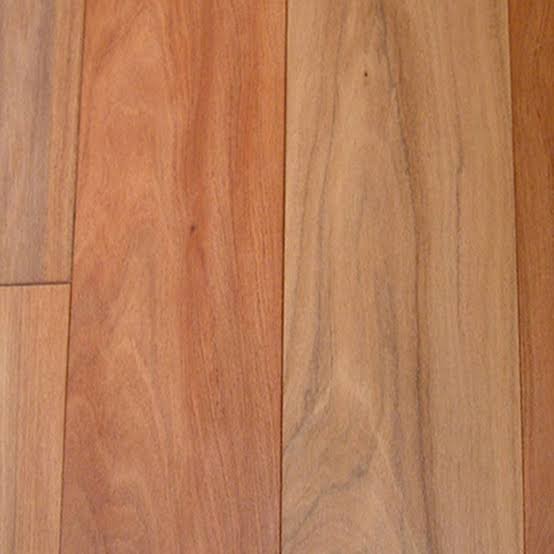
| Colour range | Soft pinkish-grey through to warm mid-brown, notably even in tone across a board. |
| Grain pattern | Fine, even and close-textured with interlocked grain; very little visible figure or vein. |
| Typical board widths | 80mm and 100mm most common; occasional 130mm in later installations. |
| Era commonly laid | 1950s through 1990s, used where an even, quiet, hard-wearing floor was wanted. |
| Tannin bleed risk | Medium |
| UV behaviour | Warms gradually from pinkish-grey toward mid-brown; a non-yellowing finish preserves the pink tone that distinguishes it. |
| Coastal suitability | Good |
HOW TO IDENTIFY IT
Brush Box is the quietest hard timber on this list. Where Spotted Gum shouts and Messmate is busy, Brush Box is remarkably even — a soft pinkish-grey to warm mid-brown with a fine, close texture and almost no gum vein, knots or dramatic figure. On first glance it can read as a very uniform Tasmanian Oak in a slightly pinker tone.
The texture is the giveaway. Brush Box has an unusually fine and even cell structure, which gives the sanded surface an almost velvety quality quite unlike the more open grain of a eucalypt. Run a hand across a freshly cut Brush Box floor and the difference from Tasmanian Oak is obvious even though the colours are close.
Grain is interlocked, which does not show as strong figure the way it does in Jarrah but does produce a subtle shimmer that shifts as you move across the room, particularly on quartersawn boards under directional light.
Hardness separates it decisively from the pale eucalypts it resembles. At 9.5 kN dry it is harder than Blackbutt and Jarrah, and roughly twice the hardness of Victorian Ash. If a floor looks like a very even, slightly pink Tasmanian Oak but resists a fingernail completely, it is almost certainly Brush Box.
HOW IT SANDS
Brush Box is hard and it is greasy, and both properties shape how it is sanded. At 9.5 kN it requires sharp ceramic abrasives and frequent changes; a dulling belt burnishes rather than cuts, and on a timber this fine-textured a burnished patch shows clearly once coating goes on.
The natural oiliness is the more distinctive issue. Brush Box carries extractives that can smear back into the surface under a loaded belt or an over-fine final pass, effectively sealing the grain before any coating touches it. That produces patchy absorption and, in bad cases, coating that will not key properly. Keeping abrasive fresh and not over-refining the final grit avoids it.
Interlocked grain means there is no single direction that cuts cleanly with every fibre, so a restrained coarse pass matters. Tear-out on Brush Box is less dramatic than on Jarrah because the texture is finer, but it still has to be worked out with the following grits at the cost of thickness.
The fine texture is unforgiving of a skipped grit. There is no vein, knot or figure to disguise a coarse scratch pattern, so the progression through the grits has to be genuinely sequential. Edge work needs matching discipline, because a perimeter band at a different final grit reads as a visible frame on a timber this uniform.
HOW IT FINISHES
Tannin levels are moderate and the practical concern on Brush Box is less about tannin bleed than about the natural oils interfering with adhesion. Where a floor has been sanded and the surface feels slick rather than open, an isolation primer is worthwhile insurance before a waterborne topcoat.
Waterborne polyurethane suits it well. The pinkish-grey to warm brown tone is subtle, and a solvent-based coating pushes it toward a flat orange-brown that loses the distinctive colour entirely. Non-yellowing clarity keeps the pink legible, which is the character worth preserving on this timber.
The fine even texture makes Brush Box unusually good under a matte or ultra-matte finish. On a timber with heavy grain or vein, matte can read as flat and lifeless; on Brush Box the velvety surface quality comes forward and the floor reads as material rather than as coating. It is one of the few species where we would actively suggest matte over satin.
Lime wash and Nordic tints work but need sampling. The interlocked grain takes pigment slightly unevenly, producing a subtle mottling that some clients like and others read as patchy. Because the timber is otherwise so uniform, any variation the pigment introduces is more visible than it would be on a busier floor.
ON THE PENINSULA
Brush Box turns up across the Peninsula in better-quality mid-century and later homes — Frankston South, Mount Eliza, Mount Martha and Mornington — where an even, hard-wearing floor was specified deliberately rather than taken as the default. It is less common than Tasmanian Oak by a wide margin, and correspondingly more often misidentified.
That misidentification has practical consequences. A quote given for a Tasmanian Oak floor that turns out to be Brush Box is a quote for the wrong job: 9.5 kN against 5.5 kN means more machine time, more abrasive and a different finishing approach. It is one of the reasons we look at the floor rather than quoting from a description.
Its hardness makes it a strong performer in high-traffic Peninsula settings. On a Mount Eliza or Mount Martha house with a large open-plan living area and a family moving through it, Brush Box under a commercial-grade two-pack waterborne handles the wear as well as anything short of Spotted Gum or Ironbark.
In coastal properties the fine texture is a mixed blessing. It resists abrasion well at 9.5 kN, but because the surface is so uniform, any scratching that does occur is more visible than it would be on a busier timber. An additional topcoat through the entry at $10 to $15 per square metre is worth doing where beach sand is a daily reality.
GALLERY
Placeholder slots — drop real photos into src/assets/ and swap the slot for <Image />.
- Photo slot 1
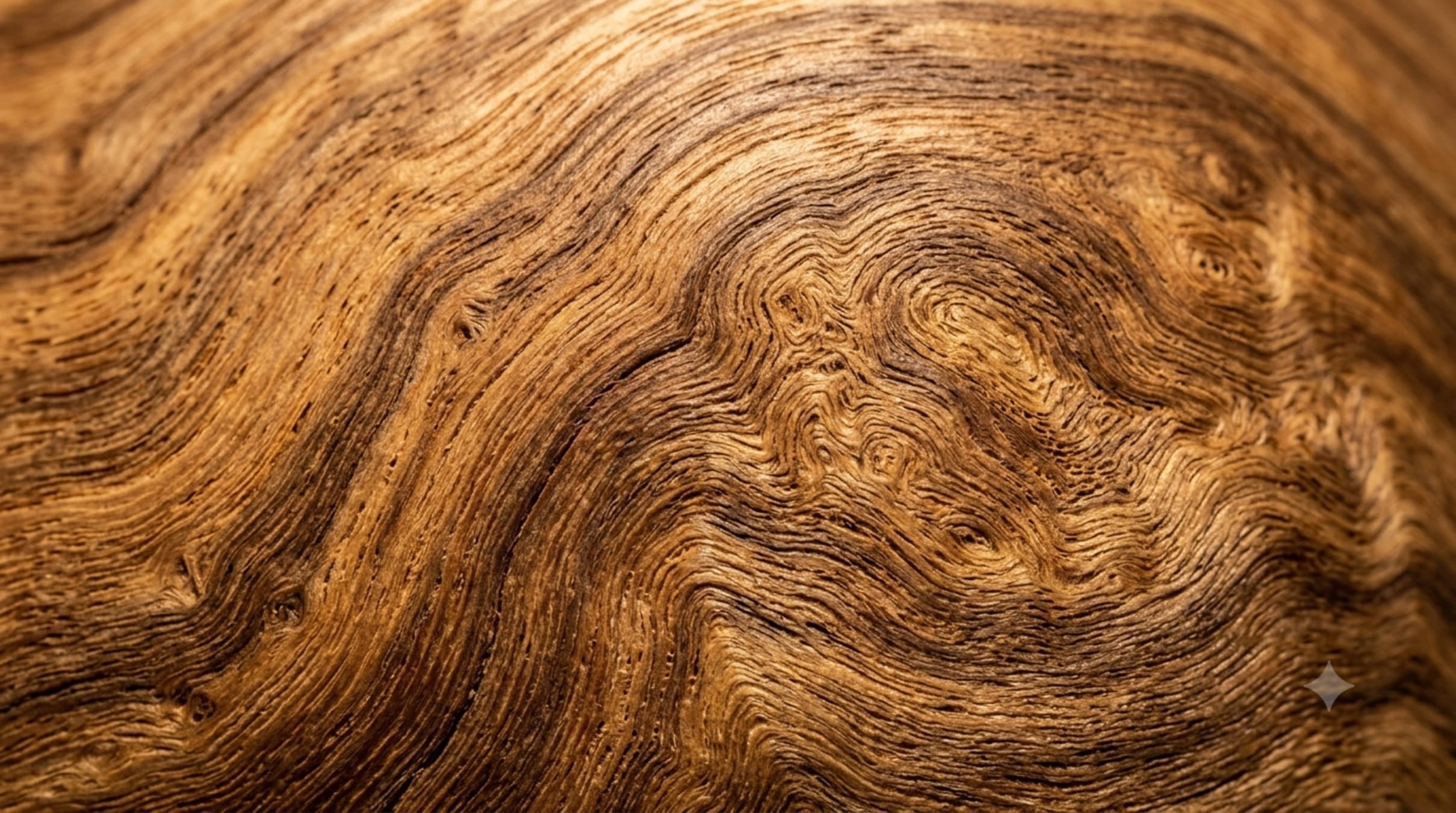
TODO: close-up of Brush Box showing the fine even close texture and pinkish-grey tone, 100mm scale. - Photo slot 2
TODO: quartersawn Brush Box under raking light showing the subtle interlocked shimmer. - Photo slot 3
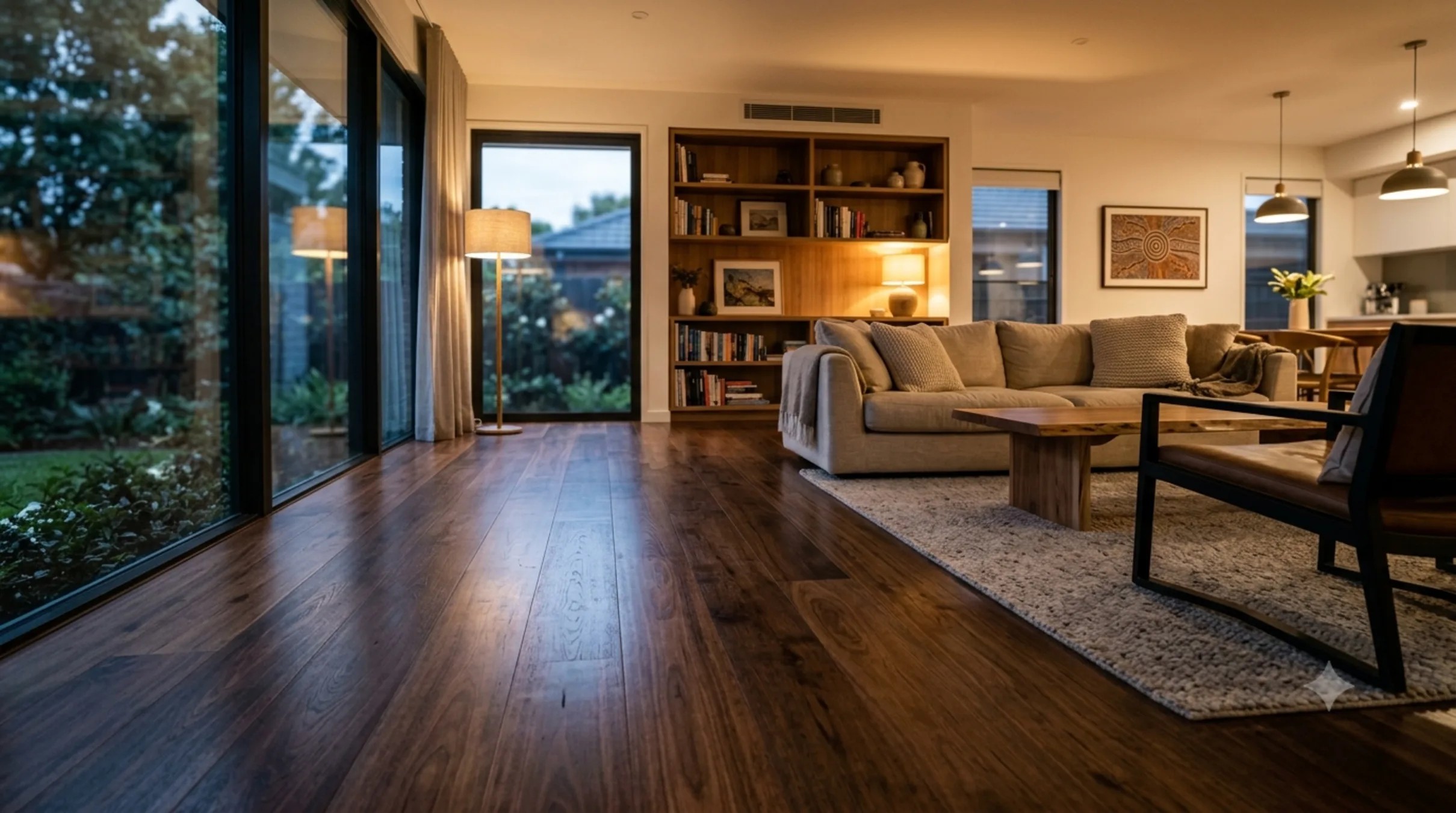
TODO: Brush Box floor finished in ultra-matte waterborne, Mount Eliza open-plan living area. - Photo slot 4
TODO: side-by-side comparison of Brush Box and Tasmanian Oak boards showing the tonal difference.
COMMON QUESTIONS
How do I tell Brush Box from Tasmanian Oak?
Hardness and texture. At 9.5 kN Brush Box resists a fingernail completely where Tasmanian Oak at 5.5 kN gives a little. The surface also feels finer, almost velvety, against the more open grain of a eucalypt. The colour is close, with Brush Box running slightly pinker.
Why is my sanded Brush Box floor absorbing coating unevenly?
Almost certainly the natural oils being smeared back into the surface by a loaded abrasive or an over-fine final pass, which effectively seals the grain before any coating touches it. Keeping abrasive fresh and not over-refining the last grit prevents it. Where it has already happened, an isolation primer is the fix.
What sheen suits Brush Box best?
Matte or ultra-matte, unusually. On most timbers matte can read flat, but Brush Box has a fine velvety surface quality that comes forward under a low sheen and makes the floor read as material rather than coating. It is one of the few species where we would actively suggest matte over satin.
Is it harder to sand than Tasmanian Oak?
Considerably. At 9.5 kN against 5.5 kN it needs sharp ceramic abrasives and frequent belt changes, and the interlocked grain and natural oils both add complications. A quote given on the assumption of Tasmanian Oak will be a quote for the wrong job, which is why we identify species on site.
Can Brush Box be lime washed?
It can, with sampling. The interlocked grain takes pigment slightly unevenly and produces a subtle mottling. Because the timber is otherwise so uniform, that variation is more visible than it would be on a busier floor — some clients like it, others read it as patchy. A sample panel on your actual floor decides it.
Does it need a primer?
Often worth it, though for adhesion rather than tannin bleed. Tannin levels are moderate; the real concern is the natural oils interfering with how a waterborne coating keys to the timber. Where the sanded surface feels slick rather than open, an isolation primer is cheap insurance.