Matte, Satin & Gloss
No cost difference between sheen levels within the same coating system
Sheen is chosen separately from chemistry and it is worth treating as its own decision rather than a footnote at the end of a quote. Every coating system in this cluster comes in a range of sheens, the cost is the same across them, and the choice changes how the finished room reads more than most people expect.
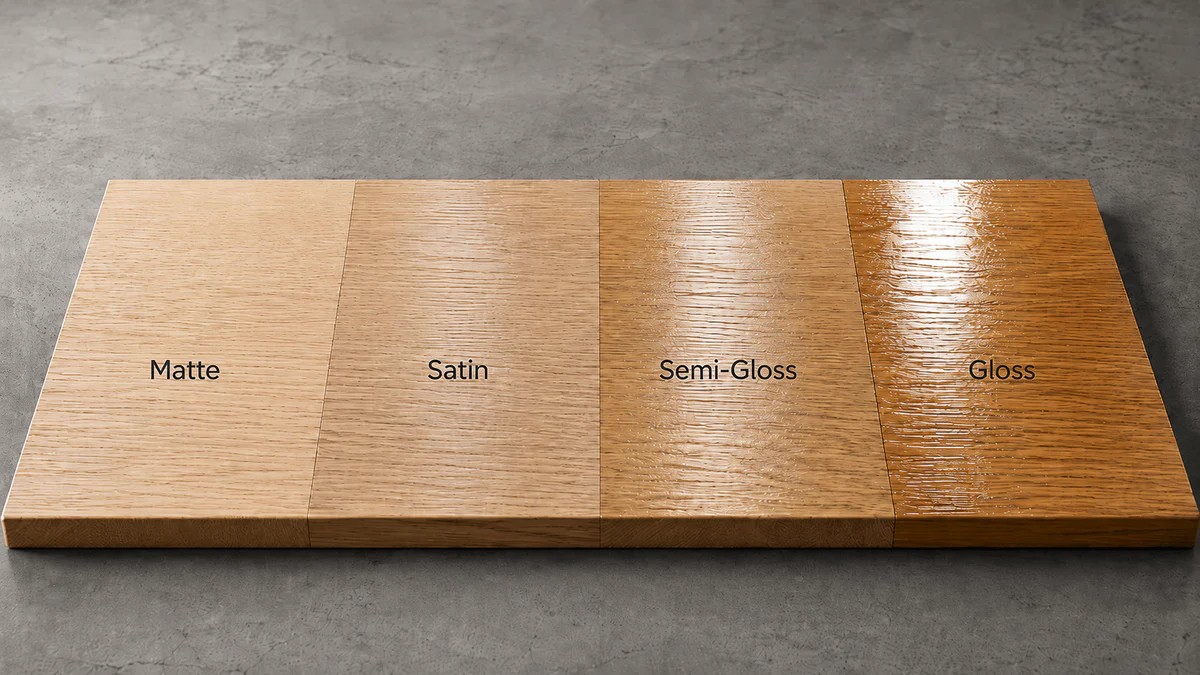
The mechanism is simple. A flattening agent is added to the coating formulation to scatter reflected light. More flattening agent, less specular reflection, lower sheen. That is the entire difference between a matte and a gloss product from the same manufacturer — not a different resin, not a different durability class, just how the surface handles light.
What changes is what you notice. A gloss floor reflects the room and draws attention to itself. A matte floor recedes and lets the timber read as material rather than as surface. Neither is correct in the abstract; it depends on the room, the light, the timber and how the floor is going to be used.
AT A GLANCE
| Turn-key cost band | No cost difference between sheen levels within the same coating system |
|---|---|
| Material cost | Identical across sheens — the difference is a flattening agent in the formulation |
| VOC level | Determined by the coating system, not the sheen |
| Odour | Determined by the coating system, not the sheen |
| Re-entry | Determined by the coating system, not the sheen |
| Full cure | Determined by the coating system, not the sheen |
| UV behaviour | Determined by the coating system, not the sheen |
| Abrasion resistance | Marginally higher on gloss; the difference is small and rarely decisive |
| Sheen options | Ultra-matte, matte, satin, semi-gloss, gloss |
| Maintenance cycle | Matte and ultra-matte show marks sooner and benefit from more frequent attention |
HOW IT WORKS
Gloss reflects light specularly, which means it acts partly as a mirror. In a room with strong directional light — the large north and west-facing glazing typical of Peninsula homes — that produces genuine glare across the middle of the day, and it amplifies every reflection off the water.
It also shows everything. Any residual scratching from a skipped grit, any unevenness left by a badly blended edge band, any dust nib that landed in the wet coat, any remnant of a cupped board that was not fully levelled — gloss finds all of it and holds it up to the light. On an old floor with genuine history in it, that is rarely flattering.
Matte and ultra-matte scatter reflection and hide those things. The cost is that they show marks differently: footprints, pet nose prints and the faint sheen of a worn traffic lane become visible on a matte floor sooner than on a satin one, because the eye reads any localised increase in gloss as a mark. On a busy hallway that is a real consideration.
Satin sits between the two and it is the sheen we recommend most often for exactly that reason. Enough scatter to be forgiving of the floor, enough uniformity not to telegraph every footprint, and it reads well against both period detailing and contemporary joinery.
HOW IT PERFORMS
Abrasion resistance is marginally higher on gloss within the same product line, because flattening agents slightly soften the film. The difference is small and it is almost never the deciding factor — a commercial-grade 2K waterborne in matte still comfortably outperforms a domestic single-pack in gloss.
Slip resistance is where sheen becomes a safety question rather than an aesthetic one. Gloss on a staircase is genuinely less safe than satin or matte, particularly in socks on a timber nosing, and gloss at a retail or hospitality entry that gets wet in winter is a liability consideration. We recommend satin as a minimum on any staircase and in any public area, with an anti-slip additive in the topcoat where the exposure warrants it.
Maintenance behaviour differs more than durability does. A matte floor benefits from more frequent attention because localised wear reads as a shiny patch. A satin floor ages more evenly. A gloss floor holds its appearance well until it starts to fail, at which point the deterioration is very visible.
The one thing sheen does not change is any of the properties that actually come from the coating system — VOC content, re-entry time, cure schedule, UV behaviour. Those belong to the chemistry.
ON THE PENINSULA
Ultra-matte is the fashionable choice across Sorrento, Portsea, Blairgowrie and the McCrae ridge, and it genuinely suits the coastal aesthetic and the pale pigmented finishes those houses tend to specify. It also marks more readily and needs more attention, which is worth knowing before committing on a heavily used floor.
Satin is what most owners land on once they have seen samples in the actual room at the actual time of day, and it is our default recommendation across Frankston, Karingal, Langwarrin, Seaford and the family housing generally. It is forgiving of an older floor and it does not telegraph every footprint through a busy hallway.
Gloss has narrowed to a specific set of cases: period homes where a high-shine floor is historically appropriate, and some commercial settings where the reflectivity is deliberate. In a heavily glazed Mount Eliza or Mount Martha living room facing the bay, gloss produces glare that most households find uncomfortable within a week.
We ask to see the room in afternoon light before finalising a sheen on any bay or Bass Strait-facing house. A sample viewed under overcast conditions tells you very little about how the same finish reads at four in the afternoon with sun coming off the water, and fifteen minutes at the right time of day prevents a decision that is expensive to reverse.
COMMON QUESTIONS
Does a matte finish wear out faster than gloss?
Marginally, within the same product line, because flattening agents slightly soften the film. The difference is small and rarely decisive — a commercial-grade 2K waterborne in matte comfortably outperforms a domestic single-pack in gloss. Choose the sheen for how the room should look and the chemistry for how the floor should perform.
Which sheen hides scratches best?
Matte and ultra-matte hide scratching and unevenness best, because they scatter reflected light rather than mirroring the room. The trade-off is that they show footprints, pet marks and worn traffic lanes sooner, since the eye reads any localised increase in gloss as a mark. Satin is the compromise most people prefer.
Is a gloss floor slippery?
On a staircase, meaningfully so — particularly in socks on a timber nosing. We recommend satin as a minimum on any staircase and in any public area, with an anti-slip additive in the topcoat where the exposure warrants it. Sheen on a staircase is a safety decision, not just an aesthetic one.
Does sheen cost extra?
No. Within the same coating system the price is identical across sheen levels — the only difference is a flattening agent in the formulation. Anyone charging a premium for matte is charging for fashion rather than for materials.
Can I change my mind after seeing the sealer coat?
Up to a point, and it is worth raising early. The sealer is generally sheen-neutral, so the decision can hold until the topcoats. Once a topcoat is down, changing sheen means screening the floor back and recoating, which is not a disaster but is not free either.
What do you recommend for a family home?
Satin, in nearly every case. It is forgiving of an older floor, it does not telegraph every footprint through a hallway, it ages evenly, and it reads well against both period skirtings and contemporary joinery. Matte if you want the timber to recede entirely and you accept more frequent attention.