Floor Sanding Balnarring
Balnarring · 3926 · Mornington Peninsula
Salt air on the Balnarring shore behaves differently to the salt air on the front-beach Peninsula suburbs. The bay side is calmer, the exposure less direct, and the finish wear rate on interior floors correspondingly gentler. That said, Balnarring is still coastal — the timber floors we work on here need to be treated as coastal properties, not as inland Peninsula work, and the finish specification reflects that.
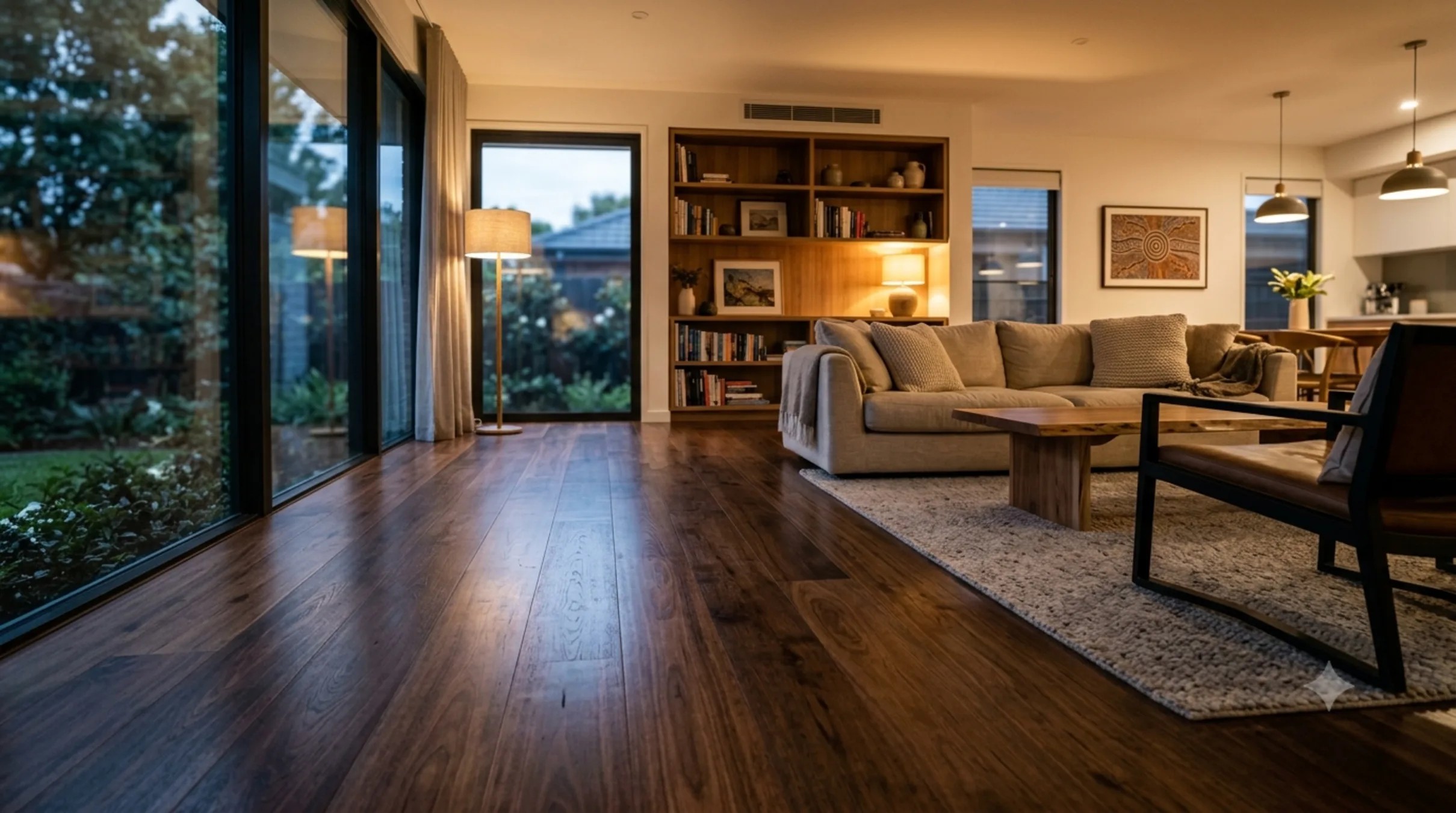
Balnarring’s residential stock spans a wide era. Older weatherboard cottages from the 1960s–70s typically have Blackbutt or Tasmanian Oak on standard subfloor systems. Postwar brick homes in the more suburban parts of Balnarring often had carpet installed over the original hardwood in the 1970s and 80s — we still find these floors intact under the carpet, worth revealing. Contemporary rural-residential and coastal-edge builds favour Blackbutt, Spotted Gum or engineered oak.
The bay-side coastal environment is milder than the ocean-facing side but still delivers salt-influenced air, humidity swings between winter and summer, and the specific stress on floor coatings that comes from doors and windows being opened frequently in warm weather. The good news: Balnarring’s environment is very forgiving of standard water-based coating systems. The bad news: any oil-based coating on a Balnarring floor will show sun-driven amber shift faster than the same coating would in a Frankston home.
Balnarring’s seasonal-use pattern shapes our work. Owner-occupiers who live here year-round get the same treatment as any other Peninsula house — an honest sand-and-polish on a normal schedule. Weekenders and short-stay properties need us to think about between-guest turnaround, which means water-based coating systems with faster cure times, and often a follow-up recoat schedule so the finish never gets bad enough to need a full sand. Between-tenancy work — sanding while a house is between tenants — is doable if we are given a week’s window; we bring extra hands to compress the timeline.
Typical Balnarring houses are 130–180m². Standard sand-and-polish costs $5,000–$7,500. Restorations of older hardwood floors uncovered from under carpet run $6,000–$9,000. Larger rural-residential properties and coastal-edge builds sit at $7,500–$12,000. Balnarring’s mix of house types means our quote range is wider here than in more architecturally uniform suburbs.
Allow 5–8 working days for standard scopes. 7–10 days for restorations that involve carpet removal, reveal assessment, board repair and full sand. Balnarring clients often use their houses seasonally — we schedule around that carefully, particularly for weekend and holiday letting patterns.
Water-based polyurethane satin is the sensible default for Balnarring. High-spec versions for coastal-edge houses; standard for inland Balnarring. Matte water-based works well for holiday-let properties where sand-tracking and dropped-glass marks are ongoing realities. Lime wash occasionally requested and works well on the wider-board oak floors of newer builds. Oil-based finishes we do not recommend for coastal Balnarring positions — the sun and salt combine to shorten their appearance life.
The Balnarring client demographic skews toward retirees and downsizers — people moving from larger inner-Peninsula properties into more manageable coastal-adjacent homes. This shapes what they want from a floor: durable, low-maintenance, aesthetically settled rather than fashion-following. We recommend finish systems that will hold up for 15–20 years without demanding regular attention, and we prefer satin water-based over trend-driven matte or lime wash for these clients.
For older brick veneer homes where we have lifted carpet and revealed hardwood underneath, the underlying floors are often in surprisingly good condition. Decades of carpet has protected them from UV, foot wear, and coating breakdown. The main issue is usually gripper-strip nail damage around the perimeter — easily filled and blended. Reveal-and-restore projects in Balnarring routinely uncover floors that look 20 years younger than they are.
Balnarring’s mix of long-term residents and downsizer newcomers has produced a healthy local trades network — we routinely coordinate with painters, plasterers and cabinet-makers on multi-trade projects. Where the sanding is one part of a larger renovation, we schedule our stage carefully relative to the other trades. Painters generally finish before we sand, cabinetry generally installs after the floor is cured. Getting the sequence wrong is expensive to fix.
REPLACING THE FLOOR IN BALNARRING INSTEAD?
If the existing boards are past saving, or you are after something different underfoot, we also supply and install timber, engineered and hybrid flooring here.