Floor Sanding Somers
Somers · 3927 · Mornington Peninsula
Somers cottages have sat under the same finish for decades, in most cases. This is a village of quiet 1960s beach houses on tree-lined streets, with a rate of turnover much lower than surrounding suburbs — and correspondingly, when we are called to sand a Somers floor, the client has typically owned that floor for 20 years or more and is only refreshing now because it is genuinely due, not because they are preparing to sell.
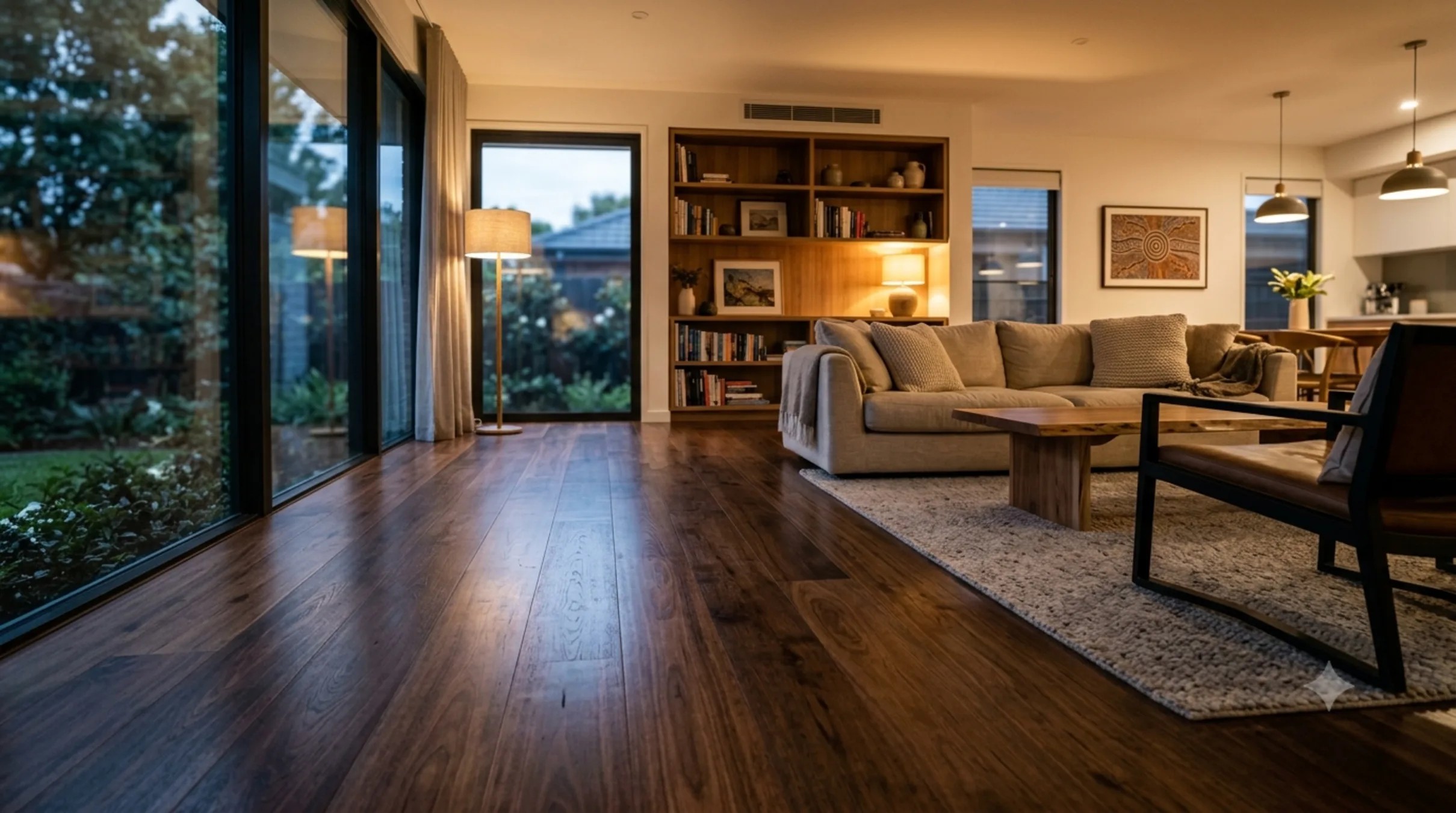
Original Somers stock is Blackbutt or Tasmanian Oak, laid conventionally when the cottages were built in the 1960s. Many still show only the original coating — perhaps recoated once decades ago — which means the sand-and-polish uncovers timber in remarkable condition. Board widths are standard 80–100mm. Newer builds and rebuilds around Somers use wider-plank engineered oak or Blackbutt.
Somers faces Westernport Bay across the mangroves — a completely different coastal environment to the Bass Strait side of the Peninsula. Salt exposure is present but milder, humidity is higher (the mangroves keep morning air heavier), and the light quality favours softer finishes over showy high-gloss. Interior floors handle this environment easily.
Somers’ character — a settled residential village with strong community ties centred on the Yacht Club — shapes what people want from their floors. The brief is rarely “make it look new” and more often “make it look properly cared for”. That translates to finish choices that age well rather than finish choices that photograph well on day one. We factor this into our recommendations: choose a finish for the next 15–20 years, not for the day of the photoshoot.
Somers cottages are typically 110–160m² — smaller than most Peninsula homes. Sand-and-polish costs run $4,000–$6,500. Simple refinish jobs on floors that do not need repair work sit at the lower end. Where the original 1960s coating needs heavier removal, add $500–$800. Modern rebuilds with more square metreage sit at $6,500–$10,000.
Allow 4–6 working days for standard cottage scopes. Somers is a great suburb for a tight timeline — small floor areas, straightforward subfloor systems, minimal repair work. We can turn around a complete sand-and-polish for a 130m² cottage in under a week including drying time.
Because Somers floors tend to sit under long-term ownership, refresh cycles here are longer than the Peninsula average — a properly done water-based finish in a Somers cottage will hold up for 15–18 years before another full sand becomes necessary. That makes the initial investment more worthwhile: it is a one-in-two-decades decision. For that reason we recommend the higher-quality water-based systems here even where a client is initially thinking of a budget option. Hardwax oil is worth considering for owner-occupied cottages where the client wants a longer-term refreshable finish.
The Somers Yacht Club is genuinely central to the community here, and much of our Somers work comes through referrals from club members who have seen a friend’s floor and wanted the same. Word-of-mouth referrals mean we arrive at a Somers quote with the client already knowing what we do — the conversation is about details, not about establishing credibility. That trust shapes how we work: we do not over-explain, we do not upsell, we do the work and let the outcome speak.
Because Somers cottages have often been in single-family ownership for decades, we regularly encounter floors that have never been sanded — only re-coated once or twice over 40–50 years. The underlying timber is essentially virgin condition, and the sanding process reveals colours and figure that the owner has never seen. It is genuinely satisfying work; the reveal moment when we lift the sander for the first time and expose the fresh timber is a highlight of many Somers jobs.
When quoting a Somers cottage that has been in the family for decades, we always ask about the timber’s history — has it been sanded before, how many times, when was the last coat applied. That history informs the sanding depth we plan and the coating spec we recommend. In cases where the floor has been sanded multiple times previously and is genuinely close to the end of its sandable life, we recommend a light intermediate approach rather than a full sand, preserving what remains for the next generation.
REPLACING THE FLOOR IN SOMERS INSTEAD?
If the existing boards are past saving, or you are after something different underfoot, we also supply and install timber, engineered and hybrid flooring here.