Lime Wash & Whitewash Floors
Priced turn-key from $45–$120/m² across the Peninsula, depending on suburb and job size
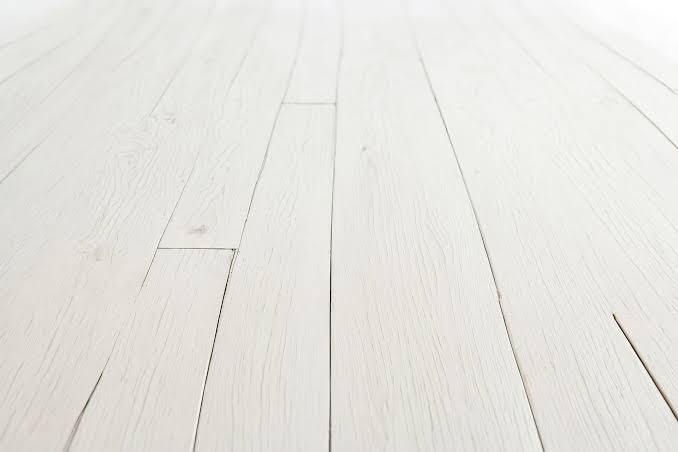
A lime wash is a pigment, not a coating, and understanding that distinction explains most of what makes this service different. White titanium dioxide pigment is worked into the open grain of freshly sanded timber, sitting in the wood rather than on it, and a clear protective topcoat goes over the top to lock it in. The result is the pale, chalky, Scandinavian-adjacent floor that has become close to a default across coastal Peninsula homes and holiday properties.
Because the pigment goes into the grain, everything depends on how uniformly the grain has been opened. That is why lime wash requires a precise multi-stage sanding sequence finishing at 120 grit — not coarser, which leaves the surface too open and takes pigment too heavily, and not finer, which burnishes the timber closed and produces patchy absorption. A floor sanded to inconsistent grit will take the wash unevenly, and that cannot be corrected afterwards without cutting back and starting again.
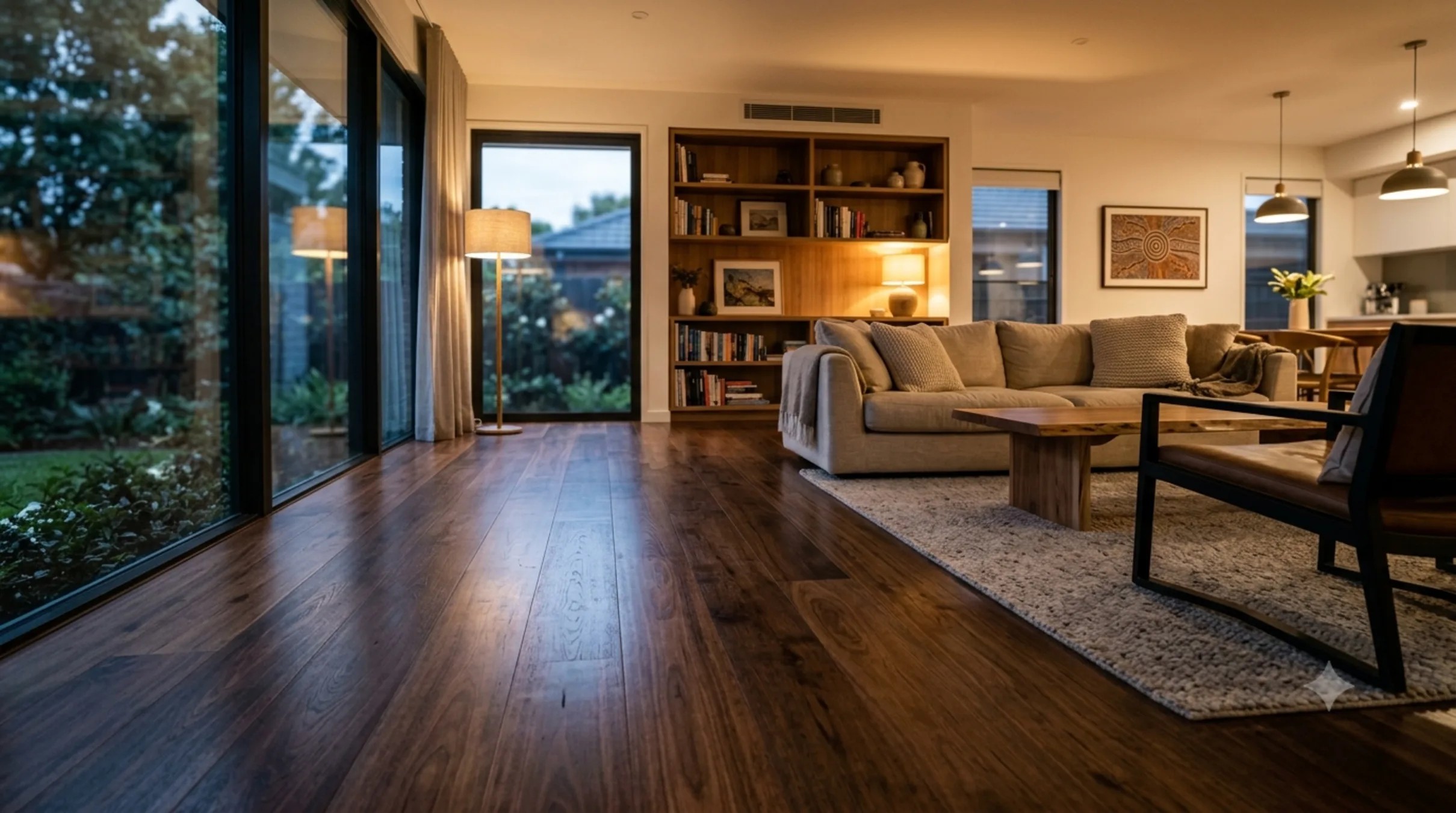
Species determines whether the technique will work at all. Lime wash performs well on Tasmanian Oak, European oak and some Blackbutt — timbers with an open, relatively neutral grain that accepts pigment cleanly. It performs poorly on dense red hardwoods such as Jarrah, where the natural colour fights the white pigment and the result reads muddy or pink rather than pale. We confirm species at the first visit and will tell you plainly where the look you want is not achievable on the floor you have.
The application itself has to run across an entire continuous floor area in one session. There is no stopping halfway through a room and resuming tomorrow — a lap line in a pigmented finish is permanent and visible, because the pigment loading differs either side of it. On a large open-plan floor that means planning the working sequence and the wet edge carefully before starting, and having enough hands on site to complete the area.
Sample panels are genuinely necessary rather than a formality. Pigment intensity reads completely differently on Baltic Pine than on European oak, and completely differently again under afternoon coastal light than under a showroom fluorescent. We prepare panels on the actual floor, at the intensity being considered, and we ask to see them in the room at the time of day it gets used most. Reversing a whole-floor pigment decision is expensive.
The topcoat over a lime wash must be non-yellowing, and this is where cheap specifications fail. A solvent-based polyurethane over a white pigment will amber, and an ambering clear coat over a deliberately pale floor turns it progressively cream, then yellow, then orange — undoing the entire point of the exercise within a few years. Only a waterborne system holds the tone. On the heavily glazed coastal homes where lime wash is most requested, that is not a marginal consideration.
Maintenance expectations should be set honestly at the outset. A pigmented finish shows wear differently to a clear one, and where the topcoat wears through in a traffic lane the pigment underneath goes with it. That means a lime wash floor generally needs attention sooner than a clear two-pack would — a maintenance recoat every five to eight years in a busy household rather than ten to fifteen. On a holiday let with guest turnover, sooner again.
Nordic tints and white-tinted finishes are the related family and the choice between them is about how much of the timber you want to see. A lime wash leaves the grain fully legible with the pigment sitting in it. A Nordic tint or white stain lays more colour over the surface and reads more uniform. Wire-brushing before either will deepen the grain texture and increase pigment take-up in the softer growth rings, which produces the pronounced coastal look at the far end of the range.
OUR PROCESS
- 01 Species confirmation and suitability assessment — the technique works on Tasmanian Oak, European oak and some Blackbutt, and poorly on dense red hardwoods.
- 02 Standard preparation: tack strips and staples out, nails punched, adhesive removed, subfloor moisture confirmed below 14 to 16 per cent.
- 03 Coarse and medium cutting to remove all existing coating and level the floor, because pigment onto residual old finish will not take.
- 04 Precise multi-stage fine sanding finishing at 120 grit, consistent across the entire floor area, for uniform pigment absorption.
- 05 Optional wire-brushing where a pronounced grain texture is wanted, increasing pigment take-up in the softer growth rings.
- 06 Sample panels prepared on the actual floor at the intensity under consideration, viewed in the room in natural afternoon light.
- 07 Full vacuum and tack-off — any dust remaining will be locked under the pigment permanently.
- 08 Lime wash or tint applied across the whole continuous area in one uninterrupted session, with the wet edge planned before starting.
- 09 Non-yellowing waterborne sealer over the cured pigment, then a 150-grit screen and vacuum.
- 10 Two waterborne topcoats in the specified sheen, with an additional coat through traffic lanes where the property warrants it.
WHAT’S INCLUDED
- Lime wash and Nordic tint systems run $55 to $110/m² turn-key, depending on pigment coverage, number of passes and species.
- As an application over a base sand-and-polish, the wash itself is $12 to $25/m² on top of the band rate.
- Multi-stage sanding to 120 grit included — it is a requirement of the technique, not an upgrade.
- Sample panels prepared on your actual floor and viewed in your actual light before any whole-floor commitment.
- Non-yellowing waterborne topcoat as standard, because a solvent-based clear over white pigment ambers and ruins the look.
- Wire-brushing available where a pronounced grain texture is wanted.
- Honest maintenance expectation: five to eight years in a busy household, sooner on a holiday let.
- A plain answer where the species will not take the look you are after.
COMMON QUESTIONS
Will lime wash work on my floor?
It depends on species. Tasmanian Oak, European oak and some Blackbutt take pigment cleanly and give the pale result people are after. Dense red hardwoods such as Jarrah do not — the natural colour fights the white pigment and the result reads muddy or pink. We confirm species at the first visit and will say plainly if the look is not achievable on your floor.
What does lime wash cost?
$55 to $110 per square metre turn-key for the complete system, depending on pigment coverage, number of passes and species. Where it is being applied over a base sand-and-polish, the wash itself is $12 to $25 per square metre on top of the band rate. The variation is real — a heavily pigmented multi-pass finish on a difficult species is at the top of that range.
Why does the sanding cost more for a lime wash?
Because pigment absorption depends entirely on how uniformly the grain has been opened, so the floor needs a precise multi-stage sequence finishing at exactly 120 grit across the whole area. Coarser takes pigment too heavily, finer burnishes the timber closed and produces patchy take-up. There is no correcting an uneven wash afterwards without cutting back and starting again.
Will it go yellow over time?
Not if the topcoat is right. A solvent-based polyurethane over white pigment will amber and turn the floor progressively cream, then yellow — which defeats the entire purpose. A non-yellowing waterborne system holds the tone indefinitely. On the heavily glazed coastal homes where lime wash is most requested, this is the single most important specification decision.
Can you do half the floor now and half later?
Not within a continuous area. A lime wash has to be applied across a whole floor space in one uninterrupted session, because a lap line in a pigmented finish is permanent and visible — the pigment loading differs either side of it. Separate rooms can be staged. An open-plan living area cannot be split.
How pale can it go?
Further than most people expect, and the honest answer is that you should see it rather than be told it. We prepare sample panels on your actual floor at the intensities under consideration and ask you to look at them in the room in afternoon light. Pigment reads completely differently on different species and at different times of day.
How does it wear compared to a clear finish?
It needs attention sooner. Where the topcoat wears through in a traffic lane, the pigment underneath goes with it, so the wear shows more than it would on a clear-coated floor. Expect a maintenance recoat every five to eight years in a busy household, sooner on a holiday let with guest turnover. That is worth knowing before you commit rather than after.
What is the difference between lime wash, Nordic tint and white stain?
How much of the timber you still see. A lime wash leaves the grain fully legible with pigment sitting in it. A Nordic tint or white stain lays more colour across the surface and reads more uniform. Wire-brushing before either deepens the grain texture and increases pigment take-up in the softer growth rings, producing the most pronounced coastal look of the three.