Floor Sanding Red Hill
Red Hill · 3937 · Mornington Peninsula
Cool-climate humidity sits in the Red Hill hollows longer than anywhere else on the Peninsula. Winter mist does not clear from the paddocks until midmorning, summer shade under the eucalypt canopy runs several degrees cooler than the Frankston flats, and both of those facts matter for the timber floors we sand here. Every board in a Red Hill house has moved under years of subfloor humidity — and that is the condition we quote and coat for.
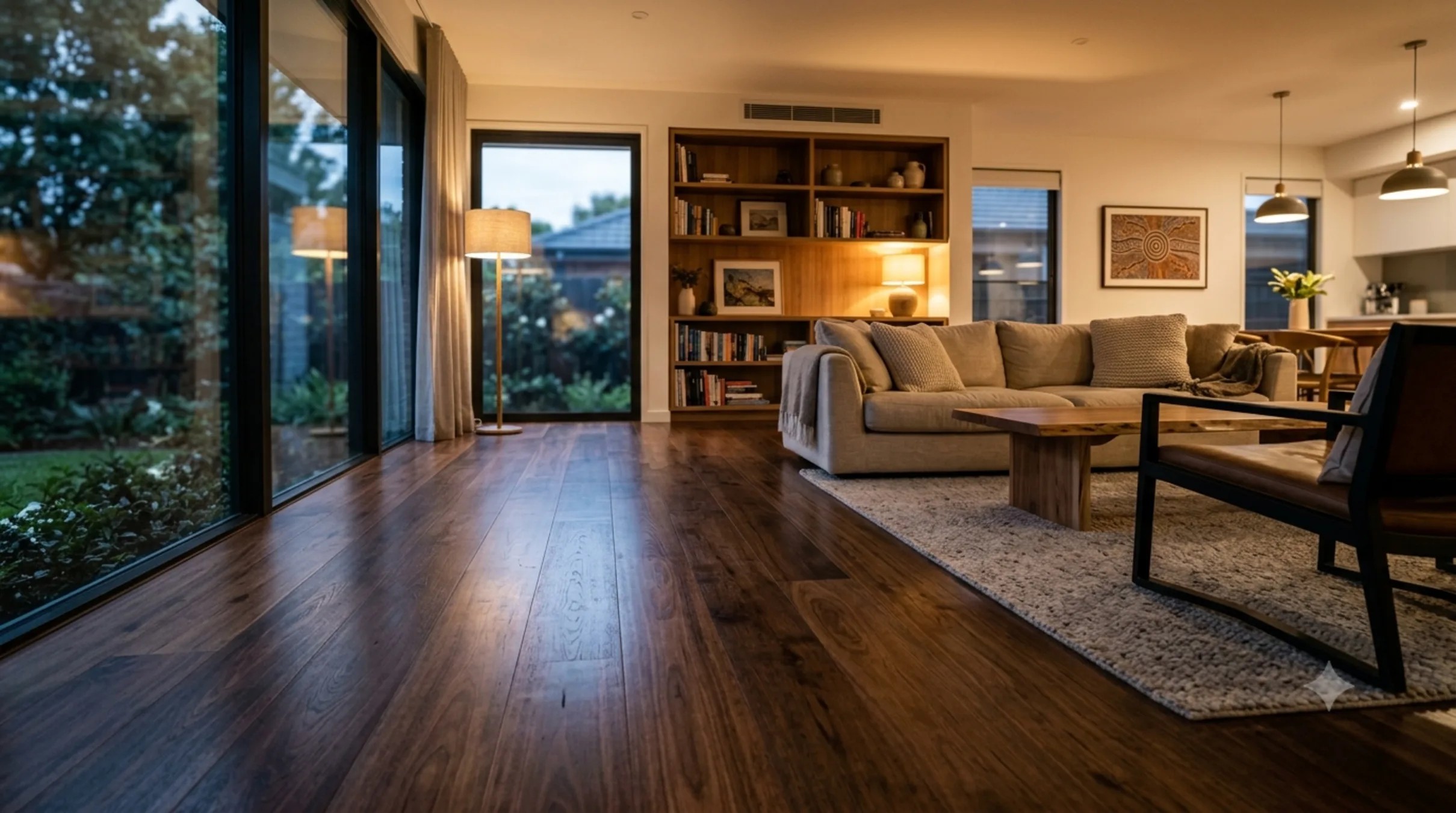
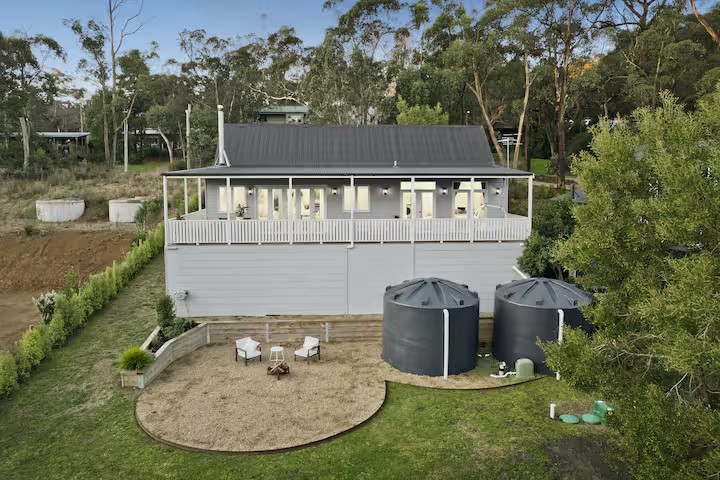
The Red Hill housing stock splits three ways. Weatherboard hobby-farm cottages from the 1950s–70s typically have Baltic Pine, sometimes Cypress Pine, laid over sparsely-battened subfloors. These floors are almost always worth restoring — original Baltic pine on acreage properties around Red Hill has a patina you simply cannot buy. Later brick-and-tile family homes on smaller subdivisions carry standard Blackbutt or Tasmanian Oak, often still under carpet installed in the 1970s or 80s. Contemporary architect-designed rural retreats — increasingly common through the winery belt — usually have engineered European oak, or wide-board hardwood laid over a plywood substrate.
The bushland setting is the practical problem. Subfloor ventilation in older Red Hill cottages is often compromised by decades of leaf litter under the house and pier settlements that have blocked vents. The result is board cupping — the underside of the timber picks up moisture the top side does not, and the boards curl slightly across their width. We sand cupped boards flat but the underlying cause needs addressing too, otherwise the movement returns. Where the subfloor needs work, we flag it in the quote and refer to a trades partner rather than pretending we can solve it with sanding alone.
A typical Red Hill three-bedroom weatherboard cottage with 140m² of exposed timber sits in the $5,500–$7,500 range for a standard sand-and-polish with a water-based coating system. Larger acreage properties — the 200–260m² architect-designed rural homes on the ridge — head into $8,000–$12,000 territory, especially if any board repairs are needed. Baltic Pine restorations on the older cottages sit at the top of that range because the softer timber demands slower, more careful sanding and often extra board work around the knots.
Allow 5–7 days on-site for the typical Red Hill house. Water-based coatings let us stage that tighter than oil-based — we can be in and out in a working week for most jobs. Larger acreage homes stretch to 7–9 days including drying time between the sealer and each topcoat. If the subfloor needs any prep before sanding, that adds a day.
For Red Hill homes we default to a two-part water-based polyurethane, satin sheen. It handles the humidity swings between damp winters and dry summers better than oil-based, and it does not add the amber tone that a lot of coastal-modern Peninsula interiors are trying to avoid. For period Baltic Pine cottages where you want the traditional warm-honey look, a hardwax oil finish is worth considering — softer sheen, more character, and easy to spot-refresh in years to come without a full sand.
One thing worth understanding about Red Hill work: the drive from Frankston adds a solid 30 minutes to our day at each end, which we factor into every quote as a small on-site allowance. This is not padding — it is real time we cannot shortchange without cutting corners on the actual sanding. Clients who ask about it appreciate the honesty; those who do not tend to shop around for cheaper quotes that then run over budget when the sander realises the drive is real.
For Red Hill floors specifically, we recommend an intermediate maintenance recoat every 5–7 years rather than waiting 15–20 years for a full re-sand. The bushland setting and cool humidity mean coatings lose their edge earlier than in drier suburbs, and a top-up coat costs a small fraction of a full sand. Booking it in with your usual house-maintenance calendar keeps the floor looking right for decades without another major sanding job.
For clients moving into a Red Hill property mid-project — a common scenario when buyers arrange sanding as part of settlement — we co-ordinate with removalists and other trades to keep the floor pristine during the transition. Furniture goes into one wing while another is sanded; the sequence rotates through the house. We plan these jobs on longer timelines than a standard sand-and-polish, but the finished floor arrives in a state that makes the extra planning worthwhile.
REPLACING THE FLOOR IN RED HILL INSTEAD?
If the existing boards are past saving, or you are after something different underfoot, we also supply and install timber, engineered and hybrid flooring here.