Hardwax Oil
$55 – $110/m² turn-key, in the same band as pigmented systems
Hardwax oil is the one finish on this list that does not form a film. Natural plant oils penetrate into the timber and carry protective waxes with them, curing within the wood rather than sitting on top of it. That single structural difference drives everything else about how the finish looks, wears and gets maintained.
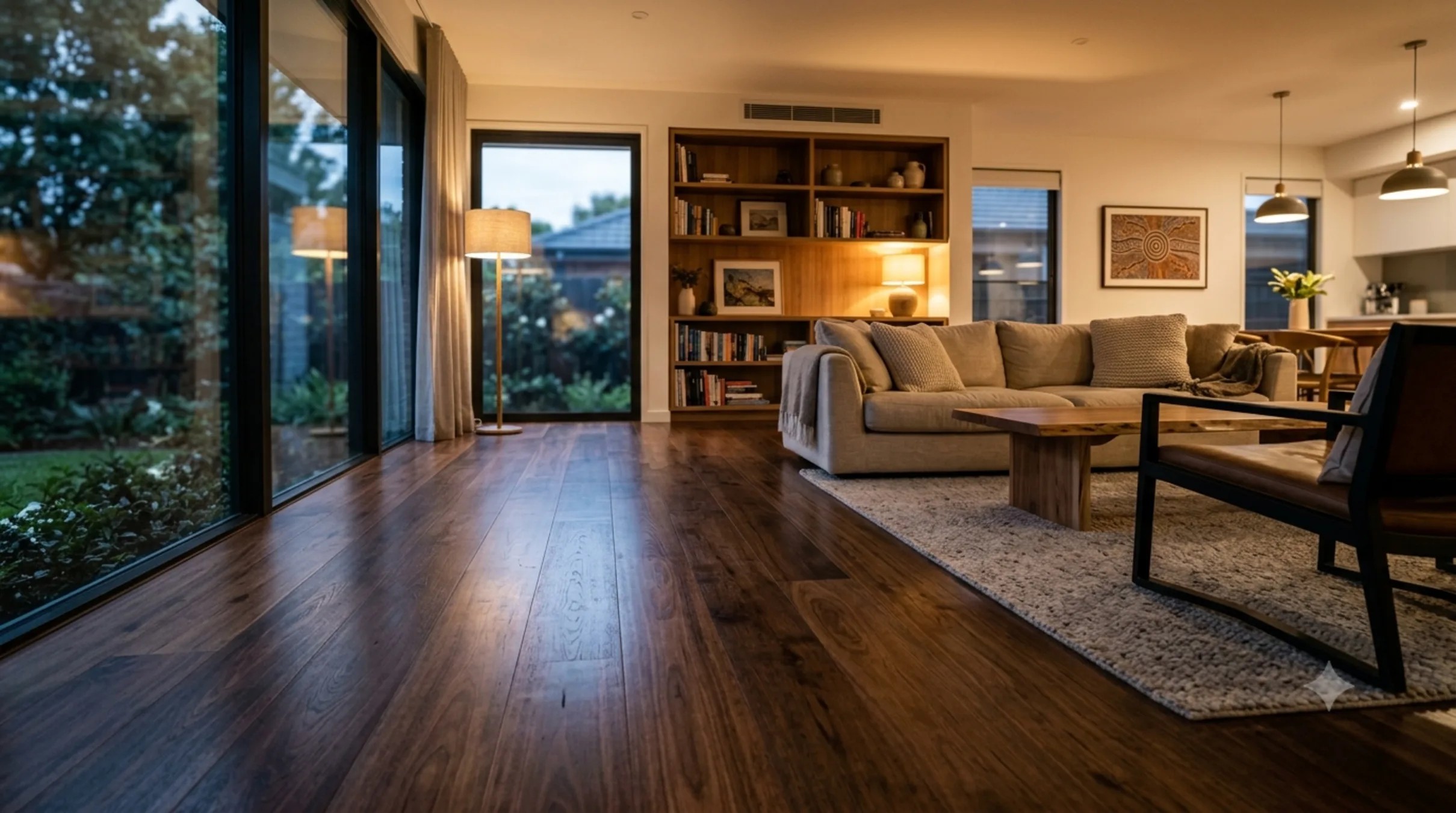
The look is the first reason people choose it. A hardwax oil floor reads as timber rather than as coated timber — a soft, natural, low sheen with the grain texture still perceptible underfoot. On a period cottage, a rural farmhouse or a floor with genuine character, it frequently suits the building better than any film finish does.
The second reason is more practical and less often understood. Because the finish is in the timber rather than over it, a worn area can be cleaned and re-oiled locally and blended in. No other finish in this cluster can be spot-repaired. On a floor that wears unevenly — a rural entry, a hallway, a kitchen path — that maintenance model fits the wear pattern far better than a film finish does.
AT A GLANCE
| Turn-key cost band | $55 – $110/m² turn-key, in the same band as pigmented systems |
|---|---|
| Material cost | Included in the turn-key band |
| VOC level | Very low |
| Odour | Minimal, with a faint natural oil scent through the cure |
| Re-entry | 24 – 48 hours depending on the product |
| Full cure | 7 – 10 days to full hardness; treat gently in the first fortnight |
| UV behaviour | Good — minimal ambering, though the timber itself continues to warm naturally |
| Abrasion resistance | Moderate to high, and highly dependent on maintenance |
| Sheen options | Natural matte, low sheen |
| Maintenance cycle | Spot-refresh as needed; full maintenance coat every 3 – 5 years in traffic areas |
HOW IT WORKS
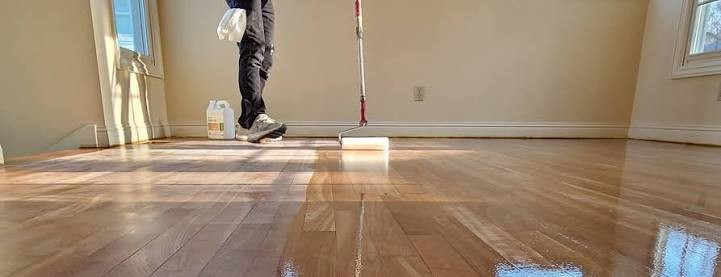
Application is a working process rather than a coating process. The oil is spread, worked into the grain, given time to penetrate, and then the excess is removed from the surface before it sets. Leaving excess oil sitting on the timber produces a sticky, patchy surface that never fully hardens, which is the most common failure mode on a poorly executed job.
Sanding preparation matters in a different way to a film finish. The timber has to be opened enough to accept the oil but not left so coarse that it drinks unevenly, and the final grit is generally slightly finer than for a polyurethane. Consistency across field and perimeter matters for the same reason it matters under pigment — uneven absorption shows.
Cure is slower than most people expect. The oils cure by oxidation rather than by evaporation, which means the finish continues to harden for a week or more after the last coat. Light foot traffic is generally fine at 24 to 48 hours, but the floor should be treated gently for the first fortnight and rugs kept off until it has fully hardened.
Maintenance is part of the specification rather than an afterthought. A hardwax oil floor is periodically cleaned and refreshed with a maintenance oil, and in traffic areas that means every three to five years. Done on schedule, the floor effectively never needs another full sand.
HOW IT PERFORMS
Abrasion resistance is moderate to high and, unusually, is far more dependent on maintenance than on the initial specification. A well-maintained hardwax oil floor outperforms a neglected polyurethane one. A neglected hardwax oil floor wears through in traffic lanes faster than either.
Water resistance is the genuine weakness. A film finish keeps water on the surface; an oil finish relies on the wax component to shed it, and standing water left long enough will penetrate and mark the timber. In a kitchen, a laundry or an entry that takes wet shoes in winter, that is a real consideration and worth weighing honestly.
Against that, damage is repairable in a way it never is on a film finish. A scratch through a polyurethane floor is permanent until the whole floor is recut. A scratch in a hardwax oil floor is sanded locally, re-oiled and blended, and disappears. Over twenty years that difference compounds substantially in the oil finish’s favour.
VOC content is very low and odour is minimal, with a faint natural oil scent through the cure. Re-entry at 24 to 48 hours is comparable to a waterborne system.
ON THE PENINSULA
We recommend hardwax oil most often on period Baltic Pine floors — the 1900s cottages through the old Mornington town centre, the heritage stock in Sorrento and Flinders, and the rural farmhouses through Red Hill, Main Ridge and Merricks. On timber with genuine patina, an oil finish holds the ambered honey tone without pushing it further and without laying a plastic-looking film over a hundred-year-old board.
It also suits the rural-residential properties through Pearcedale, Baxter and Somerville for a purely practical reason. Those houses take grit tracked in from unsealed driveways, and the wear concentrates in specific paths rather than spreading evenly. A finish that can be refreshed locally, in the zone that actually wears, fits that pattern better than one that requires the whole floor to be recoated.
Where we tend not to recommend it is on holiday lets and short-stay rentals. Guest turnover is harder on a floor than a family is, spills go unattended longer, and the maintenance discipline that makes an oil finish work is difficult to maintain across a managed property.
COMMON QUESTIONS
Can a hardwax oil floor really be spot-repaired?
Yes, and it is the main practical argument for the finish. Because the oil is in the timber rather than forming a film over it, a worn or scratched area can be sanded locally, re-oiled and blended so the repair disappears. No film finish can do this — a scratch through polyurethane is permanent until the whole floor is recut.
Is it durable enough for a family home?
Yes, provided the maintenance happens. Abrasion resistance is moderate to high and depends far more on upkeep than on the initial application. A maintained oil floor outperforms a neglected polyurethane one. If nobody will do a maintenance coat every three to five years in the traffic areas, a 2K waterborne is the safer specification.
How does it handle water?
Less well than a film finish, and this is its genuine weakness. The wax component sheds water but standing water left long enough will penetrate and mark the timber. In a kitchen, laundry or an entry that takes wet shoes through winter, that is worth weighing honestly before committing.
What does it cost?
$55 to $110/m² turn-key, which puts it in the same band as lime wash and Nordic tint systems. The range reflects the number of coats, the species and how much the timber drinks. It is more than a standard waterborne polyurethane and the maintenance model is different, so the whole-of-life comparison is not just the upfront number.
How long before we can use the room?
Light foot traffic at 24 to 48 hours. The oils cure by oxidation rather than evaporation, so the finish keeps hardening for a week or more after the last coat — treat the floor gently for the first fortnight and keep rugs off until it has fully hardened.
Will it darken the timber?
Slightly, and generally in a way people like. Oil wets the grain and deepens the natural colour a little, much as a damp cloth does on bare timber. It does not add the amber shift that a solvent-based polyurethane does — the timber continues to warm naturally over the years, but the finish itself is not driving it.