Floor Sanding Somerville
Somerville · 3912 · Mornington Peninsula
Orchard land turned residential is the short history of Somerville, and it shows up in the floors more than you would expect. The 1970s-onward family homes and the newer estates that followed were built on what had been fruit-growing country, which means level ground, deep topsoil and — relevantly for us — subfloor conditions that hold moisture longer than the sandier ground closer to the coast. It is not a Seaford-scale problem, but it is worth a meter reading before anyone starts sanding.
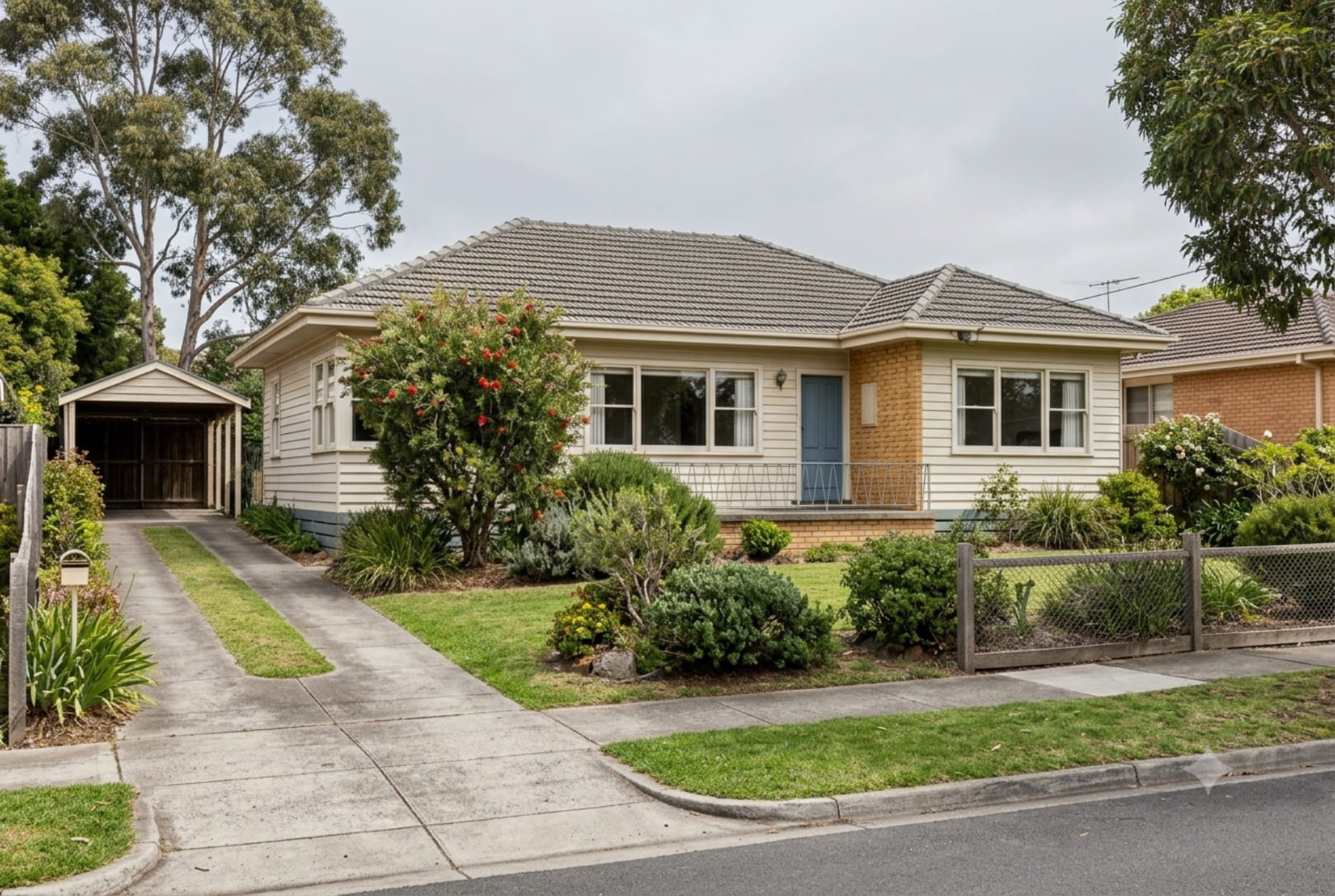
The housing stock divides cleanly by era. The 1970s and 80s family homes carry native hardwood strip flooring, generally Tasmanian Oak or Victorian Ash at 65 to 85 millimetres wide, secret-nailed over conventional joists and almost universally installed under carpet. The newer estate housing runs to engineered overlay and floating product over slab. The first group is straightforward restoration work. The second needs its wear layer measured before anyone commits to a scope.
Somerville sits in the Frankston pricing band despite being geographically closer to the Peninsula proper, and that is a deliberate call about the stock rather than the postcode. These are rural-residential family homes with conventional hardwood floors and conventional preparation requirements — the same job as a Langwarrin or a Pearcedale house. Turn-key sand-and-polish is $45 to $55 per square metre with a solvent-based system, $55 to $65 with waterborne.
Floor areas here tend to run at the upper end of the band's 60 to 80 square metre typical scope, because the blocks are larger and the houses follow. That puts most whole-job invoices in the upper half of the $3,150 to $4,550 range, with larger properties running above it. Where there is an outbuilding, a studio or a converted garage in scope, we quote it as its own line rather than averaging it into the house rate, because the preparation requirements are usually different.
The defect we see most in Somerville is straightforward mechanical wear concentrated in a few specific places. Family homes on acreage-adjacent blocks get grit tracked in from unsealed driveways and garden paths, and grit under foot traffic is effectively sandpaper. The result is a floor that is sound everywhere except the entry hall, the path from the back door to the kitchen, and the metre or so in front of the sink. Those areas have often worn through the coating entirely into bare timber.
That pattern is good news, because a floor that has worn locally rather than degraded globally is usually a full-thickness floor with plenty of life in it. The whole floor still needs sanding — you cannot blend a spot repair into an aged coating and expect it to disappear — but the timber is intact and this may well be its first cut. Where a floor has worn through to bare timber and then been walked on for years, there can be genuine erosion in the traffic lane that needs levelling passes to correct.
Preventing a repeat is mostly about the coating specification and partly about what happens at the doors. We recommend an additional topcoat through the entry and the main traffic lane, which runs $10 to $15 per square metre over the base rate and roughly doubles the life of the finish where it matters most. A decent barrier mat at each external door does more than any coating upgrade, and costs nothing by comparison.
Two to three days covers a standard Somerville scope. Day one is containment, tack strip and staple removal, nail punching, and the coarse and medium sanding passes with the primary sealer down late in the afternoon. Day two is fine rotary sanding, inter-coat screening with a 150-grit mesh pad, vacuuming and the topcoats. Light foot traffic after 24 hours on a waterborne system, full cure and furniture placement at three to seven days.
Waterborne is our recommendation and the reasoning here is practical rather than aesthetic. These are family homes, frequently with dogs, and a commercial-grade two-pack waterborne polyurethane carries very high abrasion resistance — the property that actually matters when the floor is taking claws and grit daily. It is also non-yellowing, which keeps a Tasmanian Oak floor the colour it came off the sander rather than drifting orange over a decade under the north-facing windows these houses tend to have.
The re-entry timing matters too. Solvent-based polyurethane needs the house empty for five to seven days while it off-gasses, and for a family home with school runs and a dog that is a genuine logistical problem. Waterborne is under 27 grams per litre VOC, low odour, and the household is back on the floor within 24 hours. On the arithmetic, the price gap between the two systems is smaller than a week of alternative accommodation.
One last Somerville-specific note. A number of these properties have had extensions added over the years, and where a 1970s Tasmanian Oak floor runs into a 1990s or 2000s addition the species and the age of the timber will not match. Sanded bare they can look close; coated they frequently do not, because the older timber has ambered under its previous finish and the newer has not. We sample-test a stain across the junction before committing, and where the two will not close we say so rather than promising a match we cannot make good.
REPLACING THE FLOOR IN SOMERVILLE INSTEAD?
If the existing boards are past saving, or you are after something different underfoot, we also supply and install timber, engineered and hybrid flooring here.