Floor Sanding Pearcedale
Pearcedale · 3912 · Mornington Peninsula
Wood heat is what makes Pearcedale floors different. On the rural blocks and small acreage properties through here, a slow-combustion heater or an open fire is often the primary winter heating rather than a supplement to ducted air, and running one hard for four months does something specific and predictable to a timber floor. The boards in front of it dry out, shrink across their width, and open at the joints in a way the rest of the room does not.
In the worst cases they split. A board that loses moisture faster at one end than the other develops internal stress, and on a wide board that stress resolves as a check running along the grain. Once a board has split through, filling it is a temporary measure at best — the same seasonal cycle that opened it will reopen the filler the following winter. Replacement with matched aged stock is the durable answer, at $8 to $20 per square metre or from $50 a board.
So when we sand a Pearcedale floor with a working fireplace, we treat the hearth zone as its own scope. Board condition gets assessed individually within a couple of metres of the heat source. Gaps get measured at the end of winter rather than in February, because the reading you take in a dry month tells you nothing about what the floor does in August. And we do not fill hearth-zone gaps with rigid resin, because that filler will be crushed and ejected the first time the boards take up moisture again.
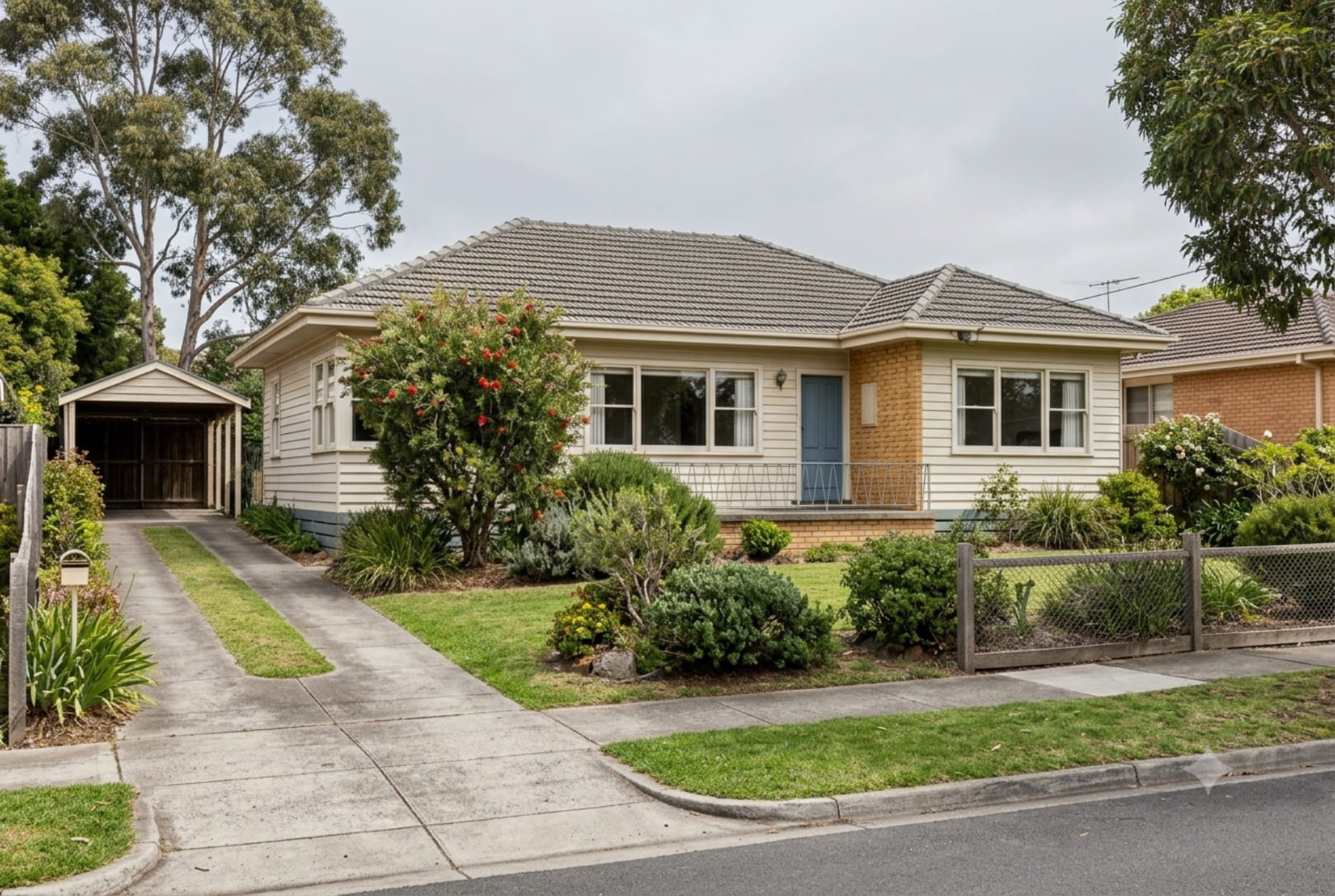
The rest of the Pearcedale stock is 1970s-onward family homes on rural blocks, floored predominantly in native hardwood strip — Tasmanian Oak, Victorian Ash, sometimes Jarrah — at 65 to 85 millimetres wide over conventional joists. Most of it went in under carpet and has spent forty years protected from UV and foot traffic, which means the timber that comes up is usually in far better condition than the room above it suggests.
Pearcedale sits in the Frankston pricing band. Turn-key sand-and-polish runs $45 to $55 per square metre with a solvent-based system and $55 to $65 with waterborne, and typical scopes of 60 to 80 square metres put whole-job invoices between $3,150 and $4,550. Acreage properties with larger floor plates run above that, and where an outbuilding or converted garage is in scope we quote it separately because the subfloor and preparation requirements are usually different.
Grit is the other rural reality. Unsealed driveways, garden paths and paddock access mean a constant supply of abrasive material tracked in on boots, and grit under foot traffic wears a coating faster than anything else short of dragging furniture. The wear pattern is diagnostic: a floor that is perfect in the formal rooms and worn to bare timber along the path from the back door to the kitchen. That is not a coating failure, it is a mechanical one.
The practical response is an additional topcoat through the traffic lanes, which runs $10 to $15 per square metre and roughly doubles the useful life of the finish where it takes the punishment. Beyond that, a decent barrier mat at every external door does more good than any coating specification, and costs a fraction. We say this to every rural client and the ones who act on it are the ones we do not see again for fifteen years.
Subfloor moisture needs checking here as it does anywhere with garden beds built up over decades. Rural properties accumulate soil and mulch against the perimeter, vents get buried, and the subfloor stops breathing. That produces cupping — boards curling upward at the edges because the underside is picking up moisture the top face is not — and sanding a cupped floor flat while it is still damp produces crowning once it dries. We take pin-type readings at multiple points and a result above 14 to 16 per cent stops the job until the ventilation is addressed.
Two to three days covers a standard Pearcedale house, extending to four where there is significant board replacement in the hearth zone or a larger acreage floor plate. Day one is containment, staple and tack strip removal, nail punching, board repairs and the coarse-to-medium passes, with the primary sealer down late. Day two is fine rotary work, screening, vacuuming and topcoats. Light traffic at 24 hours with waterborne, furniture back at three to seven days.
For coating we recommend two-pack waterborne satin on the hardwood stock. Very high abrasion resistance, which matters on a floor taking grit and animals daily; non-yellowing, which keeps a Tasmanian Oak floor from drifting orange under rural north light; and re-entry within 24 hours, which on a property with animals to feed and no spare accommodation is worth more than the price difference from a solvent-based system.
Where a Pearcedale client specifically wants the traditional look and is prepared to maintain it, hardwax oil is a legitimate alternative worth discussing. It sits into the timber rather than forming a film, gives a softer sheen that suits a rural interior, and — the genuinely useful property — can be spot-refreshed in a worn area without recoating the whole floor. On a house where the traffic lane wears faster than everything else, that maintenance model fits the wear pattern better than a film finish does.
REPLACING THE FLOOR IN PEARCEDALE INSTEAD?
If the existing boards are past saving, or you are after something different underfoot, we also supply and install timber, engineered and hybrid flooring here.