Tasmanian Oak
AT A GLANCE
| Common name | Tasmanian Oak |
|---|---|
| Botanical name | Eucalyptus regnans, obliqua & delegatensis |
| Janka rating | 5.5 kN (dry) |
| Colour range | Pale straw through to light reddish-brown, generally even across a board with subtle variation between boards. |
| Grain pattern | Straight and fine, with an even texture and occasional light gum vein. |
| Typical board widths | 65mm to 85mm strip dominates; 100mm and 130mm in later stock. |
| Era commonly laid | 1950s through 1990s, and the single most common hardwood in Peninsula brick veneer housing. |
| Tannin bleed risk | Low |
| UV behaviour | Ambers gently on its own; the dramatic orange shift people notice comes from solvent-based coatings rather than from the timber. |
| Coastal suitability | Good |
HOW TO IDENTIFY IT
Tasmanian Oak is the timber most likely to be under a Peninsula carpet, and it is also the one most often misidentified. The name covers three eucalypt species — regnans, obliqua and delegatensis — marketed together because they are visually and mechanically close enough to be sold as one product. Nothing about it is related to oak.
What you see when the carpet comes up is a pale, even, straw-coloured to light reddish-brown board with a fine straight grain and very little figure. It is a quiet timber. There are no large knots, no dramatic colour banding, and only occasional short streaks of gum vein. Board-to-board variation is more noticeable than variation within a single board, which is a useful identifying trait.
Widths run 65mm to 85mm through the bulk of the 1950s to 1980s stock, with 100mm and 130mm appearing in later installations. Boards are secret-nailed through the tongue, end joints fall roughly every 300mm, and the perimeter will be lined with gripper-strip nail holes if the floor has been carpeted.
The hardness test separates it from pine immediately — at 5.5 kN dry it resists a fingernail comfortably — but it is noticeably softer than Blackbutt or Spotted Gum, and a dropped tool will dent it. That mid-range hardness is the most reliable field distinction.
HOW IT SANDS
Tasmanian Oak is the easiest hardwood on this list to sand well, which is fortunate given how much of it there is. A conventional 40, 60, 80, 100 or 120 grit sequence works without complication, the timber cuts evenly, and it does not load abrasive the way a resinous softwood does.
The one thing it does not forgive is a skipped grit. The fine, even grain means there is no figure to disguise a scratch pattern, so any coarse scratching left behind by jumping from 40 straight to 80 shows plainly under a coating, particularly in raking afternoon light. Progressive steps, every time.
Edge work needs the same discipline. Because the timber is so uniform, a perimeter band cut at a different final grit to the field reads as a visible frame around the room once the coating goes on. That halo is more obvious on Tasmanian Oak than on almost any other species we work with.
Its mid-range hardness has practical consequences during preparation. Exposed nails must be punched properly below the surface, because at 5.5 kN the timber will not simply absorb a proud nail head the way a denser hardwood might — the abrasive catches it and tears. Old gripper-strip nails and staples all come out by hand before a machine runs.
HOW IT FINISHES
Tasmanian Oak takes essentially every finish in the range, and the pale base colour is what makes it so versatile. Tannin content is low, so an isolation primer is generally unnecessary and a waterborne system can go straight onto bare timber without risk of the dark blotching that catches out Spotted Gum and Cypress.
Waterborne polyurethane is our default recommendation and the reason is ambering. Under a solvent-based coating a pale Tasmanian Oak floor shifts steadily toward orange, and because the sun path across a room is uneven, so is the shift. A two-pack waterborne holds the colour the floor came off the sander with, indefinitely.
It is one of the best species for a lime wash or a Nordic tint. The open, even grain accepts pigment consistently, the neutral base colour does not fight white pigment the way a red hardwood does, and the result is the pale coastal floor most Peninsula clients are asking for. Pigment work needs a precise sand finishing at 120 grit for even absorption.
Staining is straightforward for the same reasons, though it is worth sampling on the actual floor. Aged Tasmanian Oak that has spent decades under a solvent-based coating has oxidised and will take stain differently to a freshly exposed board from under carpet, and those two conditions frequently exist in the same house.
ON THE PENINSULA
Tasmanian Oak accounts for a large share of the 50 to 55 per cent of Frankston-area restoration work that is native hardwood, concentrated in the 1970s brick veneer subdivisions through Frankston South, Karingal, Langwarrin and Seaford. If you own a Peninsula house built between 1960 and 1990 and there is hardwood under the carpet, this is the most likely candidate.
The recurring Peninsula problem is not the timber but the coating history. A great many of these floors were finished in solvent-based polyurethane and recoated once in the 1990s or 2000s without being sanded back, which leaves two layers of aged, ambered, brittle coating to remove before any levelling can start. That is a genuine coarse cut and it consumes abrasive quickly.
The good news is that the underlying timber is almost always sound and almost always has thickness left. A 1970s Tasmanian Oak strip floor that has been carpeted since new has never been cut, and a first sand reveals a pale, clean floor that looks nothing like the orange surface that came off it.
In the low-lying pockets — Seaford, the Karingal drainage basin, Capel Sound and Tootgarook — the species is not the issue but the subfloor is. Tasmanian Oak cups like any hardwood when the underside picks up moisture the top face is not, and it needs the same 14 to 16 per cent moisture threshold respected before anyone cuts it flat.
GALLERY
Placeholder slots — drop real photos into src/assets/ and swap the slot for <Image />.
- Photo slot 1
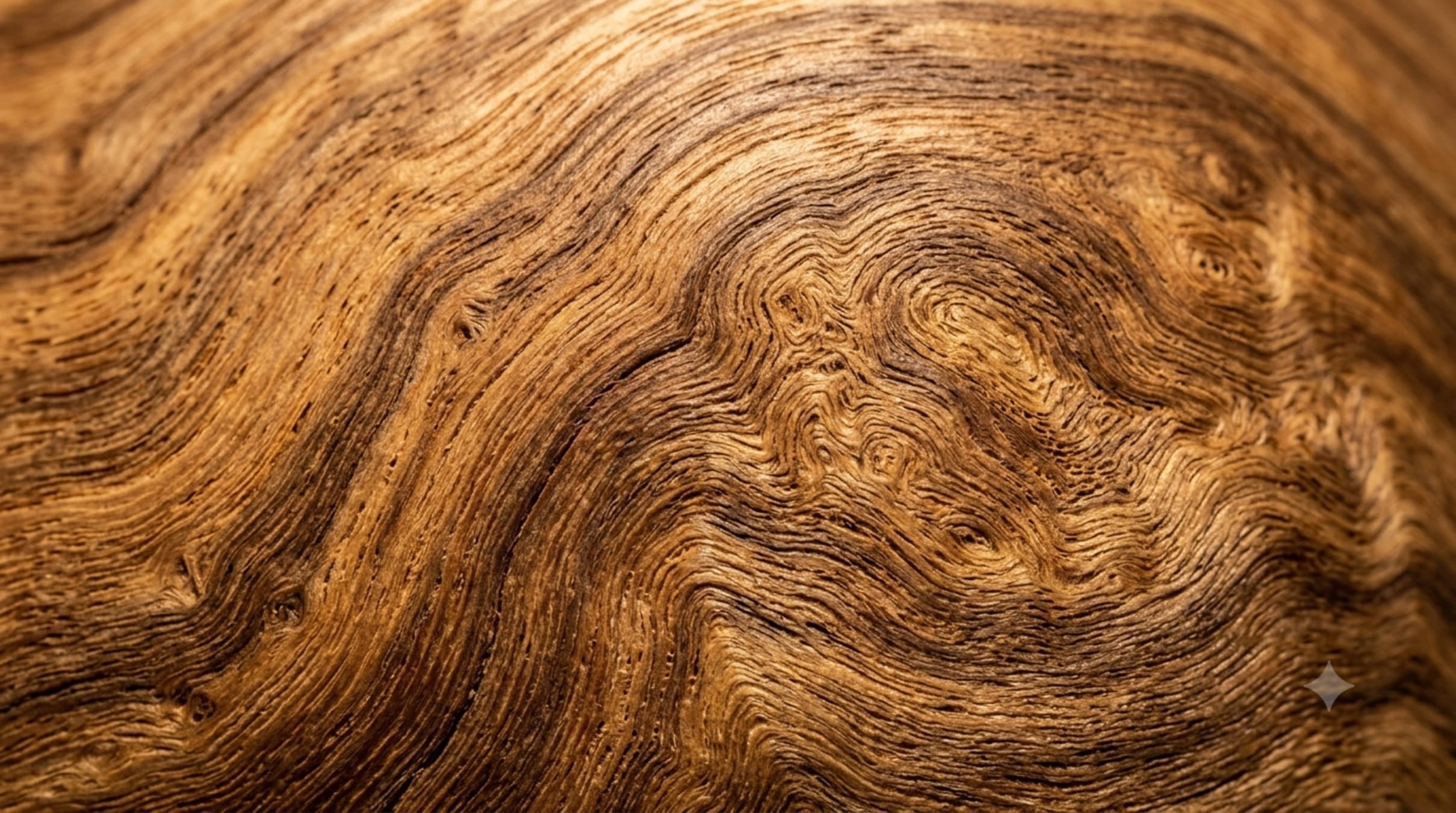
TODO: close-up of Tasmanian Oak grain at 100mm scale, natural daylight, showing fine straight grain and light gum vein. - Photo slot 2
TODO: half-sanded floor showing the contrast between ambered solvent-coated surface and freshly cut pale timber. - Photo slot 3
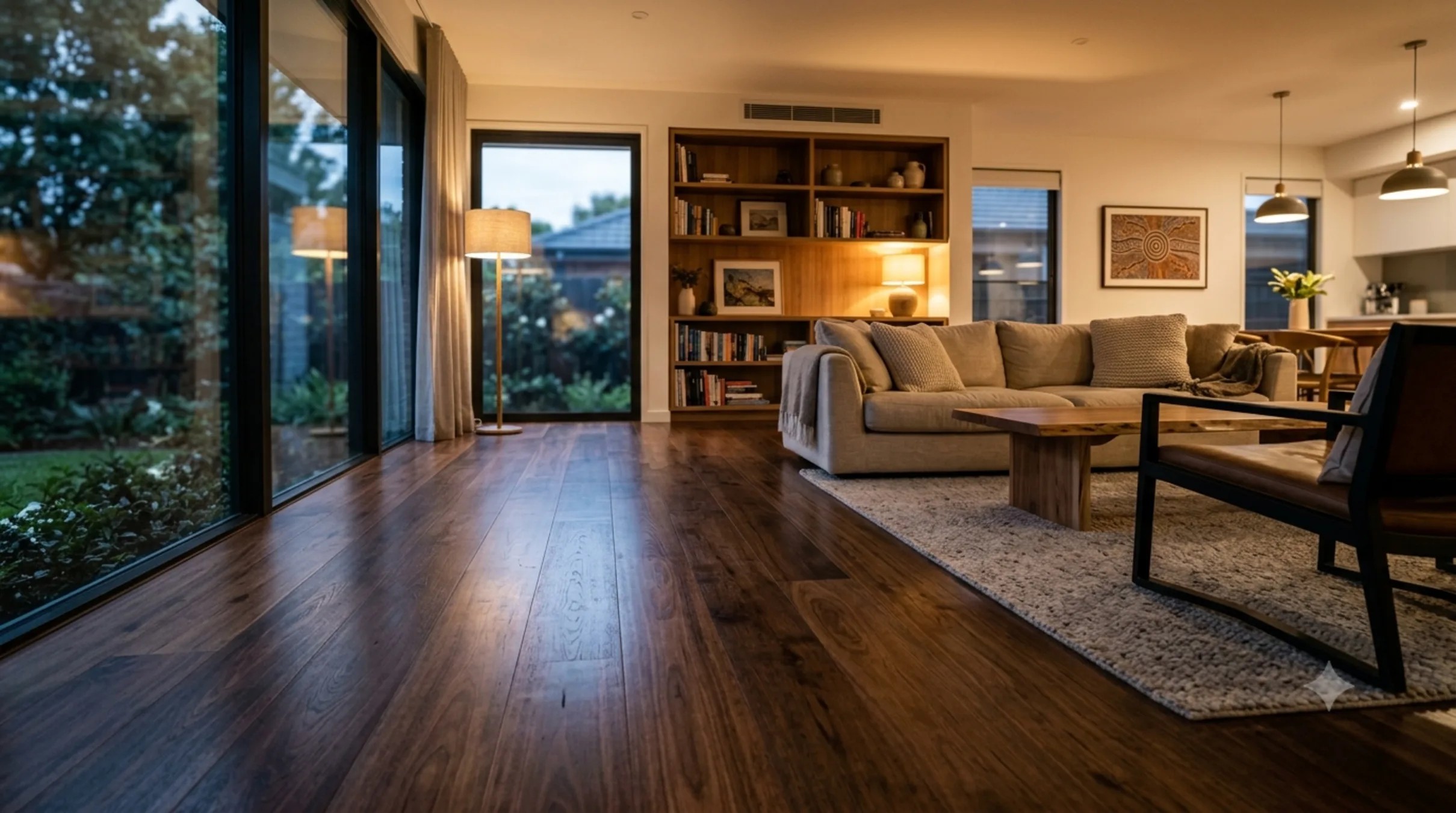
TODO: Tasmanian Oak strip floor finished in satin waterborne, wide shot in a Frankston South living room. - Photo slot 4
TODO: perimeter detail showing gripper-strip nail holes filled and blended after carpet removal.
FLOORS WE SUPPLY IN TASMANIAN OAK
Tasmanian Oak appears across 2 floors in our range. Every one is quoted supply-and-install — request a quote and we will price it for your rooms.
COMMON QUESTIONS
Is Tasmanian Oak actually oak?
No. It is a marketing name covering three eucalypt species — Eucalyptus regnans, obliqua and delegatensis — sold together because they are close enough visually and mechanically to be treated as one product. It has no botanical relationship to European or American oak.
Why has my Tasmanian Oak floor gone orange?
Almost certainly the coating rather than the timber. Solvent-based polyurethane ambers progressively under UV, and on a pale timber the shift is dramatic. Sand it off and the hardwood underneath is the colour it always was — that first coarse pass across an orange floor is one of the more satisfying moments in this trade.
What is the difference between Tasmanian Oak and Victorian Ash?
Very little, and the two are frequently interchangeable in practice. Both cover overlapping eucalypt species, both are pale and fine-grained, and both sand and finish the same way. Victorian Ash is generally the slightly paler and marginally softer of the two, but you would not reliably tell them apart in a finished floor.
Can Tasmanian Oak be lime washed?
Yes, and it is one of the best species for it. The open, even grain takes pigment consistently and the neutral pale base does not fight white pigment the way a dense red hardwood does. It needs a precise sand finishing at 120 grit across the whole floor for even absorption.
How many times can it be sanded?
A solid Tasmanian Oak strip floor has roughly eight to twelve millimetres above the tongue when new and a full cut takes about a millimetre, so six to ten sands is realistic. Heavy edge grinding takes more from the perimeter than the field, which is why an aggressively edged floor shows a dished band around the walls.
Does it need a primer before a water-based coating?
Generally not. Tannin content is low, so unlike Spotted Gum, Blackbutt or Australian Cypress it will not draw dark blotching to the surface when a waterborne coating is applied directly to bare timber. We still confirm species properly before skipping the primer.