
Choosing between water-based and oil-based polyurethane is the single most important decision you’ll make on your floor coating — and it’s usually the one clients think about least.
For most Peninsula coastal homes, water-based is the better call. Here’s why, and where the exceptions sit.
The basic differences
Oil-based polyurethane
- Warm amber tone that deepens over time
- Slower to dry (12–24 hours between coats)
- Higher VOCs and stronger fumes during application
- Extremely durable once cured
- Typically 2 topcoats standard
Water-based polyurethane
- Crystal clear — keeps the natural timber colour
- Fast drying (2–4 hours between coats)
- Low VOC and near-odourless
- Equally durable in modern formulations
- Typically 2–3 topcoats standard
Why water-based suits coastal Peninsula homes
1. It keeps the timber colour true.
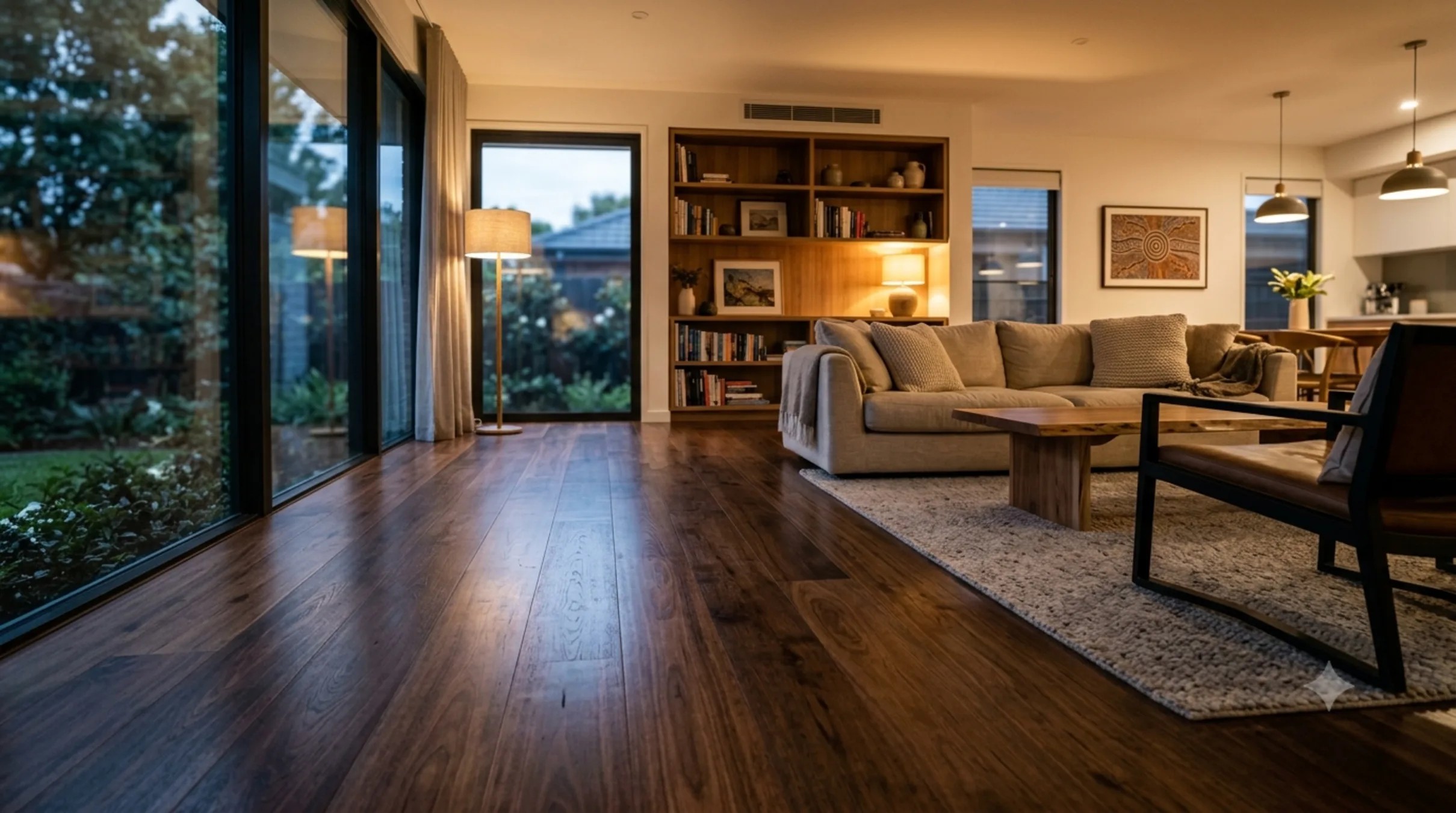
Peninsula homes tend to lean toward light, coastal interiors. A hardwood floor that’s been ambered by oil-based finish looks orange next to a coastal-toned interior scheme. Water-based finish reads clear — the timber shows through in its natural colour without a warm tint added.
Lime-washed and whitewashed floors demand water-based. Oil-based over any pale wash will yellow within months.
2. UV stability.
Modern water-based polyurethanes hold up better to sun-driven yellowing than oil-based. In a Peninsula home with big north-facing windows, that matters. Oil-based finishes near a sunny window can go orange-brown within a few years.
3. Faster turnaround.
Water-based dries fast enough to fit two topcoats in a day. Oil-based needs at least a day per coat. On a holiday-let or between-tenants job where every day matters, water-based turns around 2–3 days faster.
4. Low fumes.
For clients with asthma, small children, or pets, water-based finish is dramatically less disruptive. You can be back in most rooms within hours rather than days.
Where oil-based still makes sense
A period home wanting a warm, deep amber look.
Some heritage properties look right with an oil-finished floor — the warm tone feels era-appropriate. If your interior scheme leans traditional and warm, oil-based can be worth the compromises.
Very high-traffic commercial spaces.
Oil-based has slight edge on hardness at high traffic points. Rarely the deciding factor in a residential job.
Client preference.
Some people just prefer the look and feel of an oil-finished floor. That’s fair enough — it’s still a legitimate finish.
Common misconceptions
“Water-based isn’t as durable.” Not true of modern formulations. High-quality water-based polyurethanes tested to commercial standards outperform many oil-based products on abrasion resistance.
“Water-based makes floors look plastic.” Depends on the sheen level. High-gloss water-based can look plasticky. Matte and satin water-based reads natural.
“Oil-based is what real floor sanders use.” In 2026, most professional sanders use water-based as their default and reach for oil-based only when specifically requested or when the job calls for it.
What we recommend on the Peninsula
For 90% of Peninsula homes, our default is a two-part water-based polyurethane sealer plus two topcoats, satin sheen. This spec:
- Keeps the timber colour clean and light
- Handles coastal sun without yellowing
- Turns around fast enough to fit inside a normal holiday-let gap
- Is low-VOC and safe to re-occupy quickly
- Wears well for 12–15+ years before needing recoat
We’ll walk you through the alternative if your job calls for it — but if we’re recommending water-based, it’s because it’s the right call for a Peninsula coastal home.