Floor Sanding Safety Beach
Safety Beach · 3936 · Mornington Peninsula
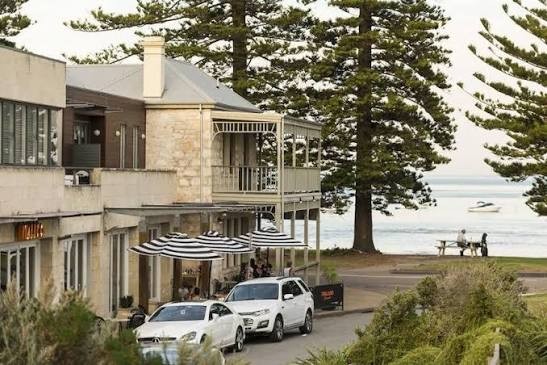
What does a marina do to a timber floor? More than you would think. The Martha Cove development put a body of tidal water through the middle of a residential pocket, and the houses built around it from the 2000s onward sit in a humidity envelope that behaves more like a waterfront property than a suburban one. Add the older holiday-shack conversions further back from the water and Safety Beach ends up with two quite different flooring problems in one postcode.
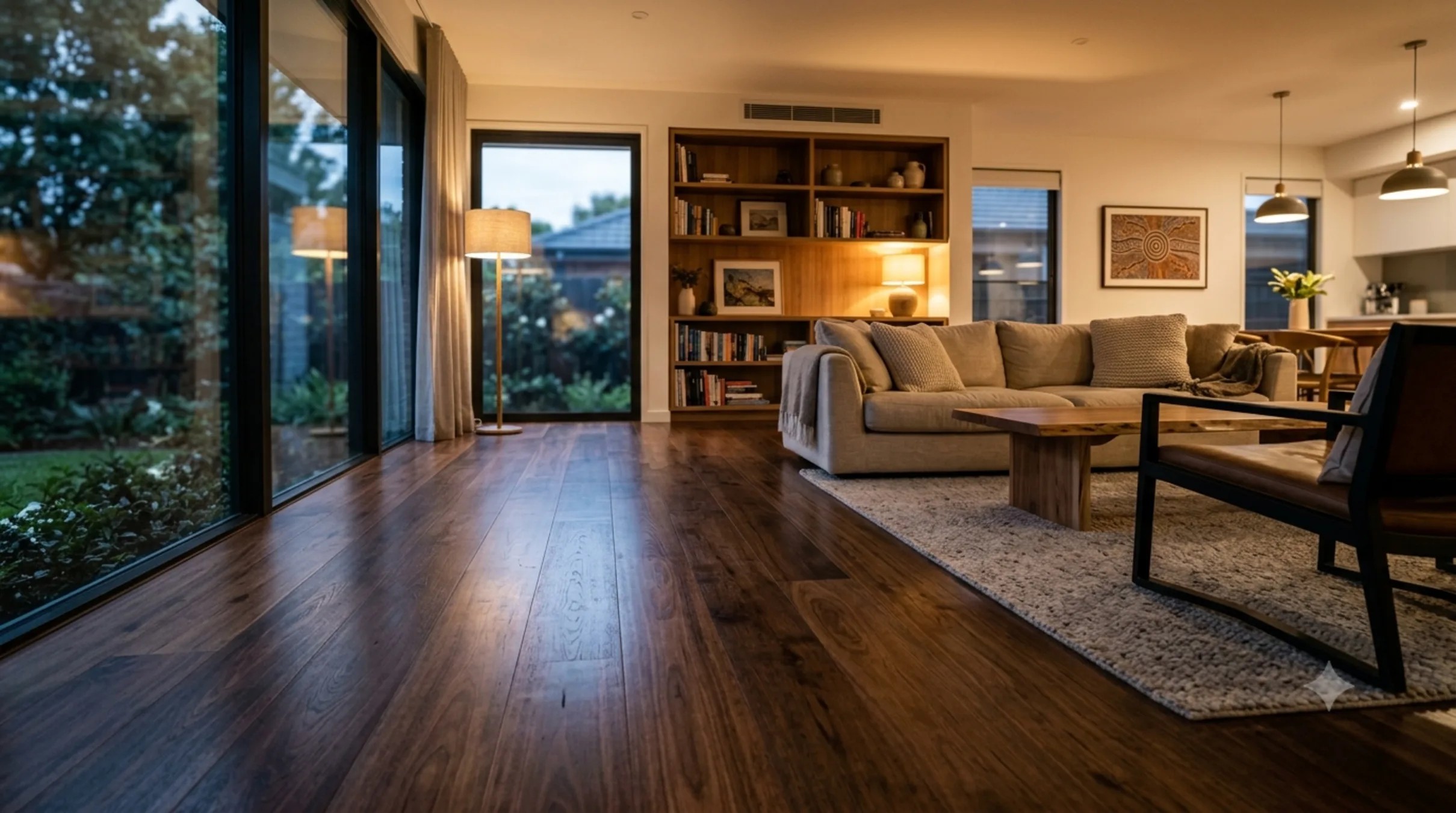
The newer Martha Cove stock is almost universally engineered European oak, wide-board, floated or glued over a concrete slab. It is a good product and it photographs beautifully, but it has a finite wear layer — typically two to six millimetres of real timber over a plywood or fibreboard core — and that thickness is the constraint on everything we can do. A full sand takes roughly a millimetre. On a thin specification there may be one cut available in the life of the floor, and it is worth being deliberate about when to spend it.
So the first thing we do here is measure rather than assume. A threshold, a floor vent, the section at a stair nosing — anywhere the edge is visible tells us what we are working with. Three millimetres or more and a careful rotary sand is reasonable. Below two and the honest answer is a screen-and-recoat at $25 to $40 per square metre, which restores the surface without spending timber the floor cannot replace.
Slab moisture is the recurring technical issue on the newer builds. Concrete holds construction water for far longer than most owners expect, and around a tidal marina the ground moisture underneath never really goes away. A floating engineered floor over a damp slab cups, peaks at the board joints and telegraphs every seam through whatever finish sits on top. Coating that floor makes it look better for a season and changes nothing about why it is moving.
We test the slab before agreeing a scope, not after. Where the readings come back high the recommendation is to address the moisture or to accept the floor as it is, and we would rather say that than sell a refinish that fails inside two years. Where the problem turns out to be a perimeter expansion gap that was filled with sealant or laid hard against the skirting, that is a carpentry fix and a cheap one, but it has to happen before any refinishing.
The shack conversions back from the water are a completely different job. Those are 1970s-era holiday houses, many extended and re-clad since, with conventional solid hardwood or Baltic Pine on bearers and joists. Subfloor clearance is often minimal, ventilation is often compromised by decades of sand and garden build-up against the perimeter, and cupping is common. Pin-type moisture readings at multiple points before sanding, and above 14 to 16 per cent the job waits.
Safety Beach sits in the Mount Eliza pricing band. Turn-key sand-and-polish runs $55 to $80 per square metre, with typical scopes of 90 to 140 square metres putting whole-job contracts between $6,050 and $8,800. Screen-and-recoat on an intact engineered floor is the separate and much cheaper line at $25 to $40 per square metre, and on a good proportion of the Martha Cove housing that is genuinely the right recommendation.
Salt is the ambient condition that shapes the coating choice. Homes this close to tidal water carry salt in the air year-round, and while salt does not attack a timber floor directly the way it attacks metal fixings, it does end up on the surface in fine abrasive quantities tracked in from outside. Combined with beach sand, that produces mechanical wear concentrated at every external doorway and along the path from the water side of the house.
Two-pack waterborne polyurethane is our recommendation and the abrasion resistance is the reason. Commercial-grade waterborne systems carry very high resistance to scuffing and scratching, which is precisely what a floor taking sand and salt daily needs. They are also non-yellowing, which matters here because Martha Cove houses are heavily glazed toward the water and a solvent-based coating under that much reflected light ambers an oak floor within a few years, unevenly, following the sun.
Timeline runs three to five days for a full sand on the larger floor plates, or one day plus drying for a screen-and-recoat. Where the property is a holiday let or short-stay rental, we schedule around booking calendars — typically a Monday to Thursday turnaround so the floor is trafficable before the weekend. That needs a fortnight of notice to organise properly, and it is worth asking about before you block out a peak week.
The advice we give most Safety Beach owners is to resist sanding an engineered floor that does not need it. Surface scratching and a dull, tired finish look like a sanding problem and usually are not. If the wear layer is intact and the timber underneath is sound, a screen-and-recoat gets you most of the way to a new floor at roughly half the cost and spends none of the thickness you will want later. That is the recommendation that keeps a floor in service for thirty years rather than fifteen.
ALSO AVAILABLE IN SAFETY BEACH
Because Safety Beach is a coastal Peninsula suburb, we also offer deck sanding and oiling and lime-wash finishes here.
REPLACING THE FLOOR IN SAFETY BEACH INSTEAD?
If the existing boards are past saving, or you are after something different underfoot, we also supply and install timber, engineered and hybrid flooring here.