Blackbutt
AT A GLANCE
| Common name | Blackbutt |
|---|---|
| Botanical name | Eucalyptus pilularis |
| Janka rating | 9.1 kN (dry) |
| Colour range | Pale golden yellow through to soft honey-brown, sometimes with a hint of pink in never-exposed areas. |
| Grain pattern | Predominantly straight, mostly plain, with occasional gum vein and pinhole borer marks. |
| Typical board widths | 80mm and 100mm most common; some 130mm in later 1970s stock. |
| Era commonly laid | 1940s through 1980s, with heavy use in postwar Peninsula homes. |
| Tannin bleed risk | Low |
| UV behaviour | Stable. Deepens slightly to a warmer honey tone over years but does not yellow dramatically. |
| Coastal suitability | Excellent |
HOW TO IDENTIFY IT
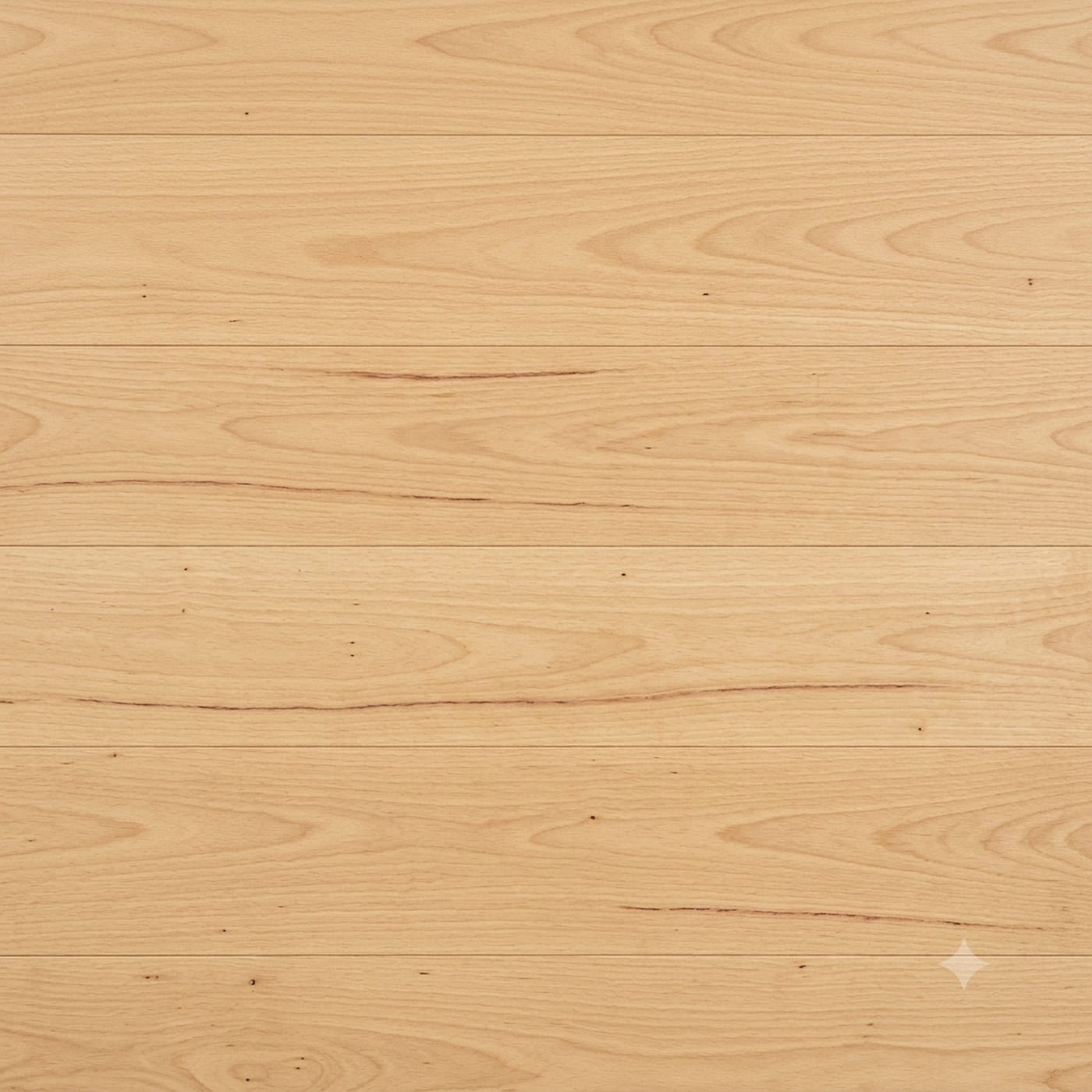
Lifting a carpet in a Peninsula home built between the 1940s and 1980s, if the floorboards underneath are Blackbutt, here is what you will see. The colour sits somewhere between pale golden yellow and soft honey-brown, sometimes with a hint of pink in the areas that never saw sunlight under the carpet. The grain runs straight along the length of the board, mostly plain, with occasional short streaks of gum vein — thin dark lines that follow the grain — and small round pinhole borer marks scattered through. It is a fairly clean-looking timber; no big knots, no dramatic figure.
Board widths are typically 80mm or 100mm, with some 130mm boards in later 1970s stock. End joints are almost always short, roughly every 300mm, and boards are usually secret-nailed through the tongue. If the carpet was laid straight over the floor, you will find the perimeter riddled with gripper-strip nail holes and a fair few staples through the top face, but almost never damage through the boards themselves.
The give-away test is hardness. Push a fingernail firmly into an inconspicuous patch: Blackbutt is dense and will not dent easily. That immediately rules out any softwood or pine variety.
HOW IT SANDS
Blackbutt is straightforward to sand and rewarding to finish. It is hard enough — Janka around 9.1 kN dry — that a normal grit sequence of 40, 60, 80 and 100 (or 120) works without drama. Move up in progressive steps; skipping grits shows in the final coat as fine scratches under raking light.
On a 30-year-old Peninsula Blackbutt floor, we usually start with 40 or 60 grit depending on how much of the old coating is left. If the floor was previously finished with oil-based polyurethane, expect a slightly heavier first pass to cut the amber film cleanly before you reach raw timber.
Cut rate is moderate. The timber is dense so the drum sander will not chew through it the way it does on pine. That is a feature, not a limitation: you have more time to control each pass and less risk of dishing.
Tear-out risk is low. Blackbutt's straight grain sands cleanly with almost no lifting fibres. The edger tends to leave a slightly darker margin at the wall line because it cuts differently to the belt sander — blending that back in with a palm sander before the first coat is standard practice, not a fault of the timber.
HOW IT FINISHES
Blackbutt takes almost every coating system well. Water-based polyurethane is our default here. It holds the natural pale-gold colour of the timber without adding the orange-brown tint that oil-based products bring. On Peninsula coastal homes especially, keeping Blackbutt looking clean and honey-toned rather than amber is usually the goal, and water-based delivers.
Oil-based polyurethane suits Blackbutt if you specifically want a warmer, deeper tone. Some period homes in Mount Eliza with Blackbutt floors have been finished this way for decades and look right that way. Hardwax oils sit somewhere between the two, with a softer sheen and a more natural feel underfoot.
Tannin bleed risk is low. You can water-pop the grain before coating without risking dark streaks. Staining is reliable: colour uptake is even and predictable, and greys, walnuts and mid-browns all take cleanly. The only stain to be careful with is anything very pale over an old floor, because Blackbutt's natural yellow undertone can pull a wash warmer than expected.
ON THE PENINSULA
Peninsula homes are the perfect proving ground for Blackbutt. It is coastal-suitable — dense enough to shrug off humidity swings between damp winters and dry summers, hard enough to handle sand tracked in from the beach, and UV-stable enough to hold its colour under the big north-facing windows most Peninsula houses have.
We see Blackbutt in almost every Peninsula suburb, but especially in the postwar hardwood pockets: Rosebud, Rye, McCrae, Frankston, Seaford. The shacks and modest houses built in those areas through the 1950s and 1960s were often laid on Blackbutt as the standard hardwood of the time. Half of them are still under carpet today.
For a holiday-let, Blackbutt is one of the easier surfaces to keep looking good between guest cycles. It hides sand and small marks better than lighter species like Tas Oak, does not scratch easily under guest wear, and refreshes well with a light re-coat every few years rather than a full strip-back.
The one thing worth flagging on every Blackbutt quote is tannin. The species carries high levels of water-soluble tannins, and a waterborne coating applied straight onto bare timber draws them to the surface as dark blotchy discolouration, uneven sheen and adhesion failure. A fast-drying shellac or alcohol-based isolation primer locks them into the grain and prevents it entirely. It is not repairable once it has happened — the floor has to be cut back and started again — which makes the primer the cheapest line item on the quote and the one most reliably missing from a cheaper one.
In the low-lying pockets where Blackbutt turns up under carpet — Seaford, the Karingal drainage basin, Capel Sound — the species is not the problem but the subfloor is. Blackbutt cups like any hardwood when the underside picks up moisture the heated top face is not, and it needs the same pin-type readings and the same 14 to 16 per cent threshold respected before anyone cuts it flat.
GALLERY
Placeholder slots — drop real photos into src/assets/ and swap the slot for <Image />.
- Photo slot 1
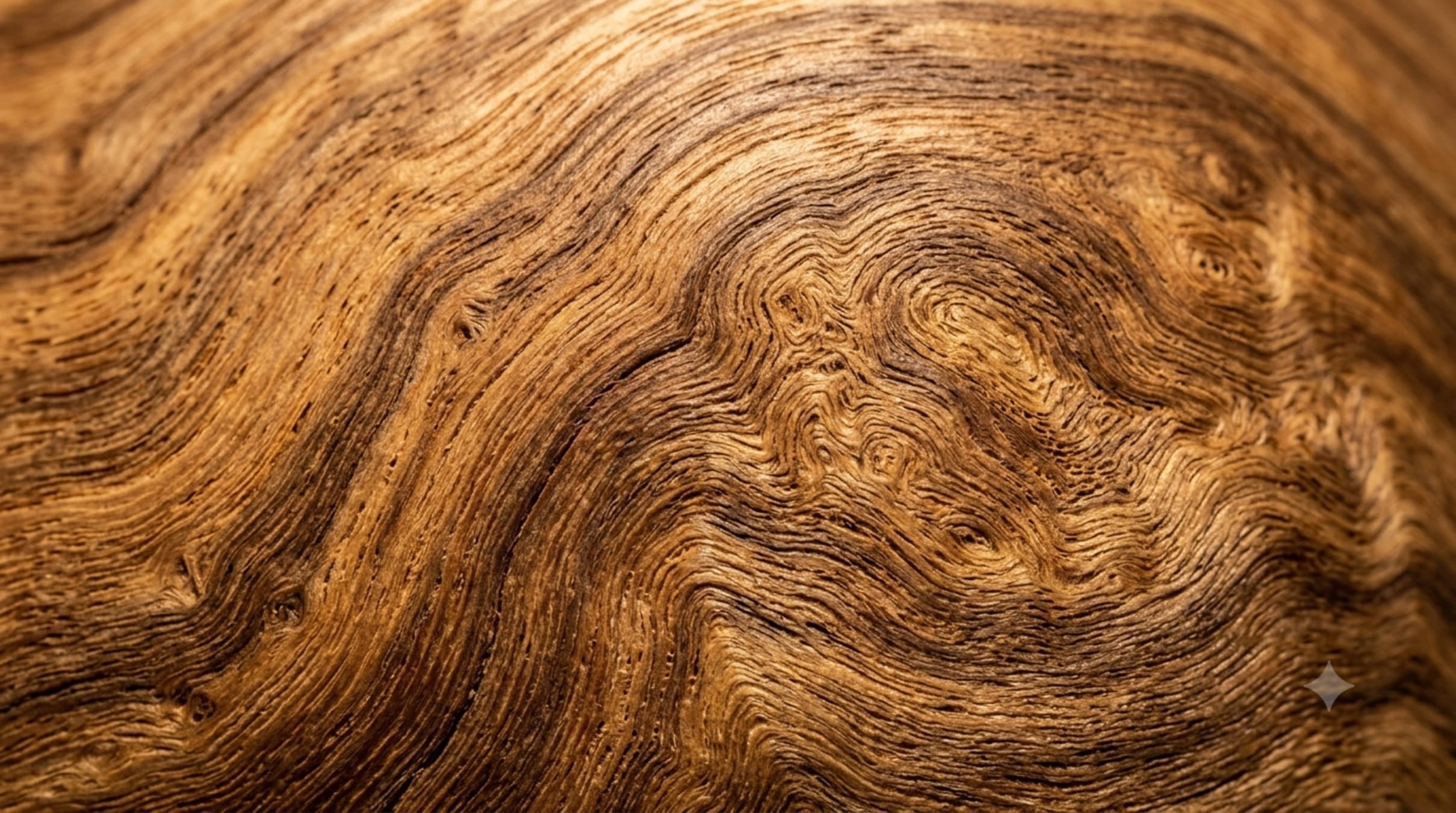
Close-up 45° macro showing the straight grain and a short streak of gum vein — natural daylight. - Photo slot 2
Sanded raw Blackbutt board next to a satin water-based finished panel for direct colour comparison. - Photo slot 3
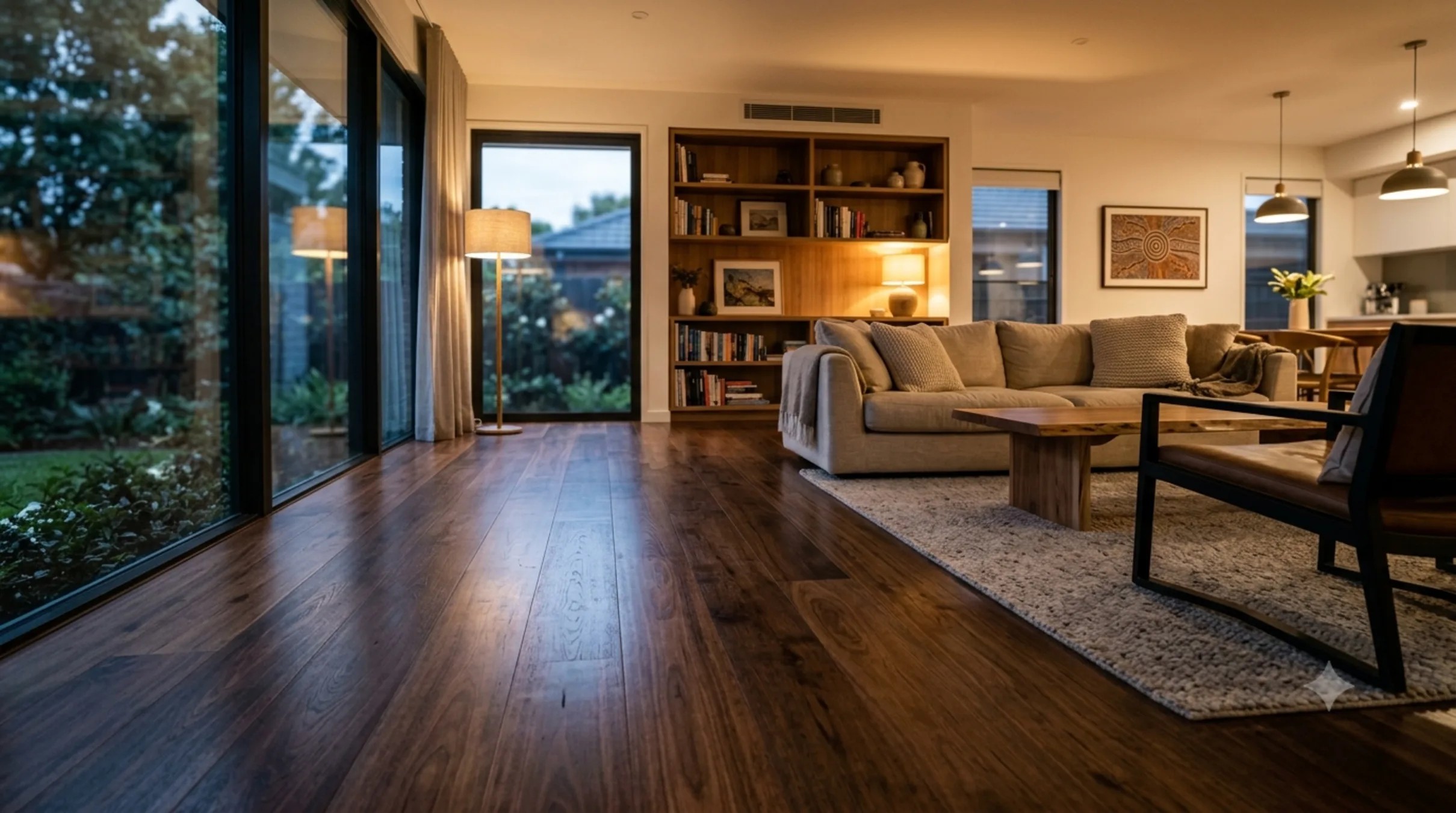
Full-room shot of a finished Blackbutt floor in a Peninsula home, taken in natural side-light. - Photo slot 4
Detail of a typical secret-nailed end join showing the short (~300mm) board spacing.
FLOORS WE SUPPLY IN BLACKBUTT
Blackbutt appears across 4 floors in our range. Every one is quoted supply-and-install — request a quote and we will price it for your rooms.
COMMON QUESTIONS
Is Blackbutt harder than Tasmanian Oak?
Yes, by a decent margin. Blackbutt sits around 9.1 kN Janka dry; Tasmanian Oak is closer to 5.5 kN. In practical terms, Blackbutt shows fewer heel marks and pet-claw scratches over time.
Does Blackbutt yellow over time?
Under water-based finish, Blackbutt deepens slightly to a warmer honey tone over the years but does not dramatically yellow. Under oil-based finish, expect a warmer amber shift within the first few years.
Can I stain Blackbutt to look like European Oak?
Approximately, with a grey-toned stain and sample testing. Blackbutt has a natural yellow undertone that fights very pale washes, so the finished floor will still read slightly warmer than raw European Oak. A grey-brown stain gets closest.
Why does my Blackbutt floor look uneven in colour after sanding?
Historic carpet coverage often leaves a colour gradient — the perimeter of the room fades where light leaked in around the edges, the middle stays pale. Sanding evens the surface but not the colour. A light stain or a couple of extra weeks of UV exposure before coating will blend it out.
Is Blackbutt safe to install in a Peninsula coastal home?
Yes. Blackbutt is one of the better hardwoods for coastal Peninsula conditions. It holds its dimensions well through the seasonal humidity swings and does not react badly to salt-influenced air.
How often does a Blackbutt floor need re-sanding?
A properly finished Blackbutt floor in a residential Peninsula home typically goes 15 to 20 years between sands. High-traffic zones may need an intermediate re-coat before then, without a full sand.