Sydney Blue Gum
AT A GLANCE
| Common name | Sydney Blue Gum |
|---|---|
| Botanical name | Eucalyptus saligna |
| Janka rating | 9.0 kN (dry) |
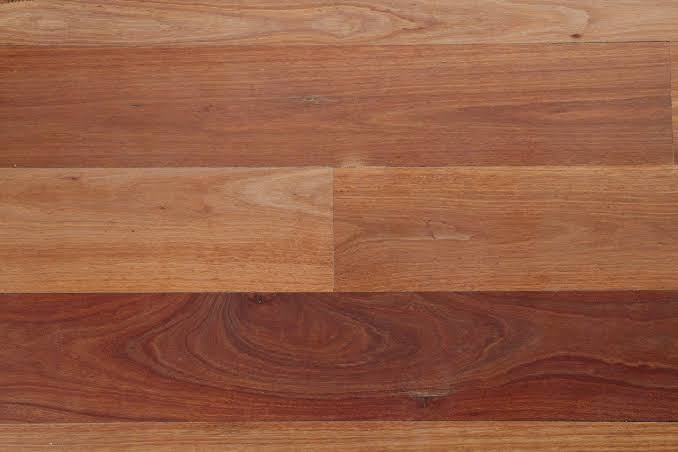
| Colour range | Warm pink through to deep reddish-brown, generally more even in tone than Spotted Gum. |
| Grain pattern | Straight to slightly interlocked, moderately open textured, with occasional gum vein. |
| Typical board widths | 80mm and 130mm most common; 180mm in modern wide-board installations. |
| Era commonly laid | 1960s onward, with heavier use from the 1990s as a premium warm-toned specification. |
| Tannin bleed risk | High |
| UV behaviour | Deepens from warm pink toward reddish-brown over years; a non-yellowing finish preserves the pink that distinguishes it from Jarrah. |
| Coastal suitability | Excellent |
HOW TO IDENTIFY IT
Sydney Blue Gum sits in the red timber family with Jarrah but reads noticeably lighter and pinker. Where Jarrah is deep burgundy-red, Blue Gum runs warm pink to a mid reddish-brown, and it is generally more even in tone across a board than either Jarrah or Spotted Gum.
The name is another that misleads. There is nothing blue about the timber — it refers to the bark of the living tree. What you actually see is a warm, moderately open-grained eucalypt with a straight to slightly interlocked grain, occasional gum vein, and considerably less dramatic figure than Spotted Gum.
Texture is the useful distinction from Jarrah in the field. Blue Gum has a more open, coarser texture with visible pores, where Jarrah is denser and tighter. Under a coating both read as warm red floors, but bare and freshly sanded the difference in surface texture is clear.
At 9.0 kN dry it is a hard timber, comparable to Blackbutt and close to Jarrah, and it resists a fingernail entirely. Colour plus hardness plus an open texture is a reliable combination: a pale pink-red hard timber with visible pore structure is almost certainly Sydney Blue Gum.
HOW IT SANDS
Sydney Blue Gum sands more readily than its hardness suggests, largely because the grain is mostly straight and the texture is relatively open. A conventional 40, 60, 80, 100 or 120 grit progression works, with sharp abrasives and reasonable belt discipline given the 9.0 kN density.
The open texture is the thing to work with rather than against. Coarse abrasive tears the pore structure rather than cutting it cleanly, leaving a slightly fuzzy surface that shows as a dull patch under coating. Restraint through the coarse pass and full progression through the medium grits produces a much cleaner result than trying to force the level early.
Where the grain runs interlocked — not universal but common enough — the usual caution applies. Fibres reversing direction within a board tear under an aggressive pass, and that tear-out then has to be sanded out with the following grits at the cost of thickness.
Gum vein appears intermittently and needs the same decision as on any veined timber: fill the wide ones with a toned resin, leave the fine ones legible, and agree that before the filler comes out. On a floor as otherwise even as Blue Gum, an over-filled vein is more visible than an unfilled one.
HOW IT FINISHES
Tannin levels are moderate to high and we treat Sydney Blue Gum as a primer species. The open pore structure means a waterborne coating draws extractives to the surface fairly readily, producing the dark blotching and uneven sheen that catches out Spotted Gum. A shellac or alcohol-based isolation primer before any waterborne topcoat prevents it.
The warm colour makes the ambering question consequential. Under a solvent-based polyurethane, Blue Gum darkens progressively from warm pink-red toward brown, and the pink that distinguishes it from Jarrah is the first thing lost. A non-yellowing waterborne holds it where it is.
The open texture affects how a finish looks as well as how it applies. A high-build waterborne system fills the pore structure and produces a smooth, unified surface. A thinner or oil-based finish leaves the texture legible, which many clients prefer on this timber because the pore pattern is part of its character. It is worth deciding deliberately.
Lime wash is not a good match. White pigment over a warm pink-red base produces the same muddy result as it does on Jarrah, and the open pores hold pigment unevenly which makes it worse. Where a client wants a pale floor and has Blue Gum, the honest answer is that the timber and the look are in conflict.
ON THE PENINSULA
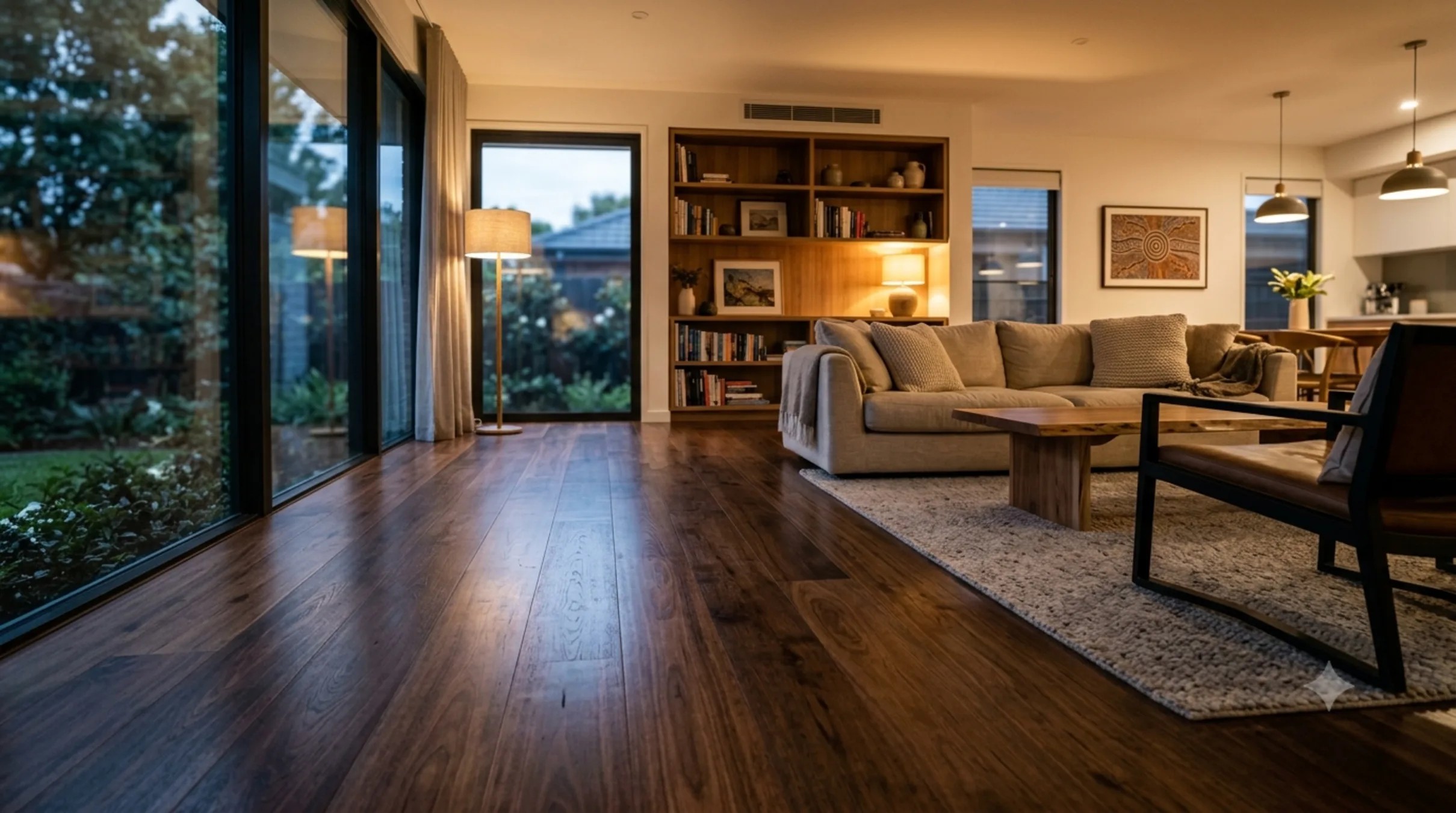
Sydney Blue Gum appears on the Peninsula mostly as a deliberate specification rather than a default — 1990s and later renovations and rebuilds through Mount Eliza, Mount Martha, Mornington and the coastal suburbs, chosen for the warm tone where an owner wanted red without the darkness of Jarrah.
Its hardness at 9.0 kN makes it a genuinely capable coastal floor. Beach sand tracked into a Rye, Blairgowrie or Dromana property is a loose abrasive, and a hard timber under a commercial-grade two-pack waterborne handles it well. The warm colour also disguises fine scratching better than a pale floor does.
The open pore structure is the coastal consideration that cuts the other way. Pores hold fine sand and grit, and on a floor that is not regularly cleaned that material sits in the surface and works as an abrasive under foot traffic. Regular vacuuming matters more on an open-textured timber than on a close one like Brush Box.
Where Blue Gum appears alongside Jarrah in the same house — which happens in renovated period homes through Frankston South and Mount Eliza — the two are close enough in colour to look like a failed match rather than a deliberate contrast. That is one case where staining the whole floor to a common deeper tone genuinely helps, at $12 to $25 per square metre.
GALLERY
Placeholder slots — drop real photos into src/assets/ and swap the slot for <Image />.
- Photo slot 1
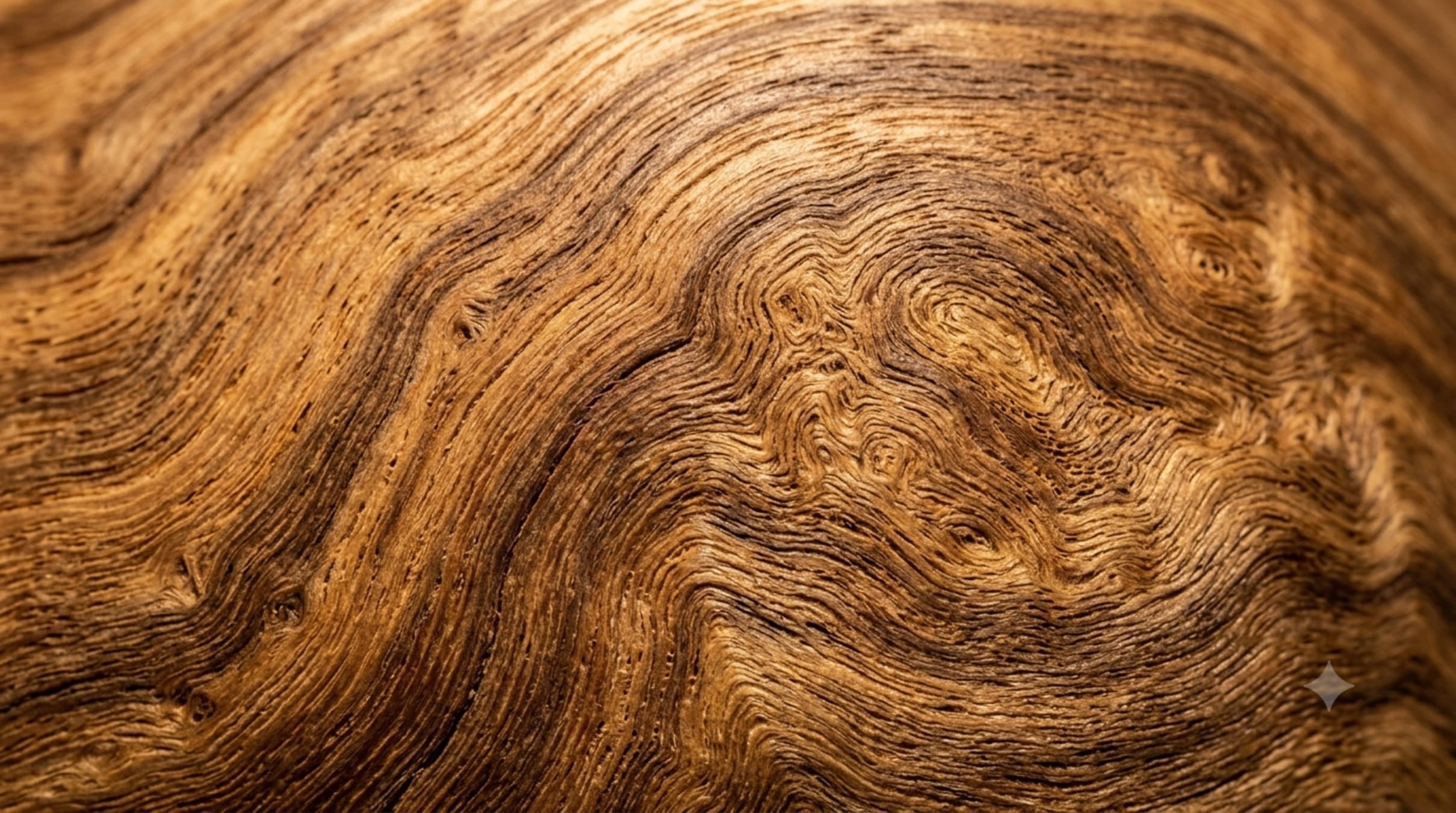
TODO: close-up of Sydney Blue Gum showing warm pink-red tone and open pore structure at 100mm scale. - Photo slot 2
TODO: side-by-side comparison of Sydney Blue Gum and Jarrah boards showing the colour and texture difference. - Photo slot 3
TODO: Sydney Blue Gum floor finished in satin waterborne, coastal Peninsula interior with natural light. - Photo slot 4
TODO: isolation primer being applied to bare Blue Gum ahead of a waterborne system.
COMMON QUESTIONS
Is Sydney Blue Gum actually blue?
No. The name refers to the bark of the living tree, not the timber. The floor runs warm pink through to mid reddish-brown, generally more even in tone than Spotted Gum and noticeably lighter and pinker than Jarrah.
How do I tell it from Jarrah?
Colour and texture. Blue Gum is lighter and pinker where Jarrah is deep burgundy-red, and it has a more open, coarser texture with visible pores against Jarrah’s denser tighter surface. Under an aged coating they look similar; bare and freshly sanded the difference is clear.
Does it need a primer?
Yes, we treat it as a primer species. Tannin levels are moderate to high and the open pore structure means a waterborne coating draws extractives to the surface fairly readily, producing dark blotching and uneven sheen. A shellac or alcohol-based isolation primer prevents it.
Can it be lime washed?
Not successfully. White pigment over a warm pink-red base gives the same muddy result as it does on Jarrah, and the open pores hold pigment unevenly which makes it worse. If a pale floor is the brief and the house has Blue Gum, the timber and the look are in genuine conflict.
Why does my floor feel slightly rough after sanding?
Usually coarse abrasive tearing the open pore structure rather than cutting it cleanly, which leaves a fuzzy surface. It shows as a dull patch once coating goes on. Restraint through the coarse pass and a full progression through the medium grits produces a much cleaner surface on this timber.
Is it a good floor for a coastal house?
Yes, with one caveat. At 9.0 kN it handles beach sand abrasion well and the warm colour disguises fine scratching. But the open pores hold grit, and on a floor that is not regularly vacuumed that trapped material works as an abrasive underfoot. Cleaning matters more on this timber than on a close-textured one.