Grey Ironbark
AT A GLANCE
| Common name | Grey Ironbark |
|---|---|
| Botanical name | Eucalyptus paniculata |
| Janka rating | 14.0 kN (dry) |
| Colour range | Pale grey-brown through to deep red-brown, often with strong variation between boards. |
| Grain pattern | Mostly straight, sometimes interlocked, close and very dense in texture. |
| Typical board widths | 80mm and 100mm most common; rarely laid wide because of the cost. |
| Era commonly laid | Intermittently across the twentieth century, usually where extreme durability was the priority. |
| Tannin bleed risk | High |
| UV behaviour | Deepens toward red-brown with exposure; a non-yellowing finish keeps the board-to-board colour variation legible. |
| Coastal suitability | Excellent |
HOW TO IDENTIFY IT
Grey Ironbark is the hardest timber you are realistically going to find in a residential floor, and the hardness is the identification. At 14.0 kN dry it is roughly three times the hardness of Victorian Ash and comfortably above Spotted Gum. A fingernail does nothing. A dropped tool frequently leaves no mark at all.
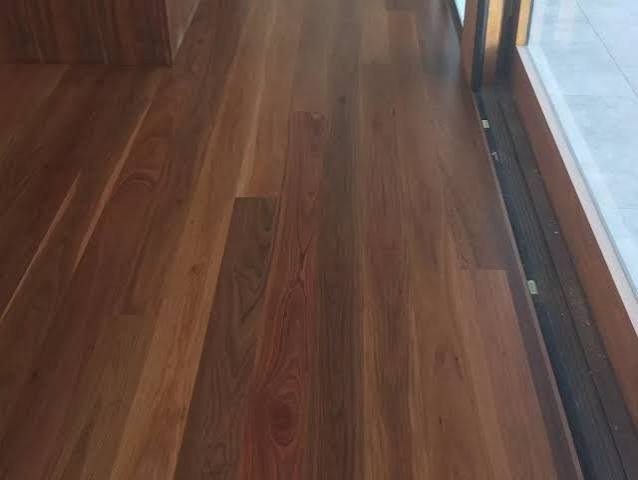
The colour range is wide and inconsistent, running from pale grey-brown through to deep red-brown, with strong variation between boards in the same floor. That variability, combined with the extreme density, is a reliable combination — there is no other common flooring timber that is both that hard and that tonally inconsistent.
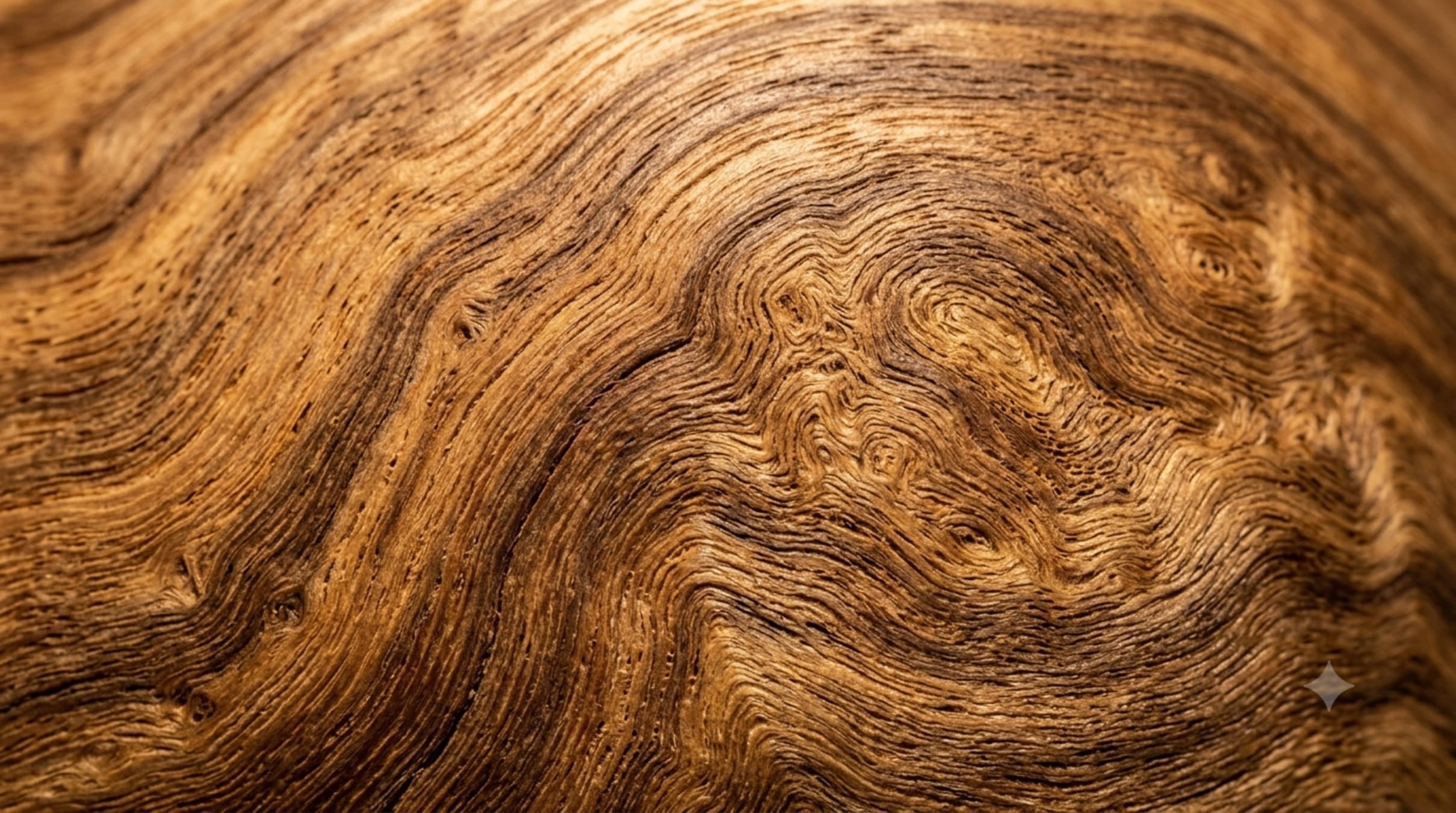
Texture is close and very dense, with little visible pore structure. Grain is mostly straight though sometimes interlocked, and there is generally less gum vein than in Messmate or Blackbutt. The overall impression is of a very solid, slightly austere floor without much decorative figure.
Weight is the practical field test if a board is available loose. Ironbark is noticeably heavier in the hand than any other timber on this list, and anyone who has carried a bundle of replacement boards will confirm it immediately.
HOW IT SANDS
Ironbark is the most demanding sanding job on this list and it should be quoted as such. At 14.0 kN the timber resists cutting to a degree that changes the economics: sharp ceramic abrasives are essential, belt consumption is high, and a dulled belt does not slow down so much as stop cutting entirely and begin polishing the surface.
Machine time is substantially longer than for the same area in a softer species. Where a Tasmanian Oak floor might take one coarse pass to level, Ironbark frequently takes two, and each pass is slower. Anyone quoting Ironbark at the same rate per square metre as a mid-range hardwood has not sanded one.
Interlocked grain, where present, tears under an aggressive pass exactly as it does in Jarrah, and the extreme density makes working that tear-out back out with finer grits genuinely slow. The coarse pass is therefore restrained by necessity as much as by preference.
Preparation matters especially here because the timber is unforgiving of anything proud. A nail head left above the surface in a 14.0 kN board will not be absorbed — the abrasive catches it, tears, and the belt is finished. Every fixing gets punched properly before a machine runs.
HOW IT FINISHES
Tannin levels are high and an isolation primer before any waterborne system is required rather than advisable. The dense, close texture does not reduce the risk — extractives still migrate to the surface as the water in the coating evaporates, producing dark blotching and adhesion failure.
The dense surface also affects how coating keys to the timber. A very close-textured hardwood offers less mechanical grip than an open-pored one, which makes correct preparation and a properly specified sealer more consequential. Over-refining the final sanding grit compounds the problem by closing the surface further.
Beyond that, a two-pack waterborne in satin is the sensible specification. The colour variation between boards is considerable, and non-yellowing clarity keeps that variation legible rather than letting a solvent-based coating darken everything toward a uniform brown.
The one genuine upside is that the finish has an easy job. At 14.0 kN the timber itself resists denting and abrasion better than any coating over it, so the floor tends to fail at the finish rather than the timber. That makes Ironbark an excellent candidate for a screen-and-recoat maintenance cycle at $25 to $40 per square metre rather than ever being run to a full sand.
ON THE PENINSULA
Grey Ironbark is uncommon in Peninsula residential flooring and turns up mostly where durability was the explicit priority — occasional commercial conversions, some rural properties through Pearcedale, Somerville and Baxter, and the odd house where an owner specified it deliberately. It is not a timber anyone laid by default.
Where it does appear, it is frequently the best floor in the building. Rural properties taking grit from unsealed driveways, and coastal houses taking beach sand, both present exactly the abrasion problem Ironbark is built to ignore. A well-maintained Ironbark floor will outlast several coatings and probably the roof.
That durability changes the maintenance recommendation. Because the timber outlasts the finish so comprehensively, the right programme is a screen-and-recoat every eight to twelve years rather than waiting for the floor to look bad and then paying for a full sand. On Ironbark a full sand is expensive and largely unnecessary.
In commercial settings on the Peninsula — a hospitality venue, a retail tenancy with public traffic — Ironbark under a commercial-grade two-pack waterborne with additional topcoats through the circulation routes is close to the most durable timber floor available. Where we find one in a trading premises, we generally advise protecting it rather than replacing it.
Sourcing replacement boards is the one genuine difficulty. Ironbark is expensive, it is not commonly stocked as flooring in the widths that older installations used, and a new board sits noticeably lighter than one that has been in a floor for decades. Where boards do need replacing, we quote the sourcing honestly at $8 to $20 per square metre or from $50 per board and give a realistic lead time, because it is frequently the longest item in the programme.
GALLERY
Placeholder slots — drop real photos into src/assets/ and swap the slot for <Image />.
- Photo slot 1
TODO: close-up of Grey Ironbark showing the close dense texture and grey-brown to red-brown variation. - Photo slot 2
TODO: board-to-board colour variation across a finished Ironbark floor, wide shot in even daylight. - Photo slot 3
TODO: worn ceramic abrasive belt after a single Ironbark pass, illustrating consumable cost. - Photo slot 4
TODO: Ironbark floor in a commercial Peninsula setting under a two-pack waterborne finish.
COMMON QUESTIONS
How hard is Grey Ironbark really?
At 14.0 kN dry it is roughly three times the hardness of Victorian Ash and comfortably above Spotted Gum at 11.0 kN. A fingernail makes no impression and a dropped tool frequently leaves no mark at all. It is the hardest timber you are likely to encounter in a residential floor.
Why does it cost more to sand?
Abrasive consumption and machine time. The density means belts dull fast and a dull belt stops cutting entirely, so belt changes are frequent. Levelling often takes two coarse passes where a Tasmanian Oak floor takes one, and each pass is slower. Quoting it at a standard hardwood rate understates the job significantly.
Does it need a primer?
Yes, required rather than advisable. Tannin levels are high and the dense texture does not reduce the risk — extractives still migrate to the surface as waterborne coating dries, producing dark blotching and adhesion failure. A shellac or alcohol-based isolation primer goes on before any waterborne topcoat.
How often will it need refinishing?
The timber will outlast the finish comprehensively, so the right programme is a screen-and-recoat at $25 to $40/m² every eight to twelve years rather than running it to failure and paying for a full sand. On Ironbark a full sand is expensive and largely avoidable if the maintenance cycle is kept.
Is it a good commercial floor?
One of the best available. Under a commercial-grade two-pack waterborne with additional topcoats through the circulation routes, an Ironbark floor handles public traffic, trolleys and grit about as well as timber can. Where we find one in a trading premises we generally advise protecting it rather than replacing it.
Why is the colour so inconsistent between boards?
That variation is natural to the species and it is not a grading fault or a finishing problem. Ironbark runs from pale grey-brown to deep red-brown and boards from the same pack can differ markedly. Sanding evens the surface, not the colour — a non-yellowing finish keeps the variation legible rather than muddying it.