Floor Sanding Fingal
Fingal · 3939 · Mornington Peninsula
Fingal barely registers as a suburb on most maps and that shapes how a job here works. It is a small rural-coastal pocket between St Andrews Beach and the Cape Schanck coast, with a scattered mix of older cottages and modern builds on generous blocks, no real town centre, and enough distance from anywhere with a trade supplier that a mid-job run for materials costs half a day rather than half an hour.
We plan around that rather than pretending it does not exist. On a Fingal job we over-order sundries at the start — abrasives, filler, sealer, applicator pads — and reconcile at the end, because arriving one belt short on day two is a genuinely expensive problem here in a way it is not in Frankston. It is a small operational detail and it is the sort of thing that separates a quote built for the location from one built for a spreadsheet.
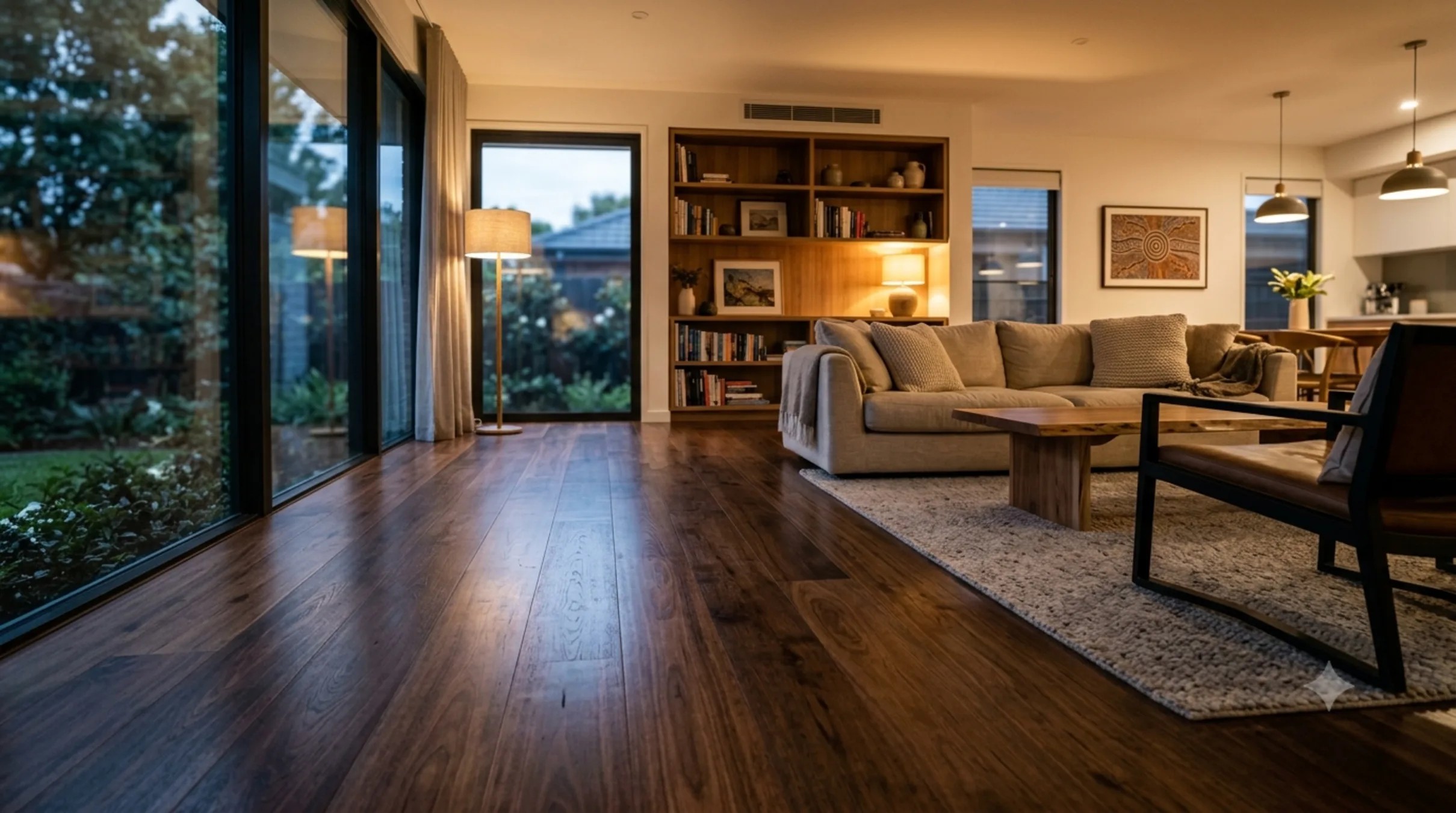
The housing mix means every quote is its own assessment. The older cottages carry wide Baltic Pine or narrow-strip native hardwood on bearers and joists, generally with low subfloor clearance and vents that decades of coastal scrub have grown over. The modern builds run to wide-plank oak, solid or engineered, over slab or on conventional joists. There is no dominant era to fall back on, so species, board width, thickness remaining and moisture content all get established from scratch on site.
Exposure here is the Bass Strait side rather than the bay, and it is a harsher environment. Wind comes off the surf coast unbroken, carrying salt and fine sand, and the properties sit in it year-round. That produces the same abrasion-driven wear pattern as the rest of the back beach — sound under furniture, worn to bare timber along the walked paths — and it puts more demand on a coating than a sheltered inland house ever will.
Fingal sits in the Peninsula pricing band at $70 to $120 per square metre turn-key. Floor areas vary widely with the mixed stock, but the modern builds on these blocks commonly run 120 to 220 square metres, which puts whole-job contracts between $10,500 and $18,000. Older cottage scopes are smaller and land below that, and we quote them on their actual area rather than assuming a Peninsula-sized floor plate because of the postcode.
Subfloor moisture is the first technical check on the older cottage stock. Low clearance plus coastal scrub grown up against the perimeter equals vents that have stopped working, and a subfloor that does not breathe produces cupping — the board edges curling upward as the underside absorbs moisture the top face is not. Pin-type readings at multiple points, and above 14 to 16 per cent we stop, because sanding a damp cupped floor flat produces crowning once it dries.
Clearing the vents is usually straightforward and it is worth doing before we start rather than after. Where the subfloor needs more than that — mechanical ventilation, or a continuous polyethylene vapour barrier across the soil — we will say so and give a realistic sense of the cost, which is invariably a fraction of what a second sanding job would be. Then we let the timber come back to a stable moisture content before cutting anything.
Cypress Pine turns up occasionally in the older rural builds here, and it needs specific handling. Australian Cypress carries high levels of natural water-soluble tannins and extractives, and applying a waterborne polyurethane directly to bare cypress draws those tannins to the surface as the water evaporates. The result is dark brown blotchy discolouration, uneven sheen and coating adhesion failure — a defect that cannot be fixed without cutting the floor back and starting again.
The prevention is a fast-drying alcohol-based or shellac-based isolation primer over the bare timber before any waterborne topcoat, forming a chemical barrier that locks the tannins into the grain. The same applies to Spotted Gum and Blackbutt, both of which appear in the newer Fingal builds. Identifying the species correctly at quote stage is what makes the difference, and it is why we would rather see the floor than quote from a description over the phone.
Coating recommendation is two-pack waterborne, satin, with the isolation primer where the species requires it. High abrasion resistance handles the sand and salt. Non-yellowing clarity holds the timber colour under the strong coastal light these houses get through their glazing. VOCs under 27 grams per litre and re-entry within 24 hours, which on a remote property with no convenient alternative accommodation is worth more than the price difference from a solvent-based system.
Timeline is three to four days for a cottage scope and four to six for a larger modern floor plate. We tend to run Fingal jobs as continuous blocks rather than splitting them across weeks, because the travel makes fragmented scheduling inefficient for everyone. If the job needs six days, we would rather book six consecutive days and finish properly than spread it over three visits and add a mobilisation each time.
ALSO AVAILABLE IN FINGAL
Because Fingal is a coastal Peninsula suburb, we also offer deck sanding and oiling and lime-wash finishes here.
REPLACING THE FLOOR IN FINGAL INSTEAD?
If the existing boards are past saving, or you are after something different underfoot, we also supply and install timber, engineered and hybrid flooring here.