Floor Sanding St Andrews Beach
St Andrews Beach · 3941 · Mornington Peninsula
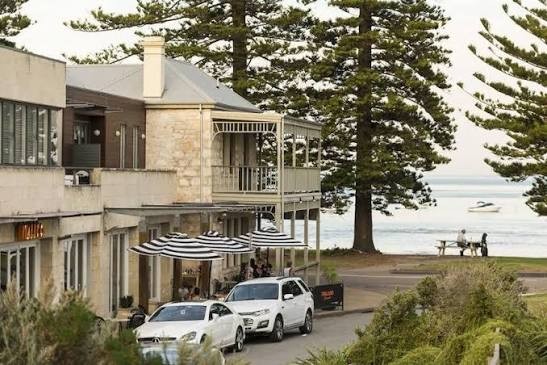
Everything at St Andrews Beach is downwind of a dune, and that single fact drives the wear pattern on every floor here. The 1990s-onward development sits on generous coastal blocks behind the dune system, exposed to the Gunnamatta side rather than the sheltered bay, and the wind carries fine sand continuously. It gets into the house on feet, on dogs, on towels and through open doors, and once it is on a timber floor it functions as loose abrasive under every step.
Sand abrasion produces a specific and recognisable wear pattern. The floor is sound and evenly coated everywhere the furniture sits, and worn progressively toward bare timber along the paths people actually walk — the entry, the run to the kitchen, the doorway to the outdoor area. It is not a coating failure. It is a mechanical one, and no amount of specification will stop it entirely. What good specification does is slow it down substantially.
The measures that actually work are unglamorous. A commercial-grade two-pack waterborne polyurethane with very high abrasion resistance is the base. An additional topcoat through the entry and traffic lanes, at $10 to $15 per square metre over the base rate, roughly doubles the life of the finish where it takes the punishment. And barrier matting at every external door does more than any coating decision, at a fraction of the cost. We say this at every quote here.
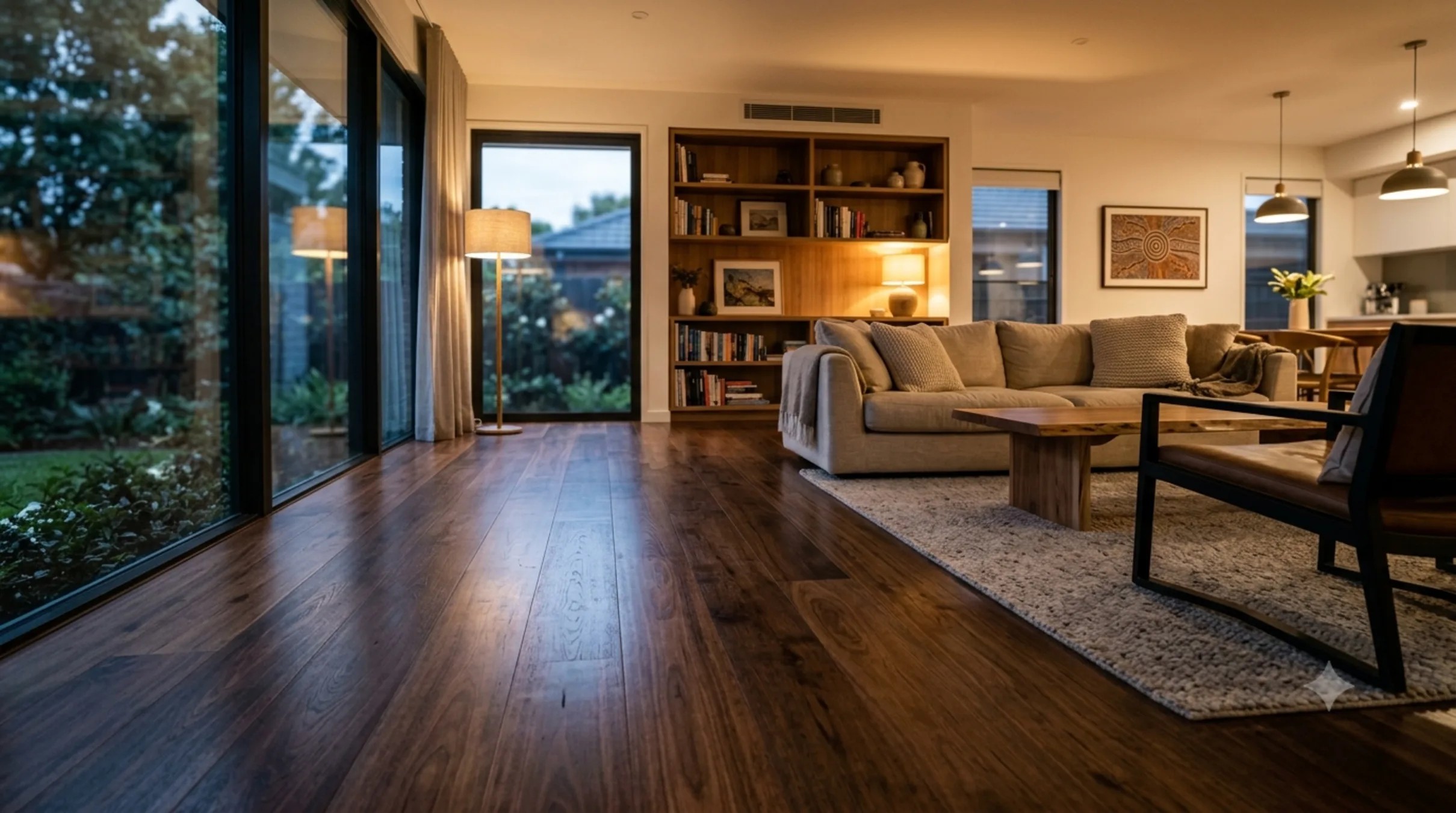
The housing stock is younger than most of what we work on, which means engineered oak is common and wear layer thickness is the first thing to establish. Engineered board carries two to six millimetres of real timber over a plywood or fibreboard core, and a full sand takes roughly a millimetre. We measure at a threshold, a vent or a stair nosing rather than estimating, because that measurement determines whether the correct treatment is a sand or a screen-and-recoat.
On a floor that has been abraded through the traffic lanes but has intact wear layer elsewhere, that decision gets genuinely interesting. A full sand levels everything and costs a millimetre of a finite resource. A screen-and-recoat at $25 to $40 per square metre restores the surface without taking timber but will not remove deep scratching that has cut into the wood itself. We show the client both options with an honest assessment of what each will and will not fix.
St Andrews Beach sits in the Peninsula pricing band at $70 to $120 per square metre turn-key for a full sand-and-polish. Floor plates here run large — 120 to 220 square metres is typical for the newer builds on these blocks — putting whole-job contracts between $10,500 and $18,000. Screen-and-recoat is the separate and considerably cheaper line item at $25 to $40 per square metre where the floor supports it.
Wind exposure also affects how we work. Coating a floor requires the house closed up, and on a windy site with doors and windows that people are used to leaving open, sand ingress during the coating and curing window will ruin a finish. Fine grit landing on a wet coat is permanent — it cures into the surface and the only remedy is cutting back and recoating. We seal the working area properly and we are firm about access during the cure, which occasionally annoys people and is non-negotiable.
Where the floor is over a slab, the checks are slab moisture and the perimeter expansion gap. Concrete wicks ground moisture indefinitely if the vapour barrier under it was compromised during construction, and a floating engineered floor over a damp slab cups and peaks at the joints regardless of what is coated on top. A floating floor laid hard against the skirting, or with the expansion gap later filled with sealant, has nowhere to go when it expands. Both are worth finding before spending money on a finish.
The pale coastal aesthetic is common here and it suits the light. Lime wash and Nordic tint systems run $55 to $110 per square metre turn-key, or $12 to $25 per square metre as an application over a base sand. They need a precise multi-stage sand to 120 grit for even pigment absorption and they must be applied across a floor in one continuous session. On a high-abrasion site it is worth understanding that pigmented finishes generally need maintenance sooner than a clear two-pack does.
Timeline is four to six days for a full sand on a typical St Andrews Beach floor plate, or one to two days plus drying for a screen-and-recoat. Days one and two are preparation and multi-directional coarse sanding with full edge grinding and corner scraping. Day three is rotary finishing, vacuuming and the sealer or wash. Day four is screening and the topcoats. Light traffic day five, heavy furniture and rugs at seven to ten days.
Where the property is a holiday let, we schedule against the booking calendar and build in realistic cure time rather than the minimum. A floor that is trafficable on day five is not a floor that should have a fully loaded suitcase wheeled across it or a rug thrown down on it. Guests will do both. Building an extra couple of days into the plan before the next booking is cheaper than recoating the entry after the first turnover.
ALSO AVAILABLE IN ST ANDREWS BEACH
Because St Andrews Beach is a coastal Peninsula suburb, we also offer deck sanding and oiling and lime-wash finishes here.
REPLACING THE FLOOR IN ST ANDREWS BEACH INSTEAD?
If the existing boards are past saving, or you are after something different underfoot, we also supply and install timber, engineered and hybrid flooring here.