Floor Sanding Langwarrin
Langwarrin · 3910 · Mornington Peninsula
Ambering is the complaint that brings most Langwarrin owners to us, though almost nobody uses that word. What they say is that the floor has gone orange. The lounge room that was a pale, even honey colour when the house was done up in the nineties now reads distinctly amber, darker under the window than behind the sofa, and no amount of cleaning shifts it. That is a solvent-based polyurethane doing exactly what solvent-based polyurethane does.
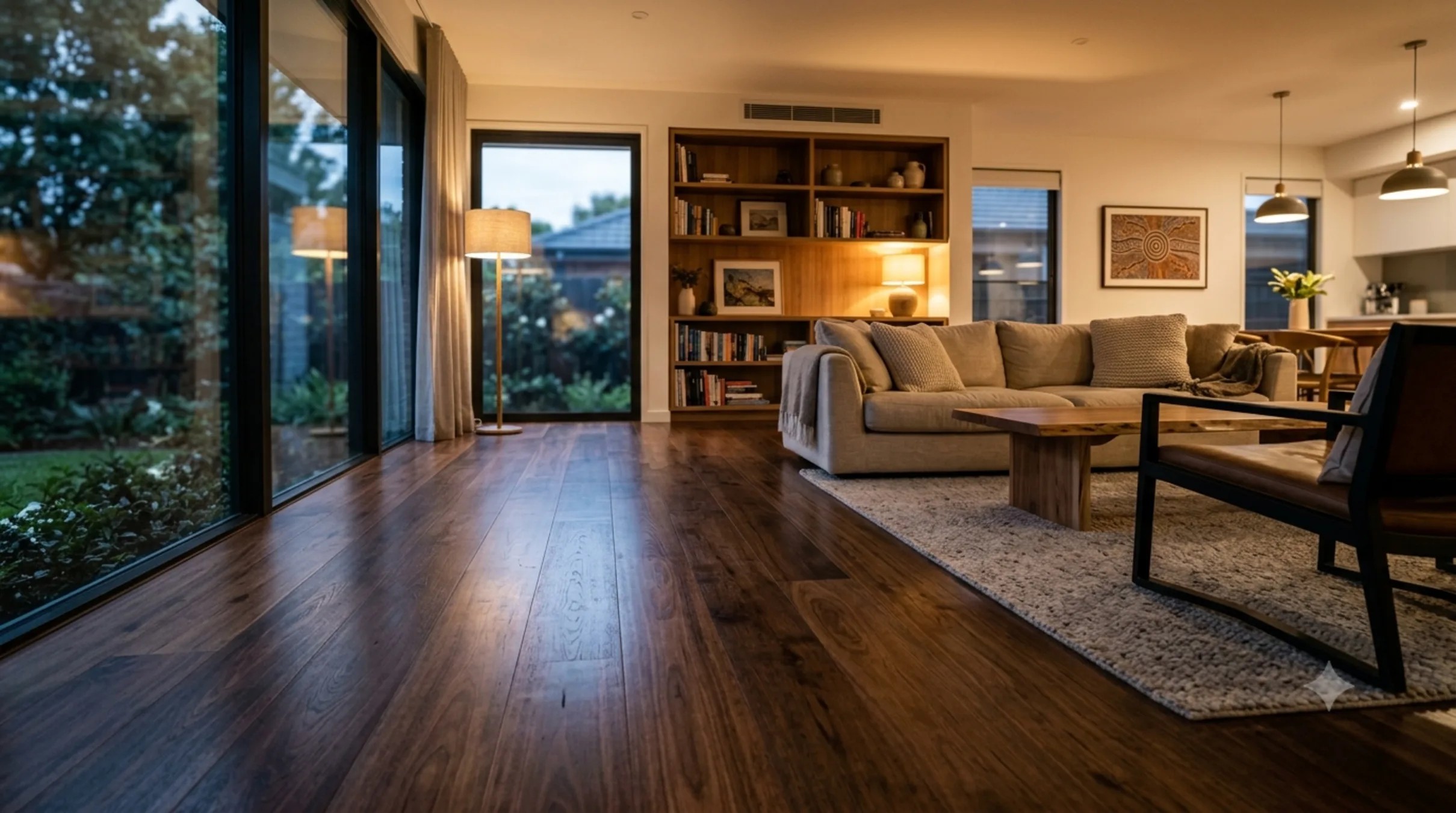
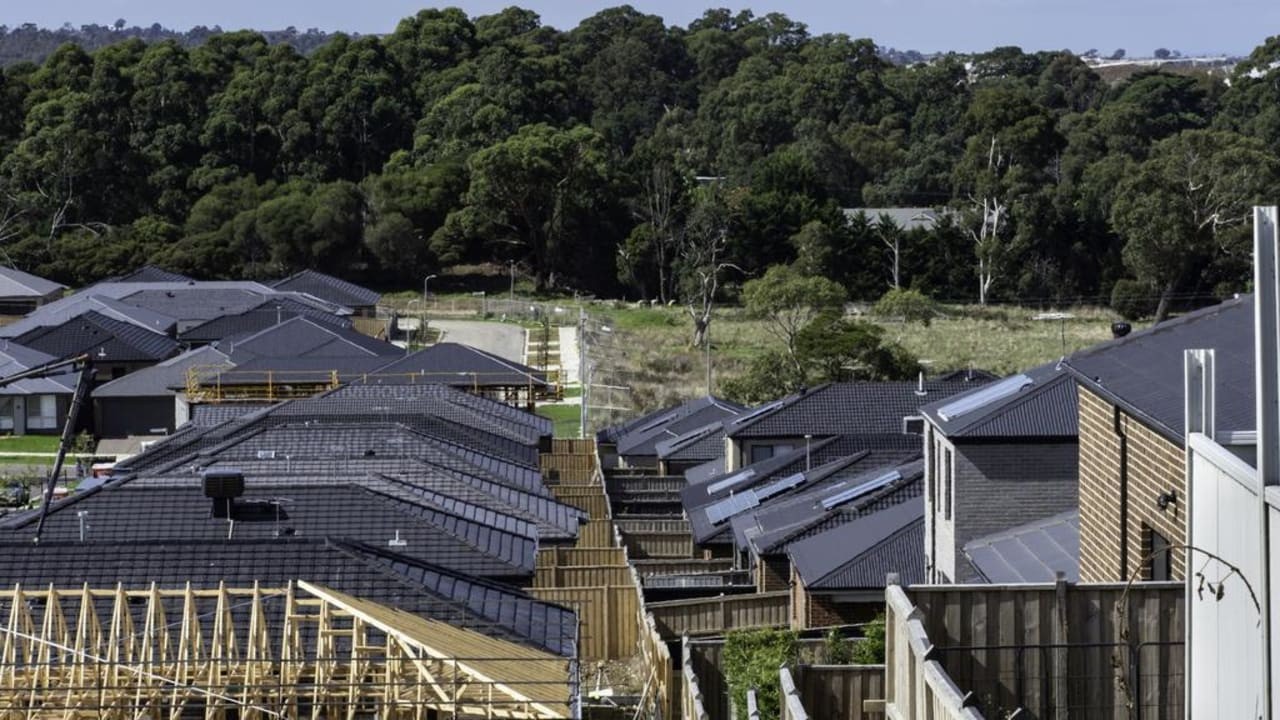
The quarter-acre blocks through Langwarrin were built out from the 1970s into the 1990s, which puts the housing stock squarely in the native hardwood era. Tasmanian Oak, Victorian Ash and the occasional run of Jarrah make up the bulk of what we sand here, laid as narrow strip flooring 65 to 85 millimetres wide over conventional joists. These are dense, tight-grained timbers that wear well and take a coating beautifully — which is why the coating, rather than the timber, is usually the thing that has failed.
Solvent-based polyurethane is a moisture-curing polymer carried in aromatic hydrocarbon solvents, and it yellows. Not as a fault, but as an inherent property of the chemistry. Under UV exposure it shifts progressively toward amber and then orange, and on a light hardwood like Tasmanian Oak that shift is dramatic. The effect is worst under north and west-facing glazing, which is why the colour is rarely uniform — the sun path across the room is written into the floor.
The good news is that ambering is entirely in the coating, not in the timber. Sand it off and the hardwood underneath is the colour it always was. That is the single most satisfying moment in this job: the first coarse pass across an orange floor, and a stripe of pale, clean Tasmanian Oak appearing behind the machine. Owners who have lived with an orange floor for fifteen years frequently do not believe it until they see it.
The obvious follow-up question is how to stop it happening again, and the answer is a waterborne system. Two-pack waterborne polyurethanes cross-link with an isocyanate or aziridine hardener and stay optically clear — non-yellowing under UV, no amber shift over the life of the finish. Abrasion resistance on the commercial-grade products is very high, comfortably enough for family traffic and dog claws. VOC content sits under 27 grams per litre, odour is minimal, and the household can be back in the room within 24 hours.
Langwarrin sits in the Frankston pricing band. Turn-key sand-and-polish is $45 to $55 per square metre with a solvent-based system, $55 to $65 with waterborne, and given what we have just said about ambering we recommend the waterborne here almost without exception. Langwarrin houses tend to run at the larger end of the Frankston band's 60 to 80 square metre typical scope because the blocks are bigger and the floor plates follow, so whole-job invoices commonly sit in the upper half of the $3,150 to $4,550 range and sometimes above it.
Against a $22 to $35 per square metre promotional rate, the difference is mostly in what happens before the coating goes down. Nail punching and perimeter joint filling, $5 to $10 per square metre. Carpet tack strip and staple removal, $10 to $20. Additional topcoats for a high-traffic hallway, $10 to $15. And GST on top of all of it. The promotional number covers a sanding pass on a floor that is already prepared, which is not a floor that exists in a real house.
Two to three days on site for a standard Langwarrin scope, occasionally four where the floor plate is larger or there is a staircase. Day one runs containment, nail punching, tack strip removal and the coarse and medium passes with the primary seal down late in the afternoon. Day two is fine rotary sanding, inter-coat screening with a 150-grit mesh pad, vacuuming and the secondary and final topcoats. Full cure and furniture placement at three to seven days.
One technical note specific to sanding back an ambered floor: the old coating comes off in a hard, glassy layer that loads abrasive quickly, and there is often more of it than expected because these floors were commonly recoated once in the 2000s without being sanded back first. Two coats of aged solvent polyurethane take a genuine coarse cut to remove. We allow for the belt consumption and the extra pass rather than trying to force it with a loaded abrasive, which burnishes rather than cuts and leaves the coating sitting in the grain.
Where a Langwarrin floor has ambered unevenly and the owner has grown fond of the warmer tone, staining is a legitimate alternative to chasing the original pale colour. A stain gets you depth and warmth immediately, evenly across the whole floor, with a non-yellowing waterborne topcoat over it that holds that colour rather than continuing to drift. Stain application runs $12 to $25 per square metre on top of the sand. We sample-test on the actual floor before committing, because timber species and stain interact unpredictably.
The last piece of Langwarrin-specific advice is about timing. Because so many of these floors are heading for a first proper re-sand after thirty years, the underlying timber usually has plenty of thickness left and this is a floor with decades of life ahead of it. Specify the coating properly now — waterborne, satin, an extra topcoat through the traffic lane — and the next intervention is a screen-and-recoat at $25 to $40 per square metre in eight or ten years, not another full sand.
REPLACING THE FLOOR IN LANGWARRIN INSTEAD?
If the existing boards are past saving, or you are after something different underfoot, we also supply and install timber, engineered and hybrid flooring here.