Floor Sanding Blairgowrie
Blairgowrie · 3942 · Mornington Peninsula
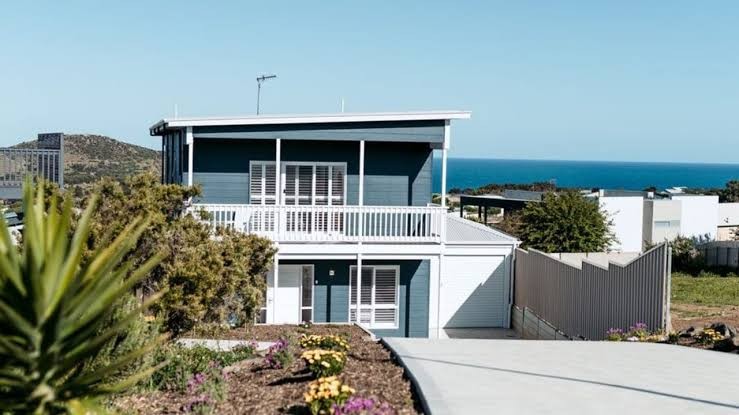
A holiday house that becomes a permanent residence asks considerably more of its floor, and that transition is the Blairgowrie story. The 1960s-onward stock here was built for occasional use — summer weekends, a couple of weeks at Christmas, largely empty the rest of the year — and a great many of those houses are now lived in year-round. The floors were specified for one duty cycle and are being asked to perform another.
What that looks like in practice is a floor that was perfectly adequate for twenty years of light use and has degraded rapidly over the last five. Coating that was only ever walked on in bare feet during January is now taking shoes, furniture, pets and daily traffic. The wear concentrates fast, and because the original finish is often a solvent-based polyurethane applied decades ago, it has also ambered heavily and gone brittle.
Brittle old coating is its own sanding problem. A solvent-based polyurethane that has been through thirty years of thermal cycling in an uninsulated beach house has lost its flexibility, and it comes off in hard glassy flakes that load abrasive quickly rather than powdering cleanly. There is frequently more of it than expected too, because these floors were commonly recoated once in the nineties without being sanded back first. Two aged coats take a genuine coarse cut to remove.
We allow for the belt consumption rather than trying to force it with a loaded abrasive. A clogged belt stops cutting and starts burnishing, which polishes the timber instead of levelling it and leaves old coating sitting down in the grain. That shows up later as patchy absorption when the new sealer goes on, and by then it is too late to fix without cutting again. It is slow, unglamorous work and it is where a proper job separates from a fast one.
Blairgowrie sits in the Peninsula pricing band at $70 to $120 per square metre turn-key, with typical scopes of 120 to 220 square metres or more putting whole-job contracts between $10,500 and $18,000. Where a floor is carrying multiple layers of aged coating that need heavy removal before any levelling can start, that additional preparation is real time and we quote it rather than absorbing it and rushing the finish.
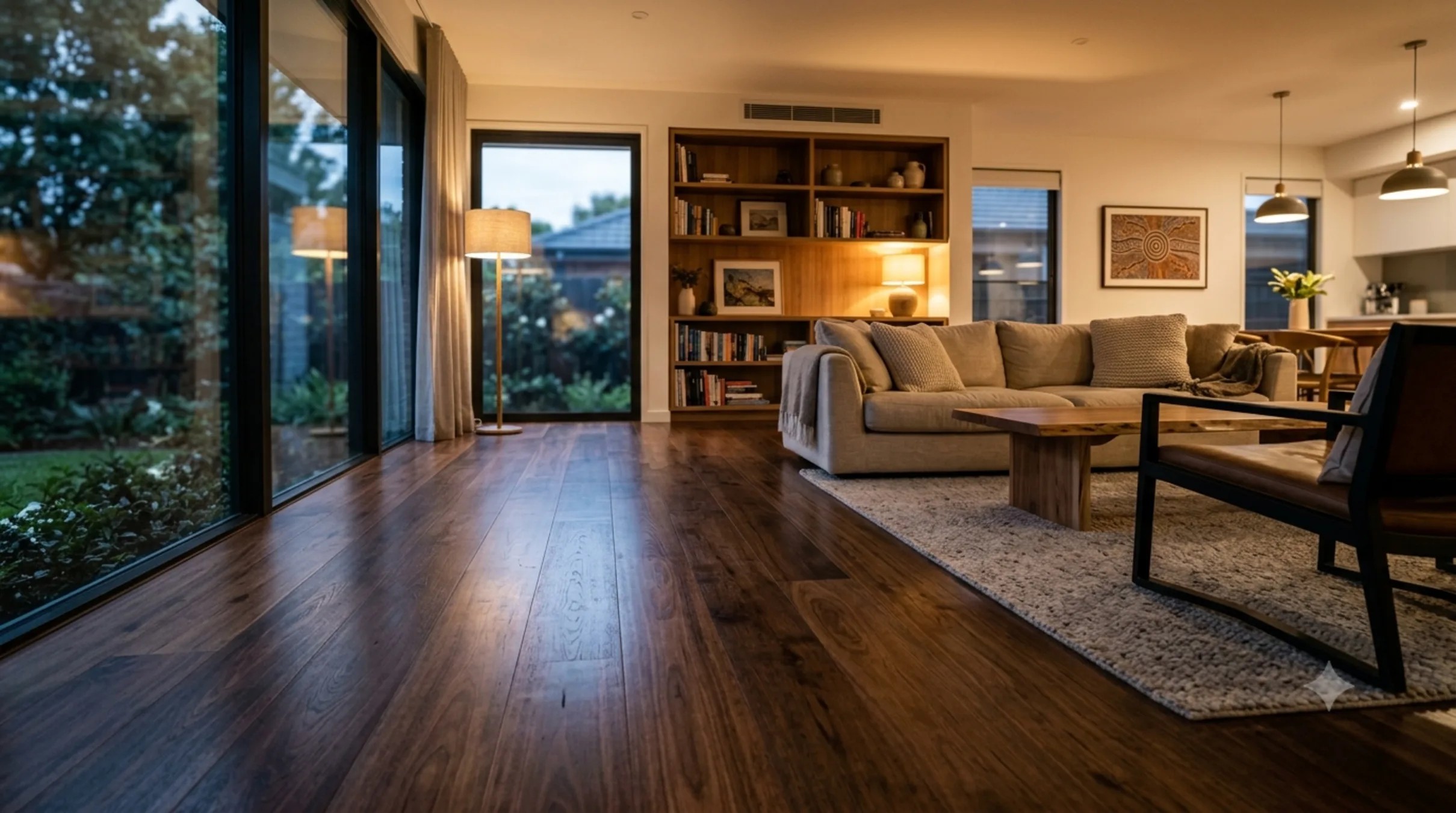
The pale coastal look is in high demand here and Blairgowrie is one of the suburbs where lime wash genuinely suits the housing. These are timber-lined, light-filled holiday houses where a warm orange floor fights everything else in the room. A lime wash or Nordic tint shifts the timber toward the pale, chalky end while keeping the grain visible. Those systems run $55 to $110 per square metre turn-key, or $12 to $25 per square metre as an application over a base sand.
The technical requirement for a pigmented finish is a precise multi-stage sand up to 120 grit. Pigment absorption is entirely dependent on how uniformly the timber has been opened, and a floor sanded to inconsistent grit will take the wash unevenly — darker where the surface is coarser, lighter where it has been burnished. That cannot be corrected afterwards without cutting back and starting again, which is why the preparation on a lime wash costs more than the preparation for a clear coat.
Species matters for a wash finish and not every Blairgowrie floor suits one. The technique works well on Tasmanian Oak, European oak and some Blackbutt. It works poorly on dense red hardwoods, where the natural colour fights the pigment and the result reads muddy rather than pale. We confirm species at the first visit and sample-test a panel at the intensity the client is after before anyone commits to a whole floor.
Where a house has moved from holiday use to permanent occupation, the coating conversation should change accordingly. A finish specified for six weeks a year does not need what a finish specified for permanent family occupation needs. Commercial-grade two-pack waterborne with an extra topcoat through the traffic lanes is the durable answer, at $10 to $15 per square metre for the additional coat, and it is worth doing at the point of conversion rather than discovering the shortfall three years later.
Four to five days for a 120 square metre Blairgowrie house on a clear coat, five to seven where a lime wash or tint is in scope. The pigmented finishes add time because the sanding sequence is longer and the application has to run across the whole floor in one continuous session. Days one and two are preparation and coarse sanding, day three rotary finishing and the wash or primer, day four screening and topcoats. Light traffic day five, furniture at seven to ten days.
Subfloor clearance on the older Blairgowrie stock is often minimal and the vents are frequently buried under sixty years of accumulated sand and garden growth. That produces cupping, and a cupped floor sanded flat while damp produces crowning once it dries. Pin-type moisture readings at multiple points before sanding, and above 14 to 16 per cent we stop and look at the subfloor first. It is the least interesting part of the quote and the part that determines whether the floor is still flat in a decade.
ALSO AVAILABLE IN BLAIRGOWRIE
Because Blairgowrie is a coastal Peninsula suburb, we also offer deck sanding and oiling and lime-wash finishes here.
REPLACING THE FLOOR IN BLAIRGOWRIE INSTEAD?
If the existing boards are past saving, or you are after something different underfoot, we also supply and install timber, engineered and hybrid flooring here.