Floor Sanding Rye
Rye · 3941 · Mornington Peninsula
Booking a Rye floor is a calendar problem before it is a technical one. A large share of the housing here is holiday let or short-stay rental, and the weeks when the owner most wants the floor done are the weeks the property is earning. We work backwards from the booking sheet: a Monday start with the final coat down on Thursday gives a floor that is trafficable for weekend guests, provided nobody drags a suitcase across it before it has cured properly.
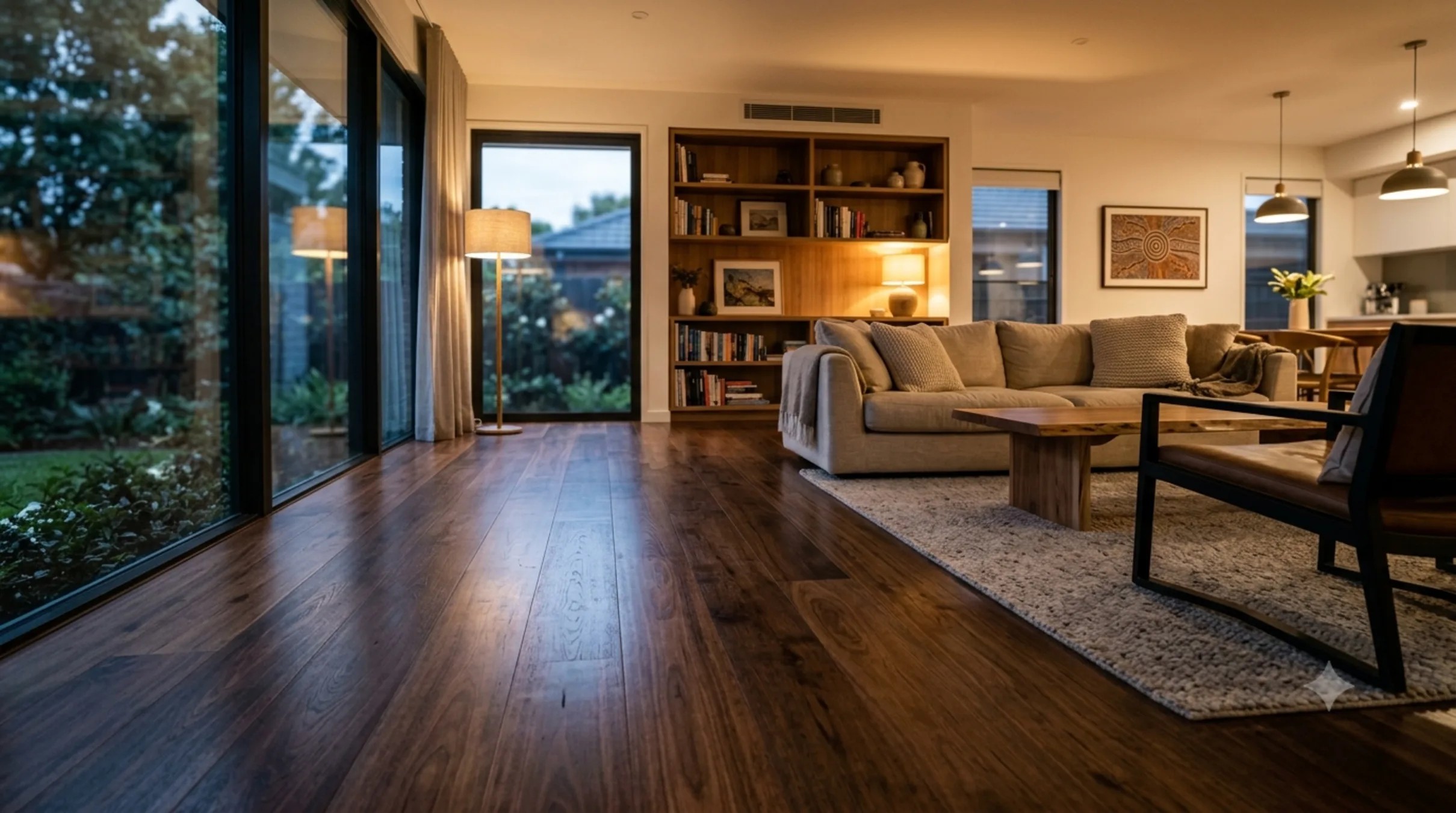
The stock itself is a genuine mix — original shacks, 1970s and 80s beach houses, and modern rebuilds, often on adjacent blocks. That variety means the floor under a Rye house could be wide Baltic Pine on bearers, narrow-strip native hardwood, or wide-board engineered European oak over a slab, and the correct treatment for each is different enough that quoting without seeing it is not really possible.
Sand is the defining wear factor and it is relentless. Rye sits between the bay and the back beaches, and beach sand tracked in on feet is functionally an abrasive powder distributed daily across the floor. Under foot traffic it wears a coating out from the entry inward, following the path people actually walk. The diagnostic pattern is a floor that is sound and glossy under the furniture and worn to bare timber in a metre-wide strip from the front door to the kitchen.
In a holiday let that pattern accelerates because the traffic is heavier and less careful than in a family home. Guests come off the beach, walk in, and put a fortnight of ordinary domestic wear onto the floor in a weekend. It is not carelessness so much as volume. Any coating specification for a Rye rental has to be made with that in mind rather than by reference to how a permanently occupied house behaves.
The practical answer is a commercial-grade two-pack waterborne polyurethane with an additional topcoat through the entry and traffic lanes. The extra coat runs $10 to $15 per square metre over the base rate and roughly doubles the useful life of the finish in the zone that takes the punishment. Beyond the coating, a decent barrier mat and an enforced shoes-off rule at the door will do more for a Rye floor than any specification we can write.
Rye sits in the Peninsula pricing band, the top of our three. Turn-key sand-and-polish runs $70 to $120 per square metre, with typical scopes of 120 to 220 square metres or more putting whole-job contracts between $10,500 and $18,000. That is a substantial number and it reflects larger floor plates, higher coating specifications and the more elaborate finishes this end of the Peninsula asks for, rather than a different rate for the same work.
Where a Rye property is a rental rather than an owner-occupied house, the specification conversation usually goes the other way — toward durability and away from fashion. Ultra-matte finishes photograph beautifully for a listing and mark more readily underfoot. Lime wash and Nordic tints look right in a beach house and need more maintenance. Satin two-pack waterborne is the boring answer that survives guest turnover, and for a property earning income that is usually the right trade.
For owner-occupied Rye houses the pale coastal look is worth doing properly. Lime wash and Nordic tint systems run $55 to $110 per square metre turn-key depending on pigment coverage, or roughly $12 to $25 per square metre as an application over a base sand. They need a precise multi-stage sanding sequence up to 120 grit so the pigment takes evenly, and they need to be applied across a whole floor in one continuous session — you cannot stop halfway and resume tomorrow.
Subfloor moisture is worth checking on the older shack stock, where clearance is minimal and sixty years of sand build-up has usually buried the perimeter vents. Pin-type readings at multiple points, and above 14 to 16 per cent the sand waits. On the modern rebuilds over slab, the equivalent check is slab moisture and the perimeter expansion gap on any floating installation — a floating floor laid hard against the skirting has nowhere to expand and will peak at the joints.
Timeline is four to five days for a 120 square metre Rye house and longer where a pigmented finish is in scope. Days one and two are preparation and multi-directional coarse sanding with full edge grinding and corner scraping. Day three is rotary orbital finishing, vacuuming and the primer, lime wash or stain. Day four is screening and the high-build topcoats. Light traffic day five, heavy furniture and rugs at seven to ten days.
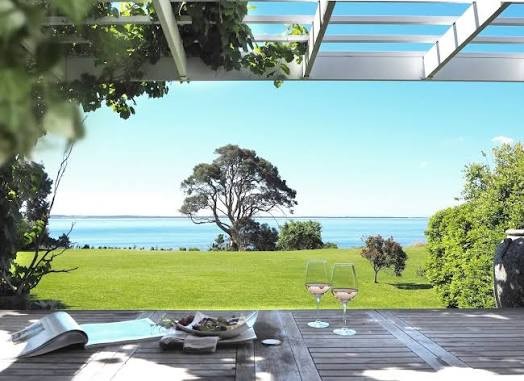
Decks are frequently in scope alongside the interior on a Rye property, and it is worth combining them. The deck takes the full southerly wind, hard summer sun and salt spray, and a finish that was fine two summers ago is generally silver, splintering and starting to lift by now. Left much longer, boards start splitting through the fixings and the job becomes replacement rather than restoration. Doing both while the gear is on site is more efficient than two separate mobilisations.
ALSO AVAILABLE IN RYE
Because Rye is a coastal Peninsula suburb, we also offer deck sanding and oiling and lime-wash finishes here.
REPLACING THE FLOOR IN RYE INSTEAD?
If the existing boards are past saving, or you are after something different underfoot, we also supply and install timber, engineered and hybrid flooring here.