Parquetry Restoration
Priced turn-key from $45–$120/m² across the Peninsula, depending on suburb and job size
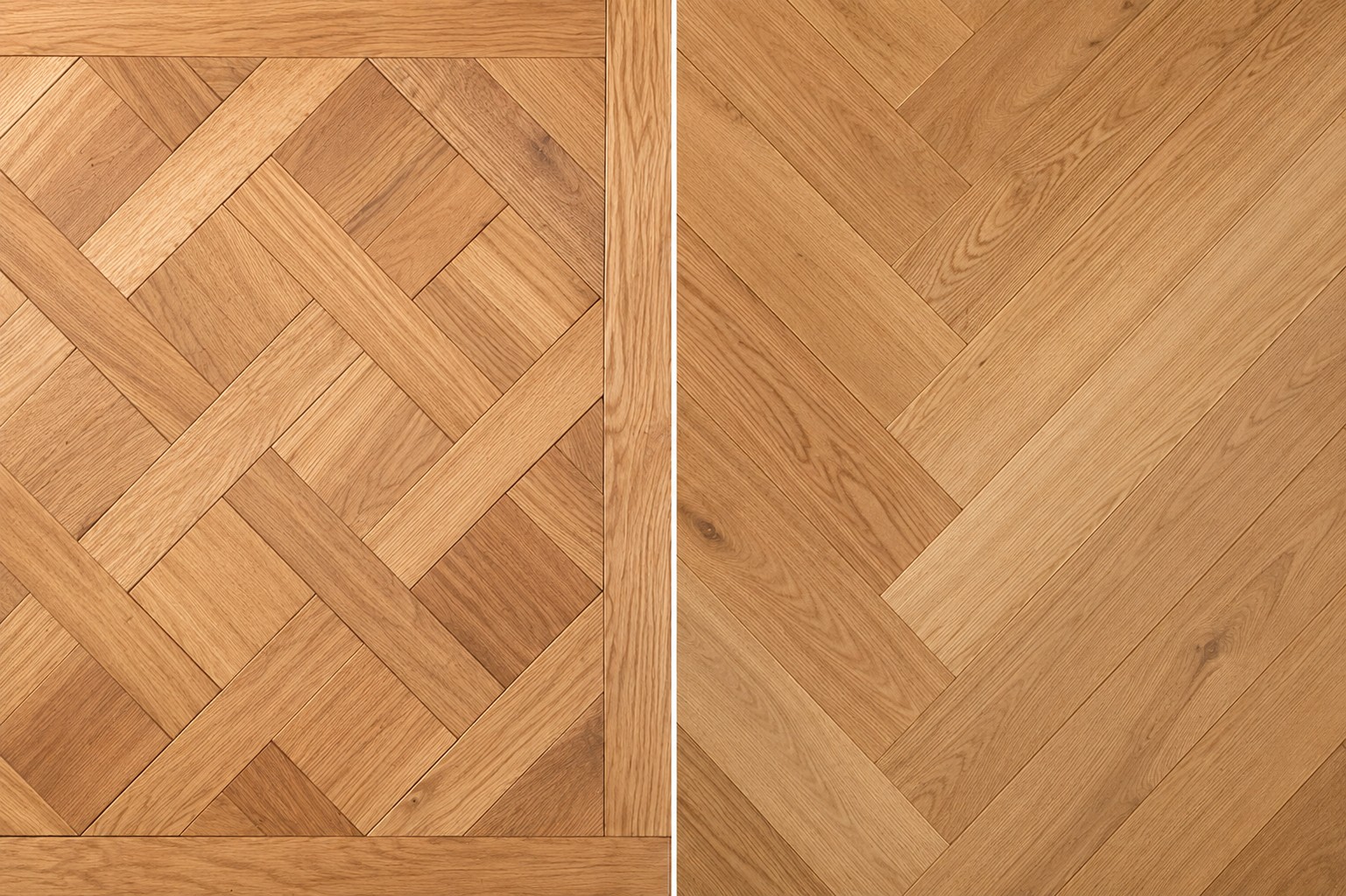
Parquetry is a different discipline to strip flooring and the difference is grain direction. A parquet floor is made of small blocks laid in a geometric pattern — herringbone, basket weave, brick bond, or a bordered mosaic — and in every pattern, adjacent blocks run their grain at ninety degrees to each other. There is no single direction to sand with, which means conventional strip-floor technique produces visible scratching across half the blocks on the floor.
The technique that works is multi-directional cutting: the floor is sanded diagonally, at forty-five degrees to the block pattern, in two opposing passes. That way no block is ever cut directly against its grain, and the scratch pattern that remains is consistent across every block regardless of orientation. It takes longer than a strip floor of the same area and it is not optional — a parquet floor sanded in one direction shows it permanently.
Block thickness is the constraint that decides whether a floor can be sanded at all. Traditional solid parquetry blocks are generous and will take multiple cuts. Overlay parquetry — thinner blocks glued to a subfloor or to a backing mesh — may have only a few millimetres above the glue line. Modern engineered herringbone has a wear layer of two to six millimetres like any other engineered product. We measure before scoping, because sanding through a block is not repairable.
Loose and lifted blocks are the most common condition problem, and they are almost always an adhesive failure rather than a timber failure. Original parquetry was often laid in bitumen, which becomes brittle with age and lets go, particularly where there has been any moisture from below. A floor that sounds hollow underfoot in patches has blocks that have released, and sanding over them will break them up.
Refixing is done before any sanding. Loose blocks are lifted, the old adhesive cleaned off both the block and the substrate, and the block relaid in a modern flexible adhesive at the correct height. Where blocks are missing entirely, matching replacements have to be sourced — same species, same dimensions, same thickness — which on an unusual pattern or an uncommon timber can be the longest lead item in the job.
Moisture underneath is the recurring cause of adhesive failure and it needs resolving rather than working around. Parquetry laid over a concrete slab that wicks ground moisture will keep releasing blocks no matter how well they are refixed. Parquetry over a timber subfloor with poor ventilation does the same. We take readings before quoting, and where the substrate is the problem we say so rather than refixing blocks that will lift again.
Gap and joint treatment on parquetry needs a lighter hand than on a strip floor. The block joints are numerous and fine, and filling them all produces a floor that reads as a flat sheet rather than as parquetry. Generally we fill only what needs filling — failed joints, chipped edges, the gap at a border transition — and leave the pattern legible. Wood-flour resin mixed to the floor colour at $5 to $15 per square metre.
Coating a parquet floor is otherwise conventional, with one caveat about sheen. High gloss on a geometric pattern amplifies every reflection and can make a herringbone floor genuinely busy to look at. Satin holds the pattern definition without the glare. On a bordered or mosaic floor where the pattern is the point, satin or matte lets the geometry read rather than competing with it.
Borders and inlays deserve their own attention and they are where a rushed job shows first. Many older parquet floors have a perimeter border running in a different pattern or species to the field, sometimes with a fine contrasting fillet between the two. Those lines are narrow, they are the first thing the eye follows into a room, and running a machine across them carelessly rounds the edges and blurs the definition. We work borders by hand where the detail warrants it rather than treating the floor as a single uniform surface.
OUR PROCESS
- 01 Pattern and construction survey: block dimensions, thickness above the glue line or backing, adhesive type, and pattern layout recorded.
- 02 Substrate moisture testing — slab or timber subfloor — before any scope is agreed, because adhesive failure is usually a moisture symptom.
- 03 Hollow-sounding areas mapped by tapping across the floor to locate blocks that have released from the substrate.
- 04 Loose blocks lifted, old bitumen or adhesive cleaned from block and substrate, and blocks relaid in flexible adhesive at correct height.
- 05 Missing blocks sourced to matching species, dimensions and thickness, and fitted before sanding.
- 06 Multi-directional coarse cutting at forty-five degrees to the pattern, in two opposing diagonal passes so no block is cut against its grain.
- 07 Progression through medium and fine grits, maintaining the diagonal working direction throughout.
- 08 Edge grinding and hand scraping at borders, thresholds and around any decorative inlay.
- 09 Selective joint filling with wood-flour resin toned to the floor — failed joints and chipped edges only, leaving the pattern legible.
- 10 Sealer, 150-grit screen, vacuum and topcoats, with satin sheen recommended so the geometry reads without glare.
WHAT’S INCLUDED
- Turn-key parquetry restoration from $45/m² in the Frankston band, $55/m² in the Mount Eliza band and $70/m² across the Peninsula band.
- Multi-directional diagonal sanding as standard — the only technique that does not scratch half the blocks on the floor.
- Block refixing and relaying quoted with the job, including cleaning old bitumen from block and substrate.
- Replacement blocks sourced to matching species, dimensions and thickness; lead time flagged at quote stage.
- Selective joint filling at $5 to $15/m² — failed joints only, so the pattern stays legible.
- Block thickness measured before scoping, because sanding through a block cannot be repaired.
- Substrate moisture resolved before refixing, so blocks do not release again.
- Satin or matte sheen recommended; gloss makes a geometric pattern visually busy.
COMMON QUESTIONS
Why can’t parquetry be sanded like a normal floor?
Because adjacent blocks run their grain at ninety degrees to each other, so there is no single direction that works with the timber. Sanding in one direction cuts half the blocks against their grain and leaves permanent visible scratching in those blocks. The correct technique is two opposing diagonal passes at forty-five degrees to the pattern, so no block is ever cut directly across the grain.
Some of my blocks sound hollow. What does that mean?
They have released from the substrate, almost always because the original bitumen adhesive has gone brittle with age or because moisture has got underneath. Sanding over loose blocks breaks them up. They need lifting, cleaning back to clean substrate and relaying in a flexible adhesive before any sanding starts.
Can you replace missing blocks?
Yes, matched to species, dimensions and thickness. Sourcing is often the longest lead item in a parquetry job, particularly on an uncommon timber or an unusual block size, so it is worth identifying missing blocks at quote stage rather than discovering the shortfall once work has started.
How thick are parquetry blocks and how many sands do I get?
It depends entirely on the type. Traditional solid blocks are generous and take multiple cuts. Overlay parquetry may have only a few millimetres above the glue line. Modern engineered herringbone has a two to six millimetre wear layer like any engineered product. We measure before scoping because there is no recovering from sanding through a block.
My blocks keep lifting even after being reglued. Why?
Almost certainly moisture in the substrate. A slab that wicks ground moisture, or a timber subfloor with poor ventilation, will keep releasing blocks regardless of how well they are refixed. That is a substrate problem, not an adhesive problem, and refixing without resolving it is money spent twice.
Should the joints between blocks be filled?
Only selectively. Filling every joint on a parquet floor produces a flat sheet and loses the pattern definition that makes parquetry worth having. We fill failed joints, chipped edges and border transitions with wood-flour resin toned to the floor, at $5 to $15/m², and leave the rest of the pattern reading as it should.
What sheen works best on herringbone?
Satin, generally. High gloss on a strong geometric pattern amplifies reflections and can make the floor visually busy to the point of being uncomfortable. Satin holds the pattern definition without the glare. On a bordered or mosaic floor where the geometry is the feature, satin or matte lets it read properly.
Is parquetry more expensive to restore than a strip floor?
The sanding takes longer for the same area because of the multi-directional technique, and block refixing adds work that a strip floor does not have. Against that, the coating stage is the same and the floor area is often smaller. We quote it on the same band basis as any other floor, with refixing and replacement blocks itemised separately.